Exam Elaborations
ANATOMY 2 EXAM 2 2026/2027 | 100 HIGH-YIELD QUESTIONS & VERIFIED ANSWERS | LATEST TEST PREP | RECENT & MOST TESTED TOPIC
Preview
Page 1 of 19
Sample · 3/19
Click to enlarge Pages 2–3 · locked
Click to enlarge Pages 5–18 · locked
Click to enlarge
Not shown
16 more pages
Locked · Full 19-page document
About this document
This comprehensive document titled "ANATOMY 2 EXAM 2 2026/2027" serves as an essential resource for students preparing for their anatomy examinations. Spanning 19 pages, it contains 100 high-yield questions and verified answers, focusing on the most recent and frequently tested topics relevant to anatomy students. It is designed to provide A+ preparation, ensuring that students are well-equipped to tackle their exams effectively.
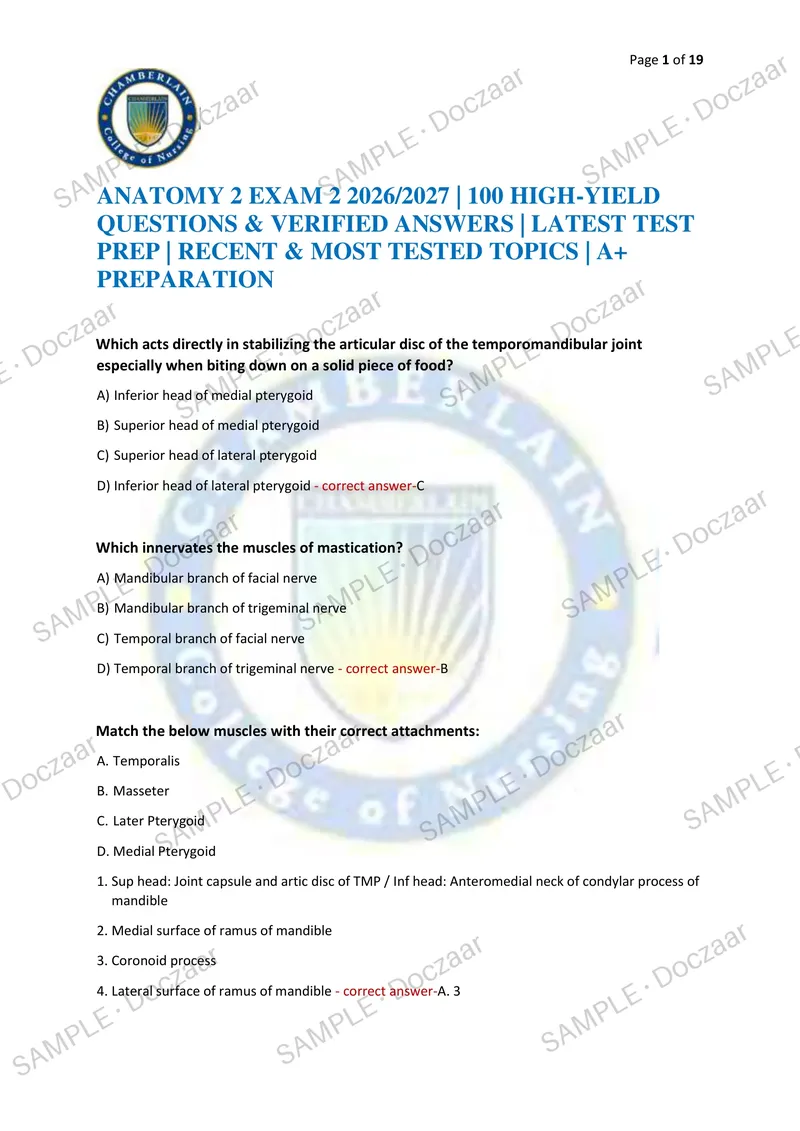
Key areas covered include the musculoskeletal functions of the temporomandibular joint, with questions targeting the specific roles of the medial and lateral pterygoid muscles. The document also addresses the innervation of the muscles of mastication, highlighting the mandibular branch of the trigeminal nerve as a critical component. Students will find value in the detailed matching exercises, which connect various muscles to their correct anatomical attachments.
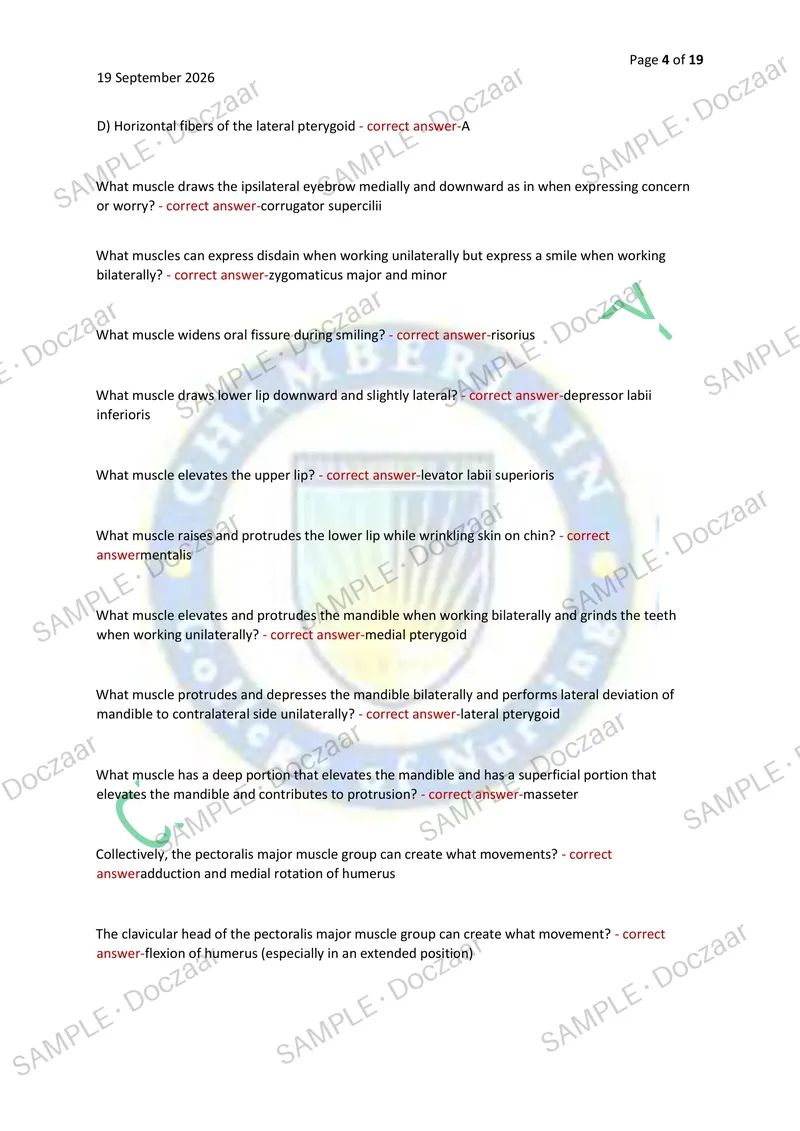
In addition to musculoskeletal topics, the document delves into facial expression muscles, identifying the functions of muscles such as the corrugator supercilii for expressing concern, the zygomaticus major and minor for smiling, and others like the risorius and depressor labii inferioris for widening the oral fissure and drawing the lower lip downward, respectively.
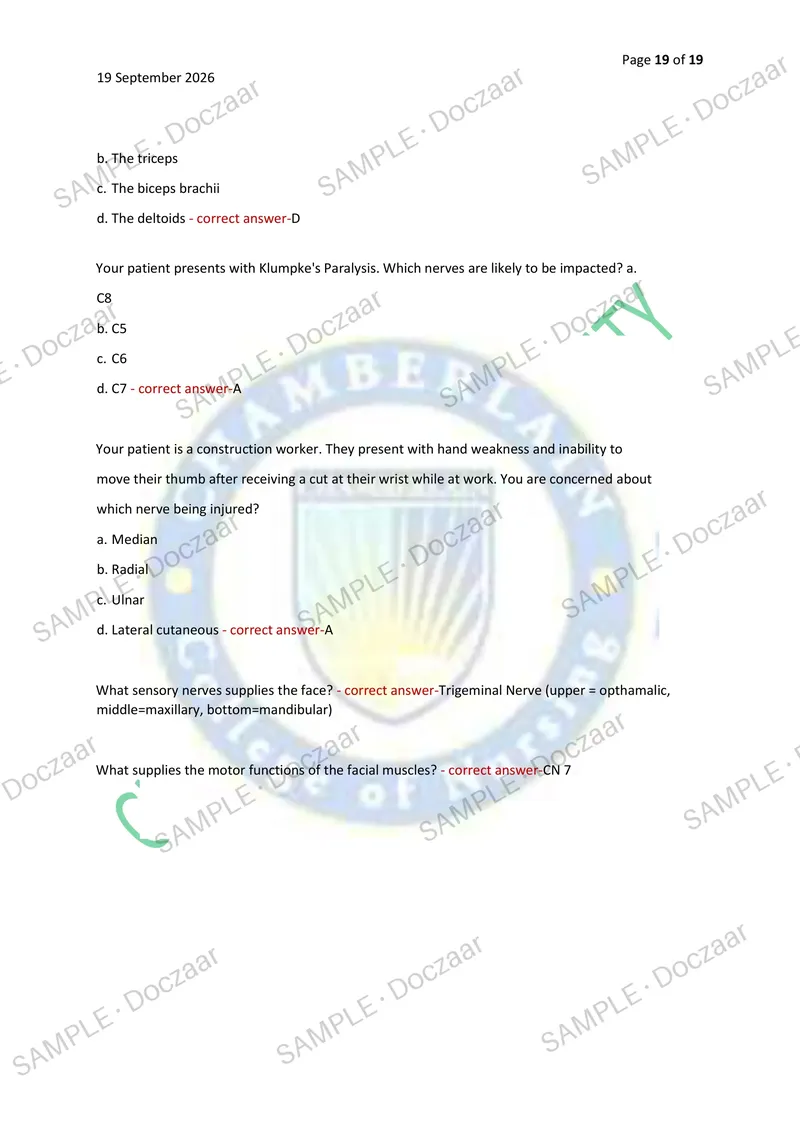
Further insights are provided into the movements facilitated by the pectoralis major muscle group, including adduction and medial rotation of the humerus, as well as the clavicular head's role in humeral flexion. For those addressing shoulder disorders, the document emphasizes muscle flexibility and strength training, particularly focusing on the trapezius, levator scapulae, and rhomboids.
Overall, this document is an invaluable tool for anatomy students seeking to enhance their understanding and performance in exams, offering a rich array of questions, answers, and explanations related to critical anatomical functions and structures.
Reviews
No reviews yet.
Be the first — reviews come from verified buyers.