BIOS-251 Exam 2 Review | Questions and | Anatomy and Physiology I | Latest Update
Click to enlarge Pages 2–6 · locked
Click to enlarge Pages 8–12 · locked
Click to enlarge Pages 14–19 · locked
Click to enlarge Pages 21–25 · locked
Click to enlarge
25 more pages in the full document
5 of 30 pages free to preview
PDF · 30 pages
About this document
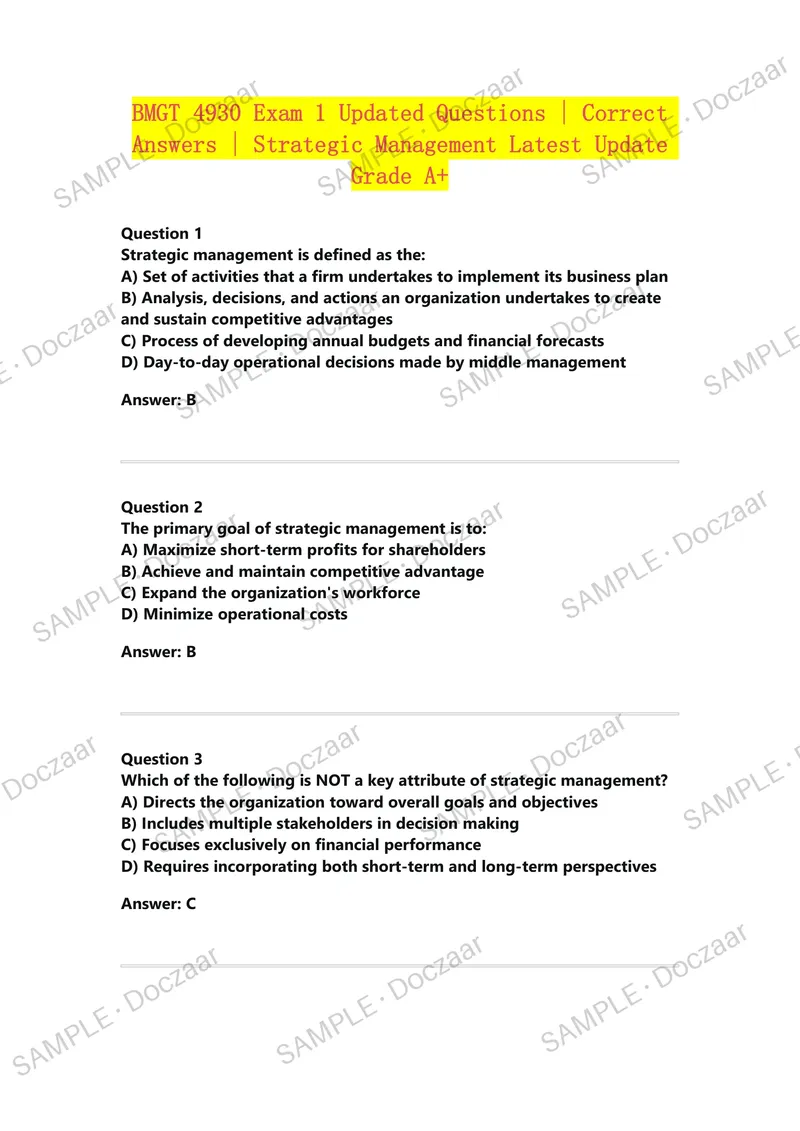
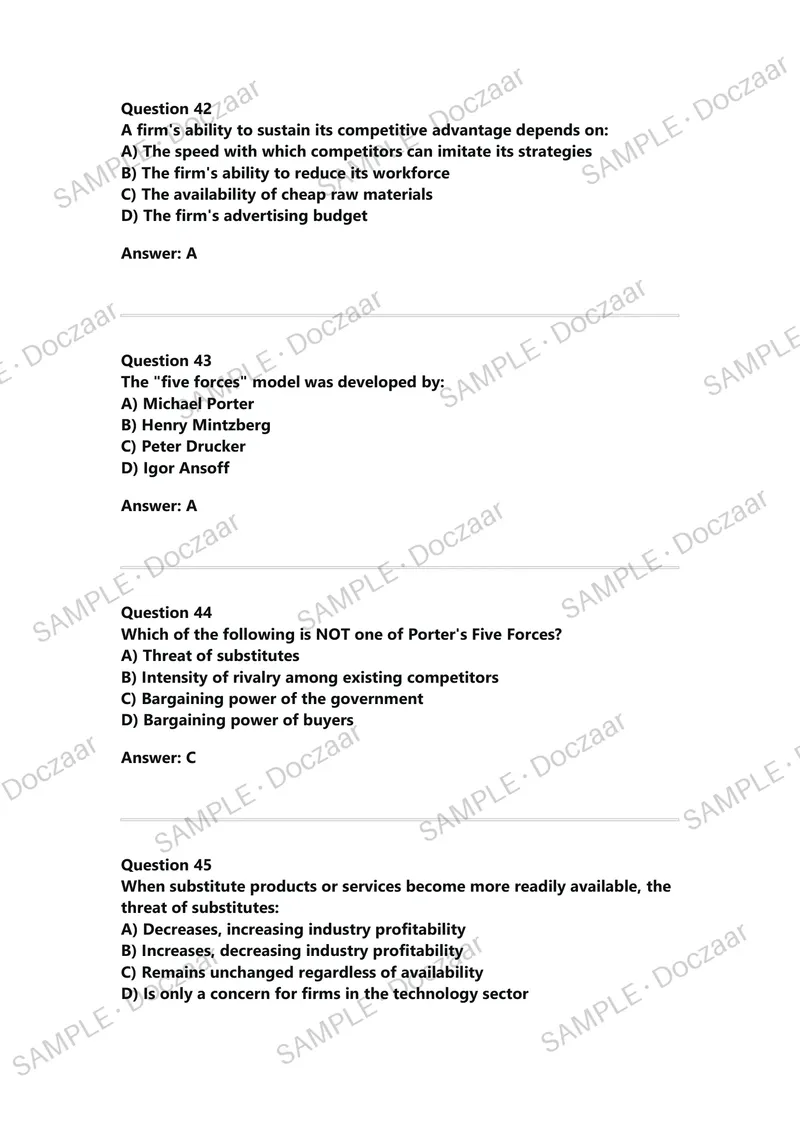
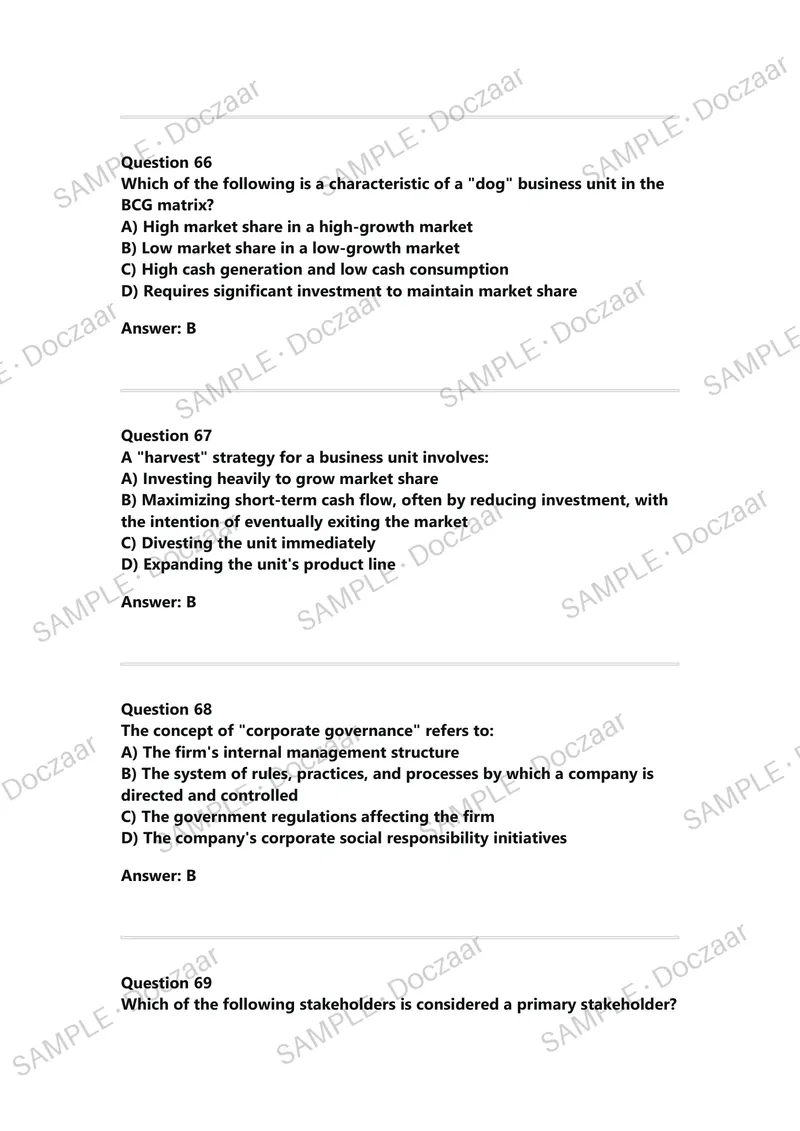
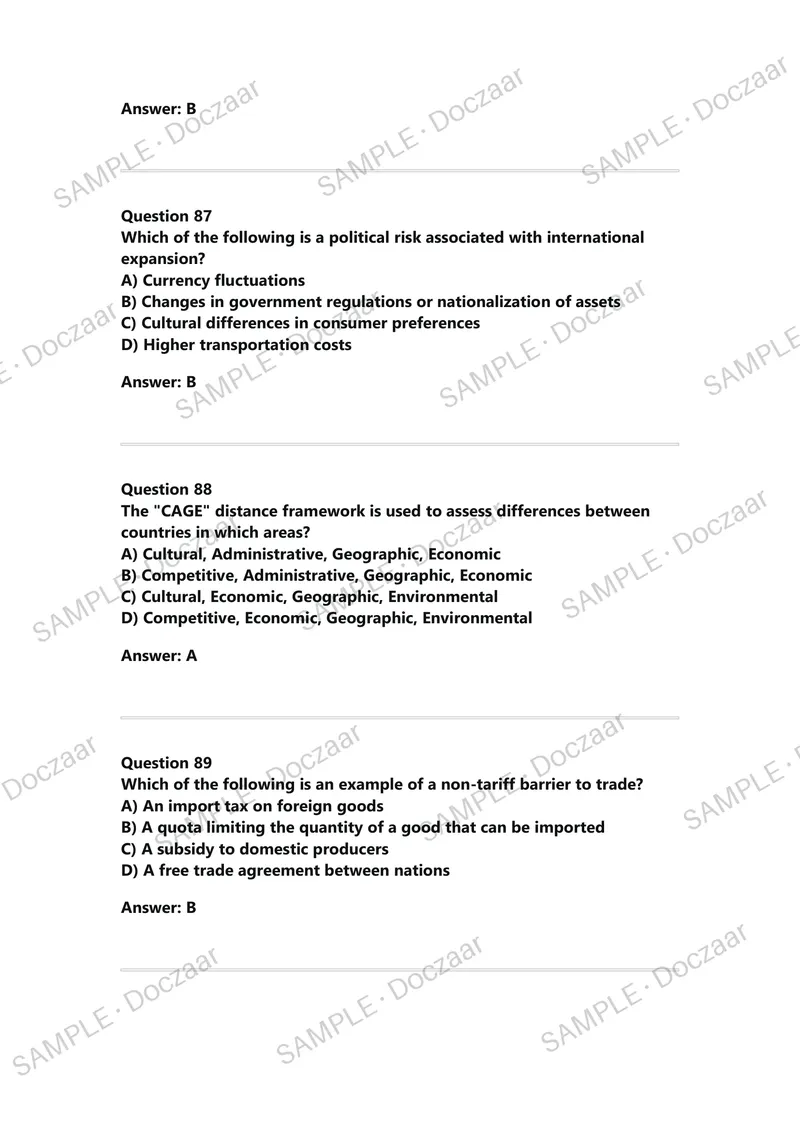
This document is a comprehensive guide for students preparing for the BMGT 4930 Exam 1, focusing on strategic management concepts. It provides updated questions and correct answers, ensuring students have the latest information on strategic management principles. The content covers key topics such as the definition of strategic management, which involves the analysis, decisions, and actions an organization undertakes to create and sustain competitive advantages.
The primary goal of strategic management is highlighted as achieving and maintaining competitive advantage. It also discusses the essential attributes of strategic management, such as directing the organization toward overall goals, involving multiple stakeholders, and balancing short- and long-term perspectives.
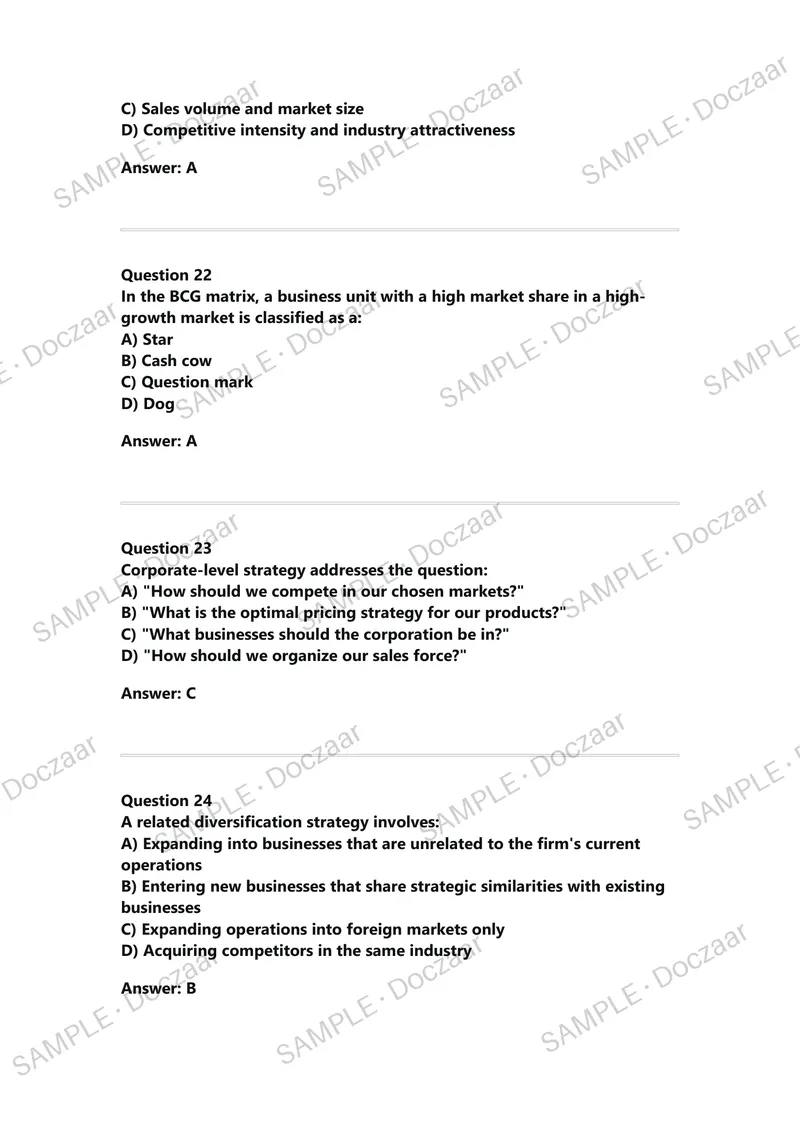
Students will learn about the BCG matrix, particularly the classification of business units with high market share in high-growth markets as "Stars." The document outlines corporate-level strategy by addressing which businesses a corporation should be in and explains related diversification strategies that involve entering new businesses sharing strategic similarities with existing ones.
Additionally, the guide discusses the factors affecting a firm's ability to sustain its competitive advantage, including the speed of strategy imitation by competitors. It introduces Michael Porter's "five forces" model, explaining key forces such as the threat of substitutes and the bargaining power of buyers. The concept of value creation is explained as generating sales revenues exceeding production costs, and benchmarking is defined as comparing a firm's processes and performance to industry leaders. Lastly, it distinguishes "threshold resources" as necessary but not providing a competitive advantage.
Reviews
No reviews yet.
Reviews come from people who bought the document.
Related documents
ATI RN Nutrition Proctored Exam with Questions and Verified Answers, 100% Guaranteed Pass With Appropriate Explanations
Walden University · Medicine
Exam Elaborations · 77 pages · PDFUndergraduate
Florida Nursing Home Administrator Exam (FL NHA) Practice Test Bank (2026 / 2027)REVIEW WITH COMPLETE REAL EXAM QUESTION
Walden University · Medicine
Exam Elaborations · 47 pages · PDFUndergraduate
4003 Variations Questions and Verified Answers, 100% Guarantee Pass Complete A+ Guide
Walden University · Medicine
Exam Elaborations · 72 pages · PDFUndergraduate
Advanced Life Support (ALS) Online Session Final Exam – New Questions and Verified Answers (2026 / 2027 Update)| Grad
Walden University · Medicine
Exam Elaborations · 35 pages · PDFUndergraduate
ALBERTA HEALTH CARE AIDE PROVINCIAL EXAM 250 Practice Questions & Detailed Answers CLHA AHRE | A+ GRADED
Walden University · Medicine
Exam Elaborations · 58 pages · PDFUndergraduate
ALF CORE TRAINING FLORIDA EXAM 2026/2027 ASSISTED LIVING FACILITY ADMINISTRATOR CERTIFICATION – FLORIDA AHCA | 200 VER
Walden University · Medicine
Exam Elaborations · 35 pages · PDFUndergraduate
ARKANSAS JURISPRUDENCE COUNSELING UPDATED STUDY GUIDE | ACTUAL EXAM WITH ACCURATE SOLUTIONS A+ GRADED!
Walden University · Medicine
Exam Elaborations · 169 pages · PDFUndergraduate
ATI PN Mental Health Proctored Exam 2026 NGN With Screenshots — Master Q&A Review
Walden University · Medicine
Exam Elaborations · 42 pages · PDFUndergraduate