BIOS-251 Exam 2 Review | Questions and | Anatomy and Physiology I | Latest Update
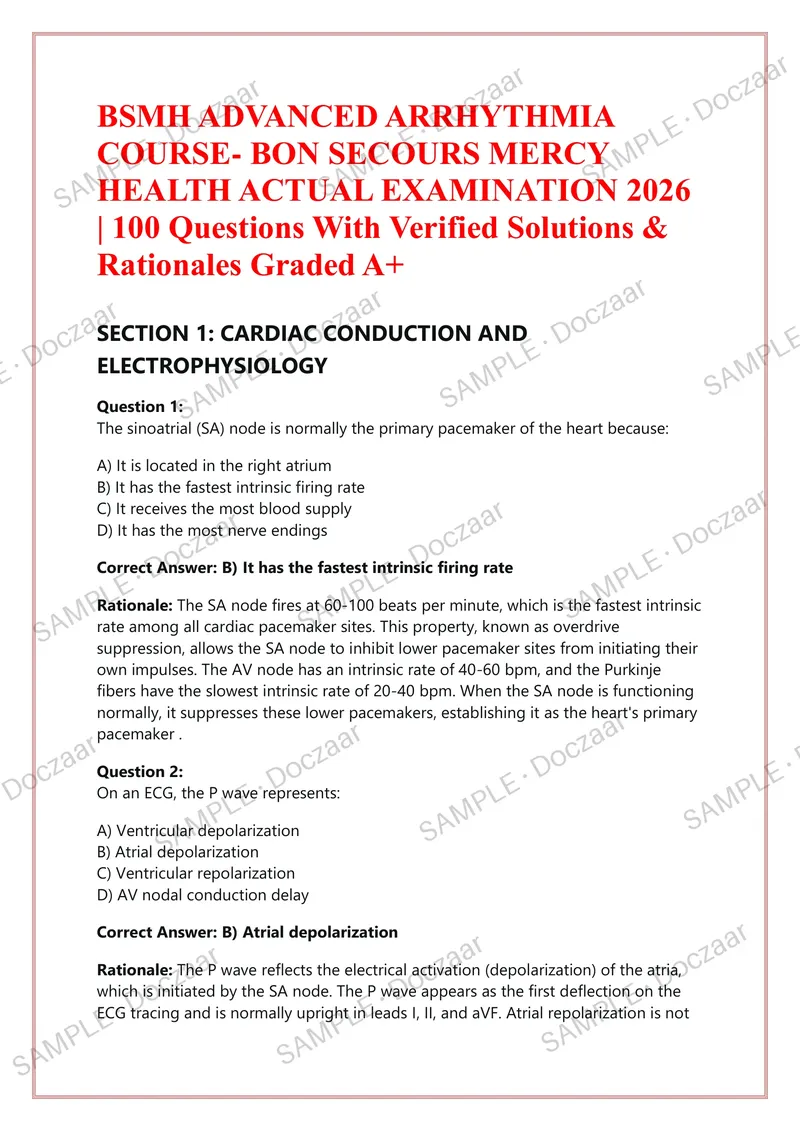
Click to enlarge Pages 2–4 · locked
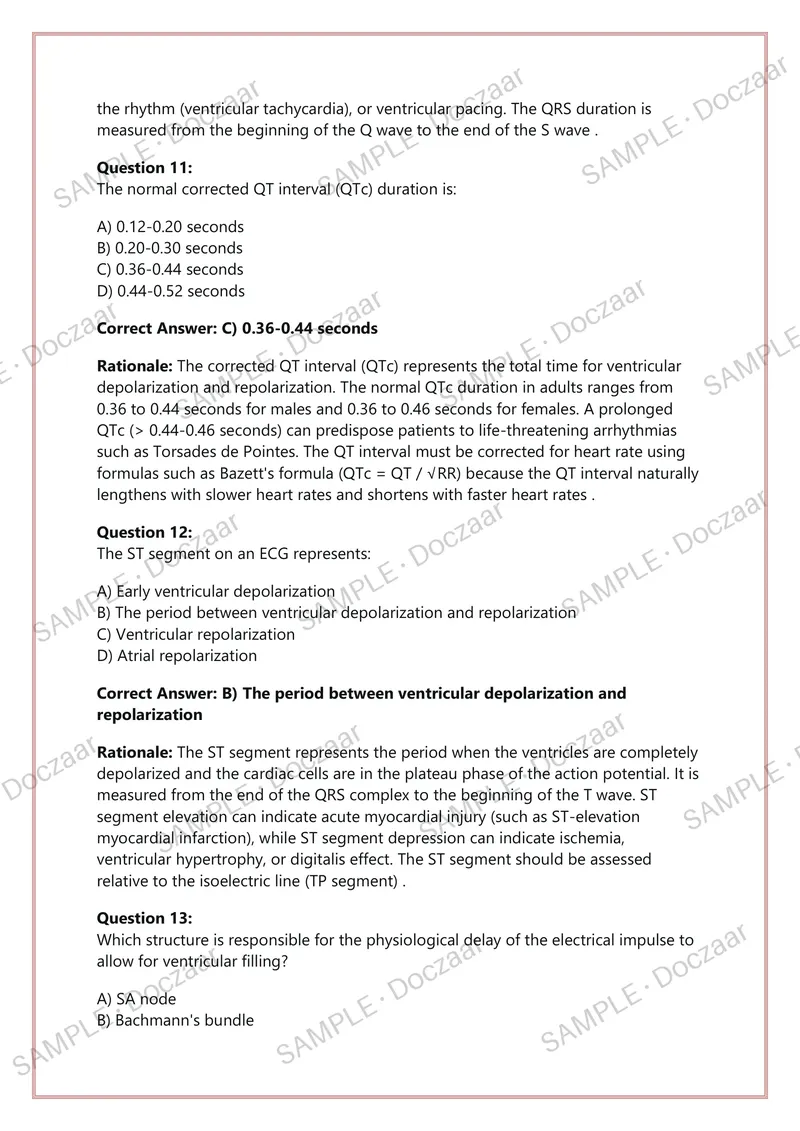
Click to enlarge Pages 6–11 · locked
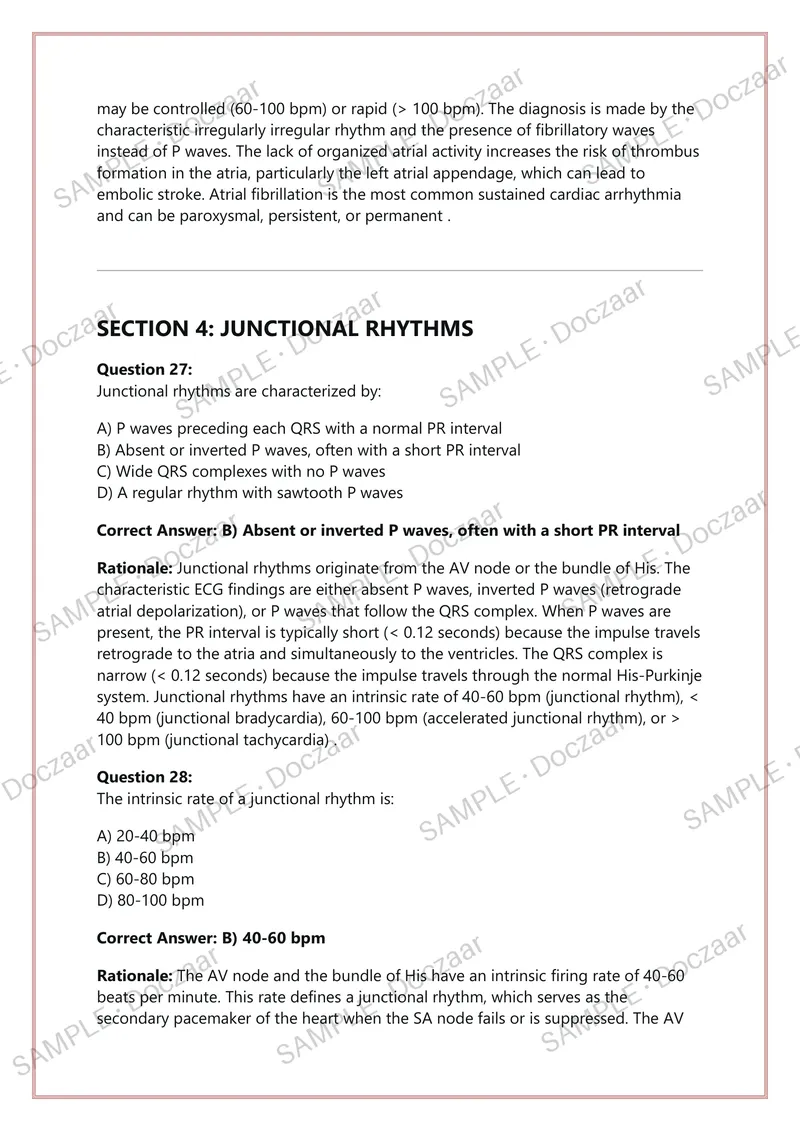
Click to enlarge Pages 13–15 · locked
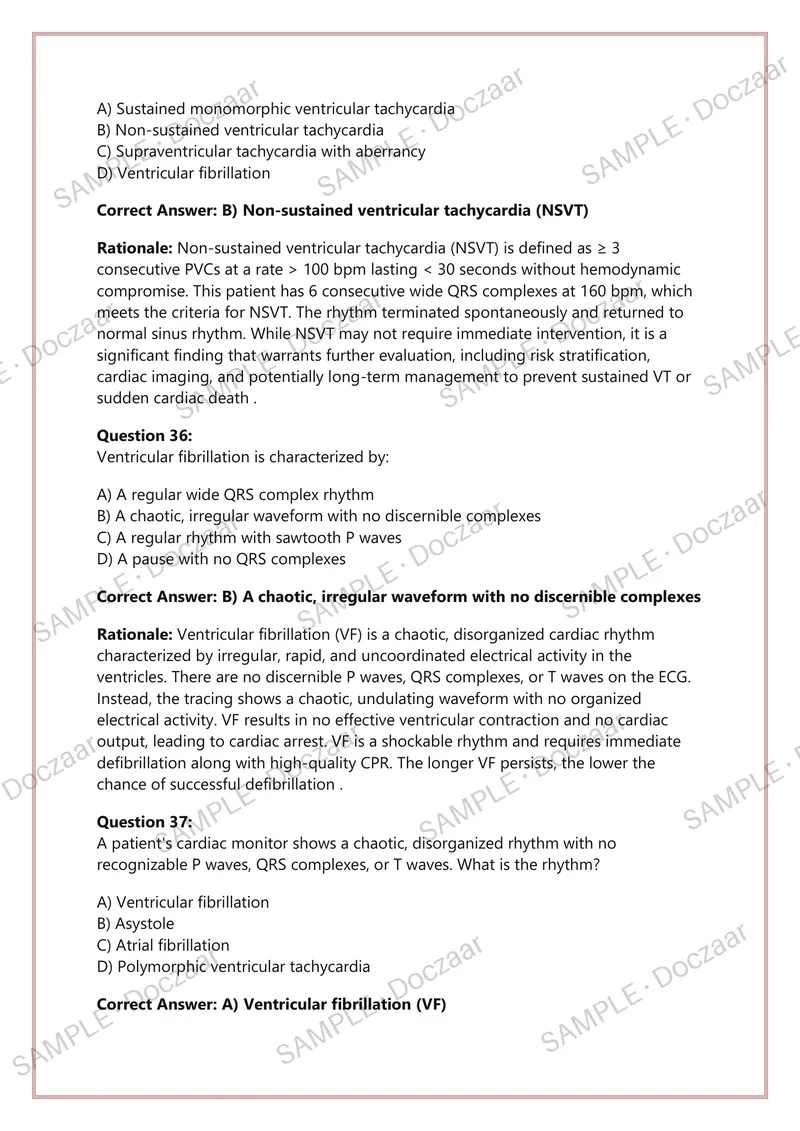
Click to enlarge Pages 17–25 · locked
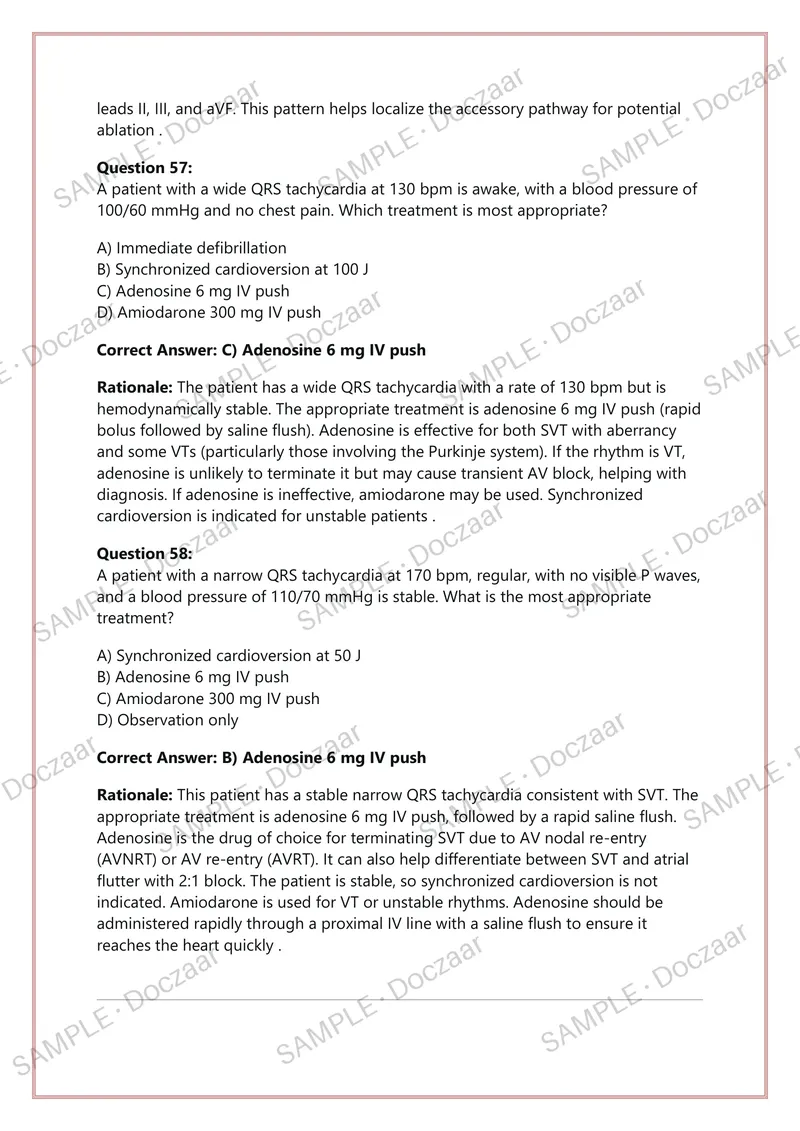
Click to enlarge Pages 27–33 · locked
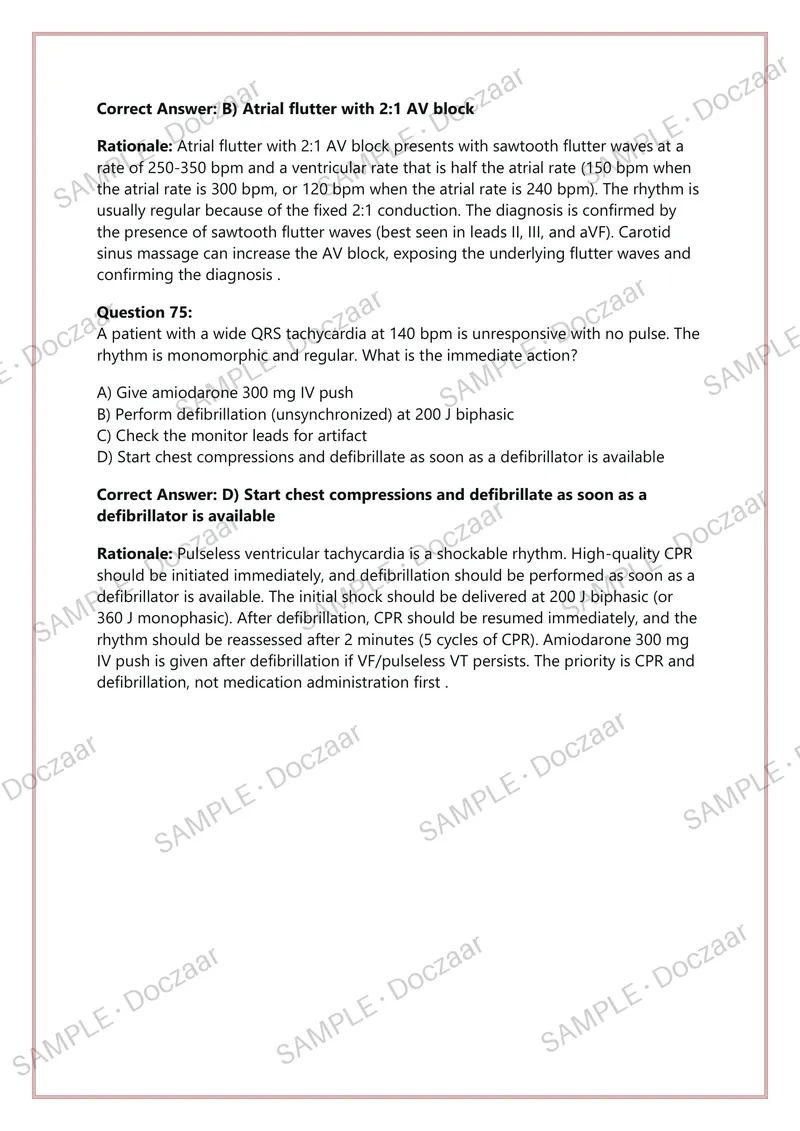
Click to enlarge
28 more pages in the full document
6 of 34 pages free to preview
PDF · 34 pages
About this document
The BSMH Advanced Arrhythmia Course, developed by Bon Secours Mercy Health, is an expertly crafted resource designed to deepen the understanding of cardiac conduction and electrophysiology among healthcare professionals. This comprehensive examination contains 100 multiple-choice questions, each accompanied by verified solutions and detailed rationales. It is an ideal preparation tool for students and practitioners aiming to excel in the field of cardiology, particularly in diagnosing and managing arrhythmias.
The document primarily covers key concepts such as the role and function of the sinoatrial node, the interpretation of ECG waveforms, and definitions of various heart rhythms including normal sinus rhythm, sinus bradycardia, and sinus tachycardia. Each section is structured to enhance learning by providing a question, followed by possible answers, the correct choice, and an explanation that reinforces the fundamental principles of cardiology.
For instance, one question explains why the sinoatrial node acts as the heart’s primary pacemaker due to its fastest intrinsic firing rate, a property known as overdrive suppression. Another question clarifies that the P wave on an ECG corresponds to atrial depolarization. Additionally, the document discusses the characteristics of sinus bradycardia and sinus tachycardia, including their clinical implications and potential treatments.
This exam is a valuable educational tool for students pursuing careers in healthcare, offering a thorough grounding in arrhythmia recognition and management. It is also a perfect keyword-rich document for SEO, targeting terms like "cardiac conduction," "ECG interpretation," "arrhythmia management," and "advanced arrhythmia course."
Reviews
No reviews yet.
Reviews come from people who bought the document.
Related documents
ATI RN Nutrition Proctored Exam with Questions and Verified Answers, 100% Guaranteed Pass With Appropriate Explanations
Walden University · Medicine
Exam Elaborations · 77 pages · PDFUndergraduate
Florida Nursing Home Administrator Exam (FL NHA) Practice Test Bank (2026 / 2027)REVIEW WITH COMPLETE REAL EXAM QUESTION
Walden University · Medicine
Exam Elaborations · 47 pages · PDFUndergraduate
4003 Variations Questions and Verified Answers, 100% Guarantee Pass Complete A+ Guide
Walden University · Medicine
Exam Elaborations · 72 pages · PDFUndergraduate
Advanced Life Support (ALS) Online Session Final Exam – New Questions and Verified Answers (2026 / 2027 Update)| Grad
Walden University · Medicine
Exam Elaborations · 35 pages · PDFUndergraduate
ALBERTA HEALTH CARE AIDE PROVINCIAL EXAM 250 Practice Questions & Detailed Answers CLHA AHRE | A+ GRADED
Walden University · Medicine
Exam Elaborations · 58 pages · PDFUndergraduate
ALF CORE TRAINING FLORIDA EXAM 2026/2027 ASSISTED LIVING FACILITY ADMINISTRATOR CERTIFICATION – FLORIDA AHCA | 200 VER
Walden University · Medicine
Exam Elaborations · 35 pages · PDFUndergraduate
ARKANSAS JURISPRUDENCE COUNSELING UPDATED STUDY GUIDE | ACTUAL EXAM WITH ACCURATE SOLUTIONS A+ GRADED!
Walden University · Medicine
Exam Elaborations · 169 pages · PDFUndergraduate
ATI PN Mental Health Proctored Exam 2026 NGN With Screenshots — Master Q&A Review
Walden University · Medicine
Exam Elaborations · 42 pages · PDFUndergraduate