BIOS-251 Exam 2 Review | Questions and | Anatomy and Physiology I | Latest Update
Click to enlarge Pages 2–9 · locked
Click to enlarge Pages 11–18 · locked
Click to enlarge
17 more pages in the full document
3 of 20 pages free to preview
PDF · 20 pages
About this document
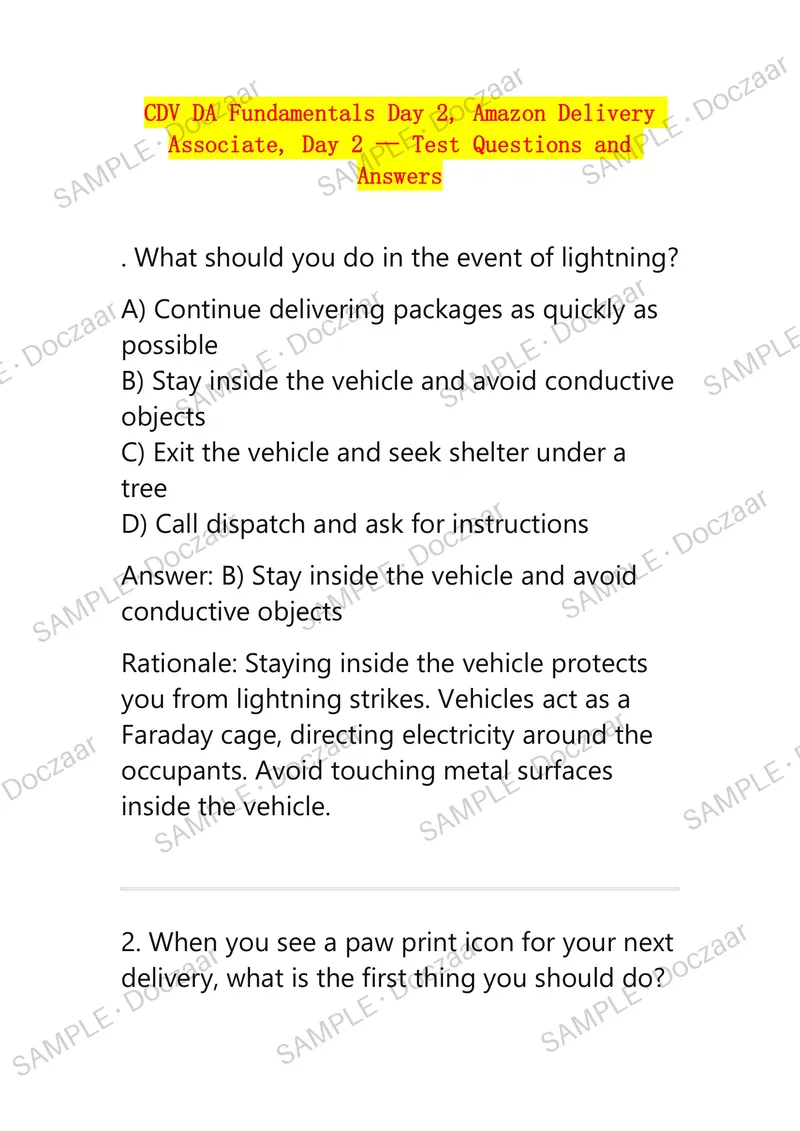
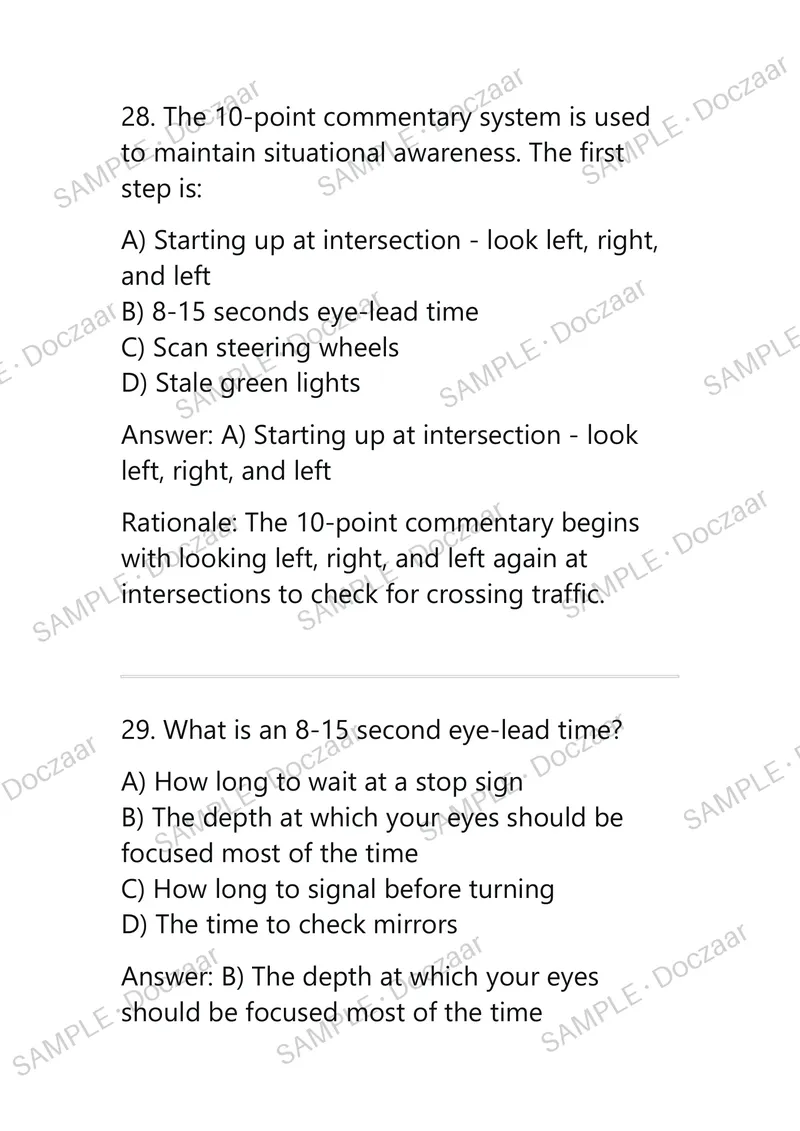
This document covers essential test questions and answers for Amazon Delivery Associates on their second day of training, focusing on safety and efficiency in package delivery. Key topics include safety protocols, such as the recommended actions during lightning storms, where associates should stay inside their vehicles to avoid conductive objects. This approach utilizes vehicles as a Faraday cage to protect against lightning strikes.
The document also emphasizes the importance of customer communication, particularly when identifying delivery issues indicated by paw print icons, and the process for handling situations like malfunctioning garage doors. In such cases, associates are advised to select the "door didn't close" option and contact support to ensure customer property security and proper issue documentation.
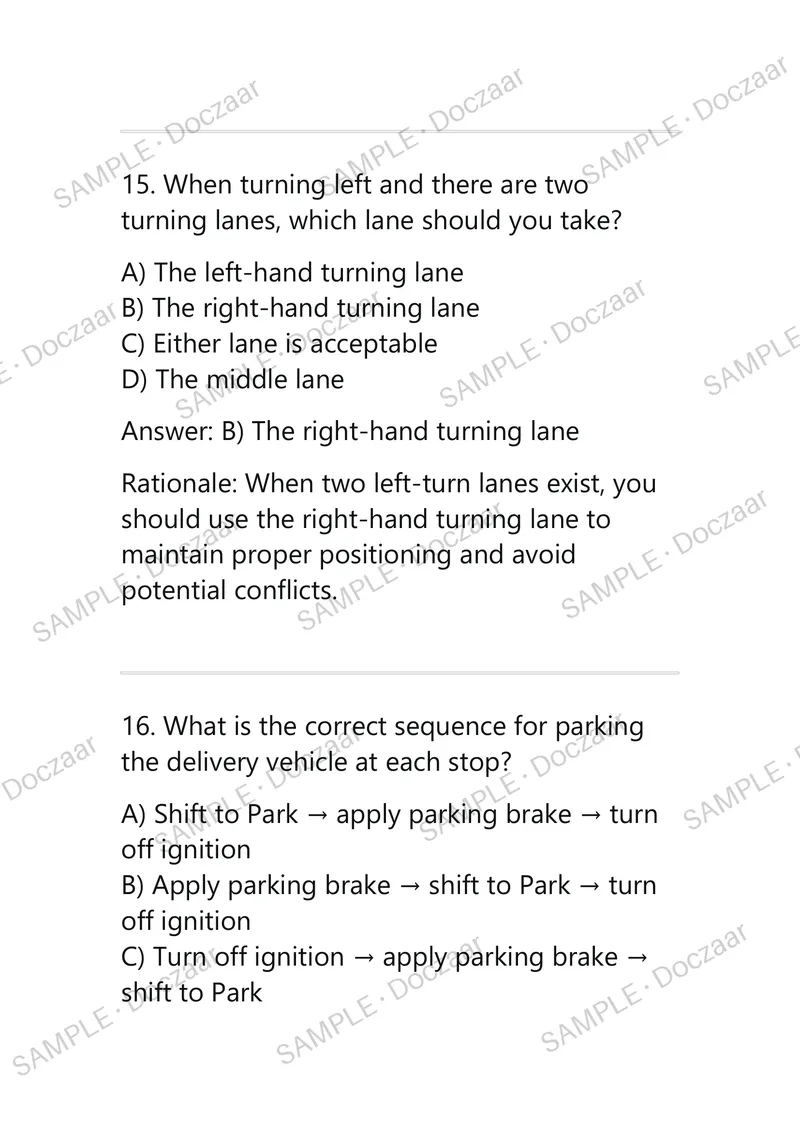
Furthermore, the document highlights the use of the Mentor app to monitor safe driving behaviors by tracking actions like harsh braking and acceleration, promoting safe driving habits. It outlines the recommended minimum following distance for highway driving, which is 6-8 seconds at speeds over 30 mph, to maintain adequate stopping distance.
Additionally, the guide specifies the weight threshold for using team lifts or mechanical assistance to prevent injury, set at packages over 50 lbs. It also covers vehicle operation and inspection protocols, including efficient package organization using driver aid numbers and sort zones marked by yellow stickers, to streamline delivery sequences and reduce errors.
Reviews
No reviews yet.
Reviews come from people who bought the document.
Related documents
ATI RN Nutrition Proctored Exam with Questions and Verified Answers, 100% Guaranteed Pass With Appropriate Explanations
Walden University · Medicine
Exam Elaborations · 77 pages · PDFUndergraduate
Florida Nursing Home Administrator Exam (FL NHA) Practice Test Bank (2026 / 2027)REVIEW WITH COMPLETE REAL EXAM QUESTION
Walden University · Medicine
Exam Elaborations · 47 pages · PDFUndergraduate
4003 Variations Questions and Verified Answers, 100% Guarantee Pass Complete A+ Guide
Walden University · Medicine
Exam Elaborations · 72 pages · PDFUndergraduate
Advanced Life Support (ALS) Online Session Final Exam – New Questions and Verified Answers (2026 / 2027 Update)| Grad
Walden University · Medicine
Exam Elaborations · 35 pages · PDFUndergraduate
ALBERTA HEALTH CARE AIDE PROVINCIAL EXAM 250 Practice Questions & Detailed Answers CLHA AHRE | A+ GRADED
Walden University · Medicine
Exam Elaborations · 58 pages · PDFUndergraduate
ALF CORE TRAINING FLORIDA EXAM 2026/2027 ASSISTED LIVING FACILITY ADMINISTRATOR CERTIFICATION – FLORIDA AHCA | 200 VER
Walden University · Medicine
Exam Elaborations · 35 pages · PDFUndergraduate
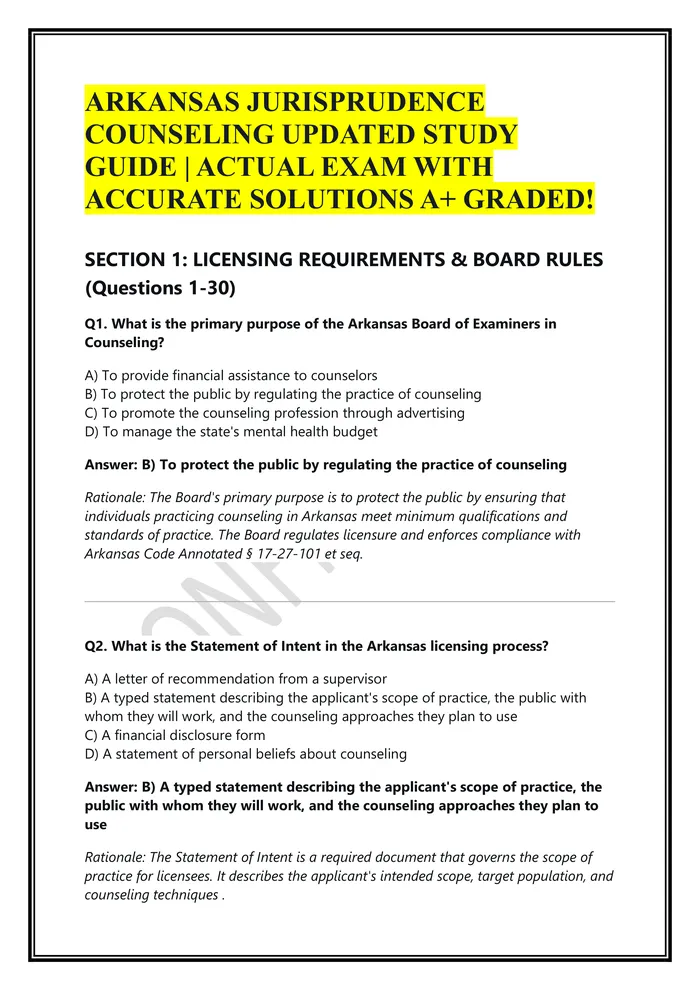
ARKANSAS JURISPRUDENCE COUNSELING UPDATED STUDY GUIDE | ACTUAL EXAM WITH ACCURATE SOLUTIONS A+ GRADED!
Walden University · Medicine
Exam Elaborations · 169 pages · PDFUndergraduate
ATI PN Mental Health Proctored Exam 2026 NGN With Screenshots — Master Q&A Review
Walden University · Medicine
Exam Elaborations · 42 pages · PDFUndergraduate