BIOS-251 Exam 2 Review | Questions and | Anatomy and Physiology I | Latest Update
Click to enlarge Pages 2–4 · locked
Click to enlarge Pages 6–8 · locked
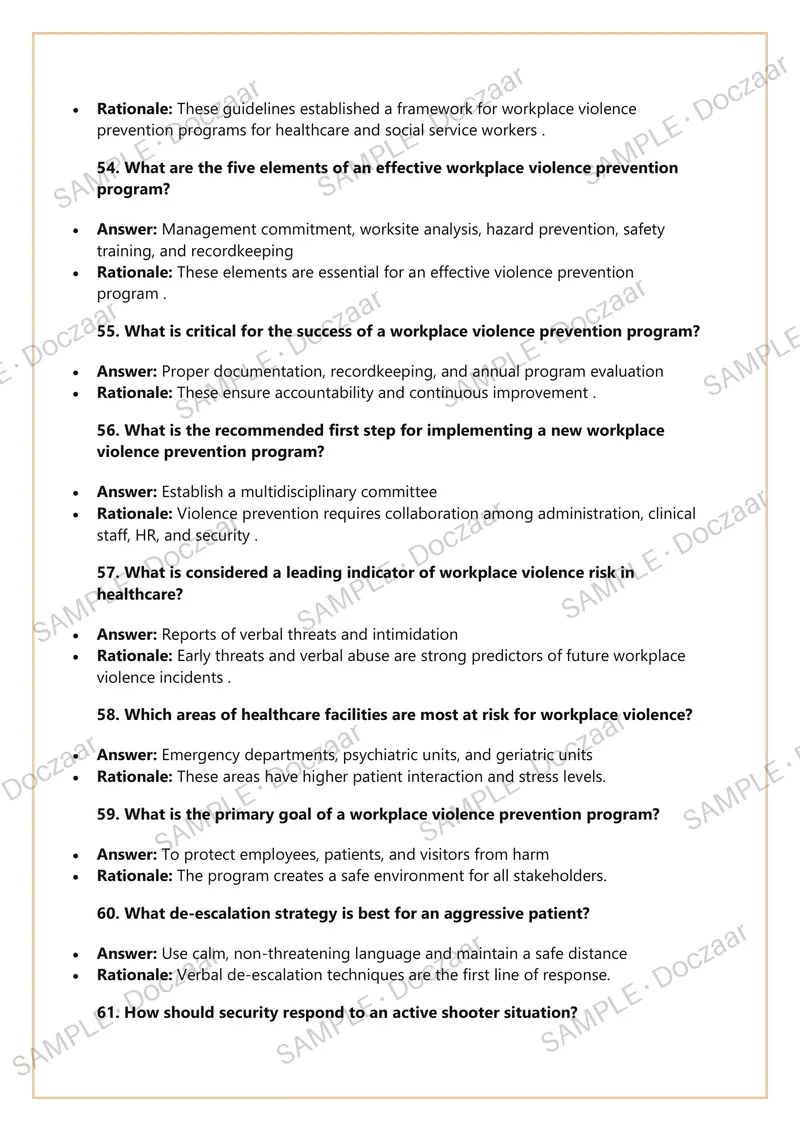
Click to enlarge Pages 10–19 · locked
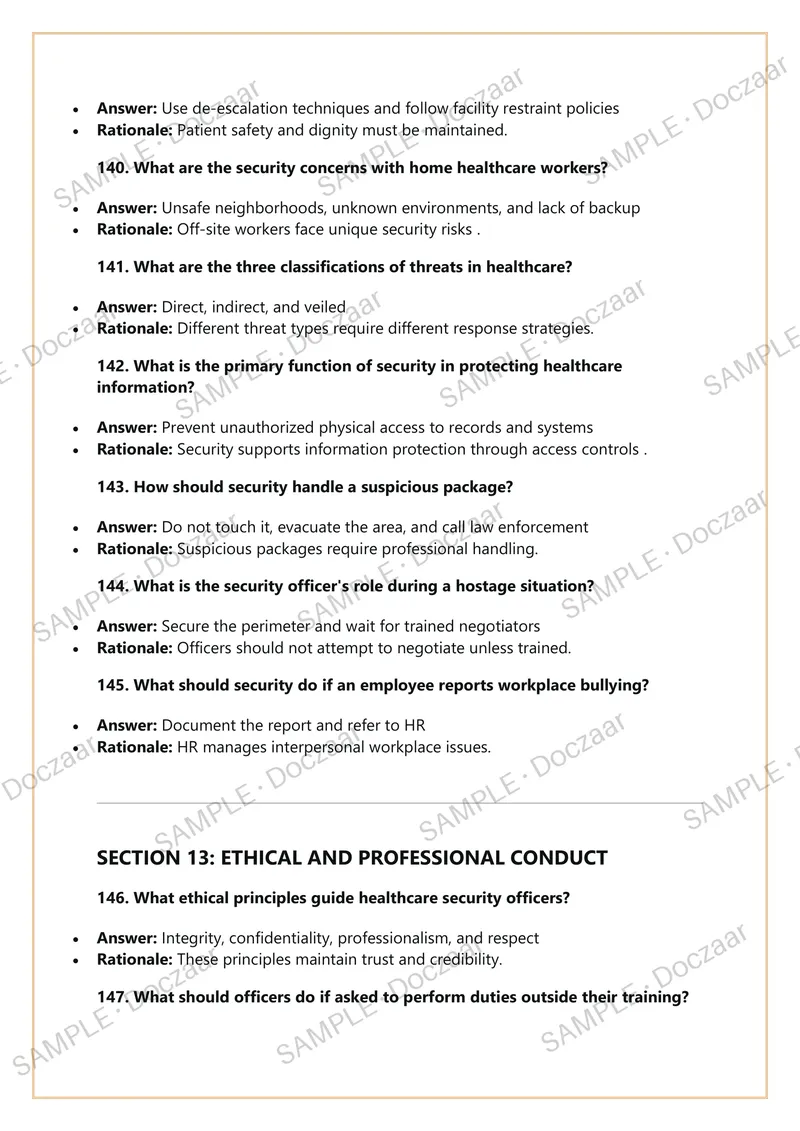
Click to enlarge Pages 21–26 · locked
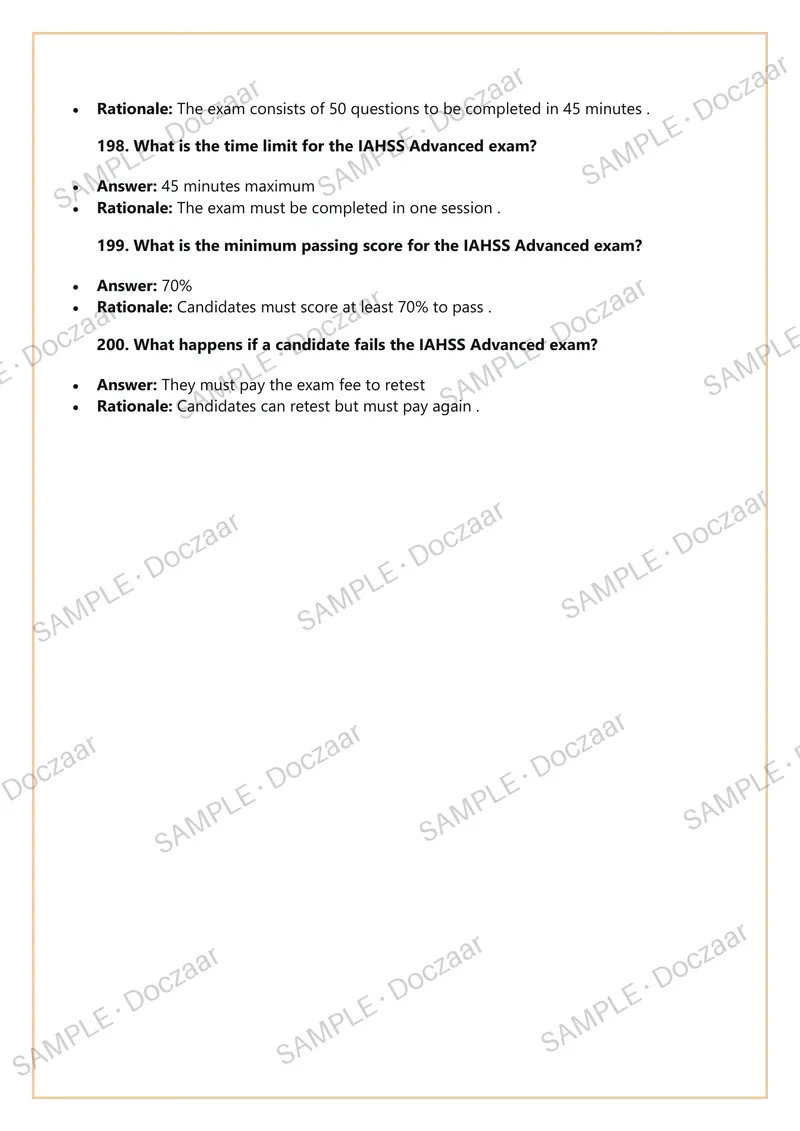
Click to enlarge
22 more pages in the full document
5 of 27 pages free to preview
PDF · 27 pages
About this document
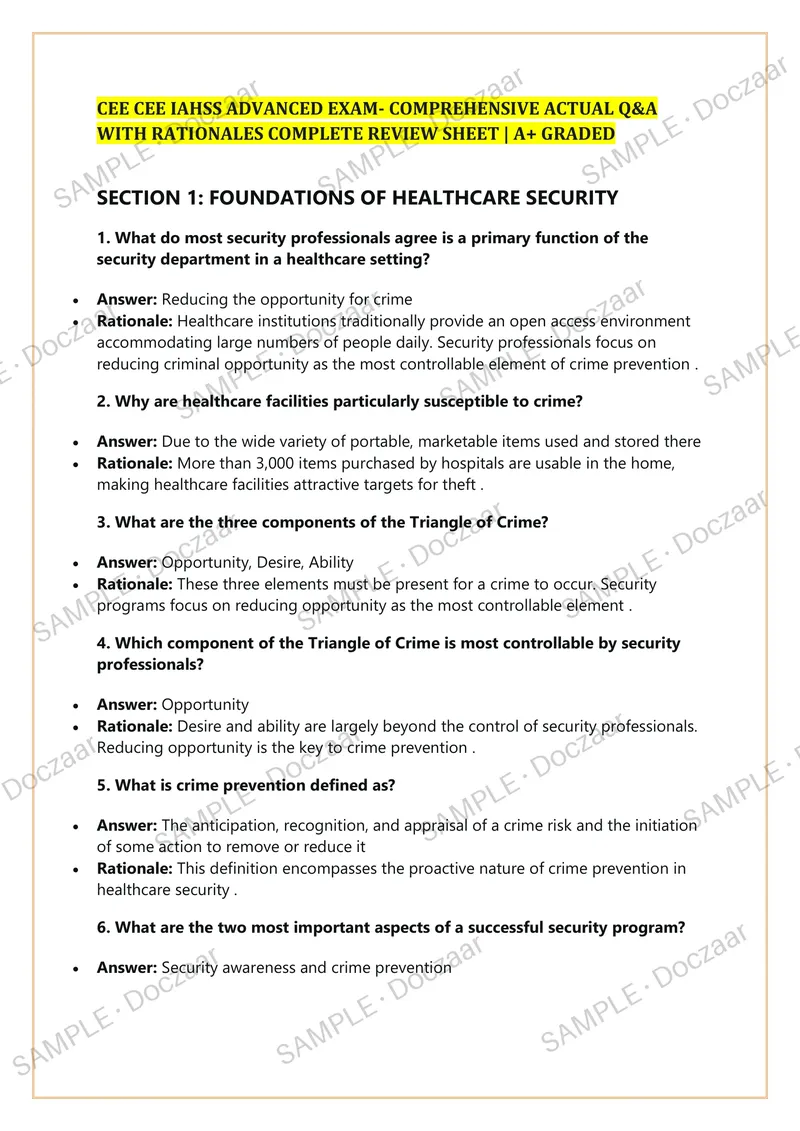
This comprehensive review sheet is designed for students preparing for the CEE CEE IAHSS Advanced Exam in healthcare security. It provides actual questions and answers with detailed rationales to help learners understand key concepts in healthcare security. The document is divided into various sections, focusing primarily on the foundations of healthcare security and the unique challenges that healthcare institutions face.
The first section explores the primary functions of security departments, emphasizing crime prevention as a central goal. It discusses the Triangle of Crime, which includes opportunity, desire, and ability, and highlights opportunity as the most controllable element by security professionals. The document defines crime prevention as the anticipation and reduction of crime risks, focusing on proactive measures in a healthcare setting.
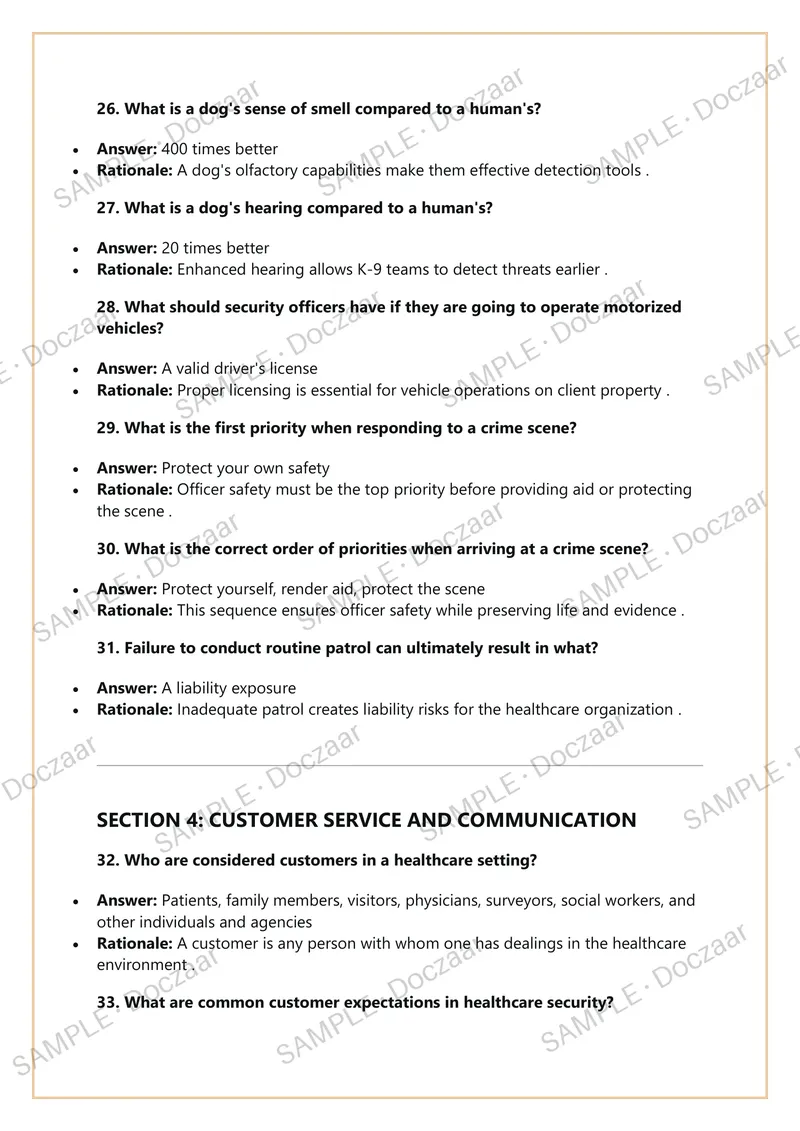
Additionally, the text covers important aspects of successful security programs, such as security awareness and crime prevention strategies, alongside customer service skills crucial for security personnel. It underscores the significant role of non-verbal communication, noting that 93% of communication is body language. The importance of maintaining a positive customer service attitude is highlighted, as a poor attitude can lead to a loss of customers.
The document also introduces the Fish Philosophy, which includes principles like "Choose your attitude" and "Make their day," aiming to foster positive interactions and a supportive workplace culture. Key traits for security personnel in delivering good customer service are outlined, and the importance of access control in sensitive areas like pharmacies and emergency departments is discussed. Immediate response to lost keys or access cards is stressed to prevent unauthorized access, emphasizing the vulnerabilities of traditional lock and key systems.
Reviews
No reviews yet.
Reviews come from people who bought the document.
Related documents
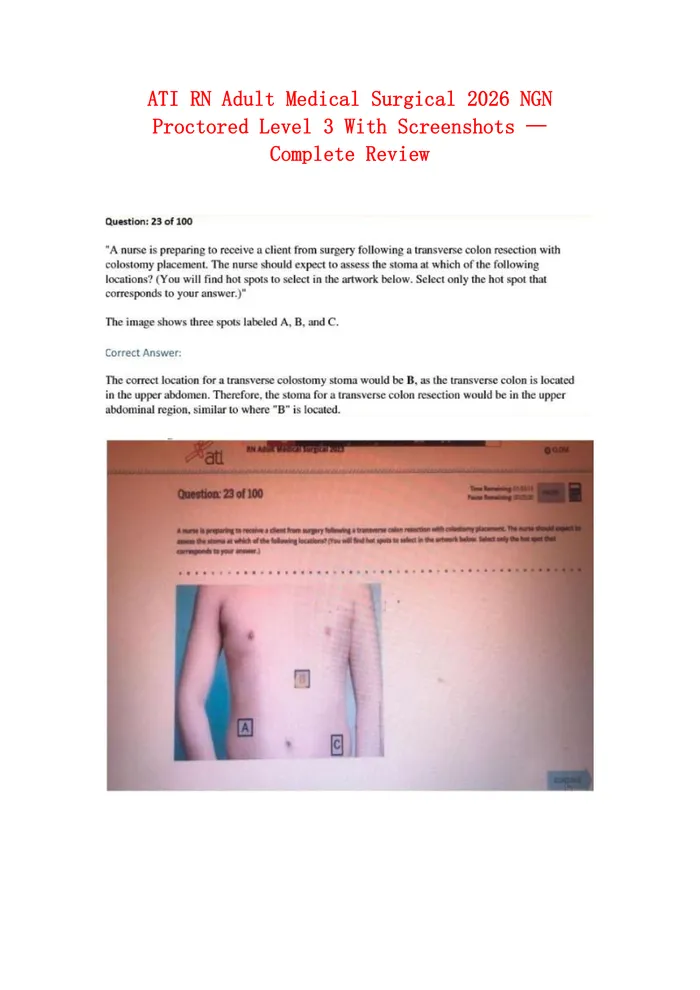
ATI RN Nutrition Proctored Exam with Questions and Verified Answers, 100% Guaranteed Pass With Appropriate Explanations
Walden University · Medicine
Exam Elaborations · 77 pages · PDFUndergraduate
Florida Nursing Home Administrator Exam (FL NHA) Practice Test Bank (2026 / 2027)REVIEW WITH COMPLETE REAL EXAM QUESTION
Walden University · Medicine
Exam Elaborations · 47 pages · PDFUndergraduate
4003 Variations Questions and Verified Answers, 100% Guarantee Pass Complete A+ Guide
Walden University · Medicine
Exam Elaborations · 72 pages · PDFUndergraduate
Advanced Life Support (ALS) Online Session Final Exam – New Questions and Verified Answers (2026 / 2027 Update)| Grad
Walden University · Medicine
Exam Elaborations · 35 pages · PDFUndergraduate
ALBERTA HEALTH CARE AIDE PROVINCIAL EXAM 250 Practice Questions & Detailed Answers CLHA AHRE | A+ GRADED
Walden University · Medicine
Exam Elaborations · 58 pages · PDFUndergraduate
ALF CORE TRAINING FLORIDA EXAM 2026/2027 ASSISTED LIVING FACILITY ADMINISTRATOR CERTIFICATION – FLORIDA AHCA | 200 VER
Walden University · Medicine
Exam Elaborations · 35 pages · PDFUndergraduate
ARKANSAS JURISPRUDENCE COUNSELING UPDATED STUDY GUIDE | ACTUAL EXAM WITH ACCURATE SOLUTIONS A+ GRADED!
Walden University · Medicine
Exam Elaborations · 169 pages · PDFUndergraduate
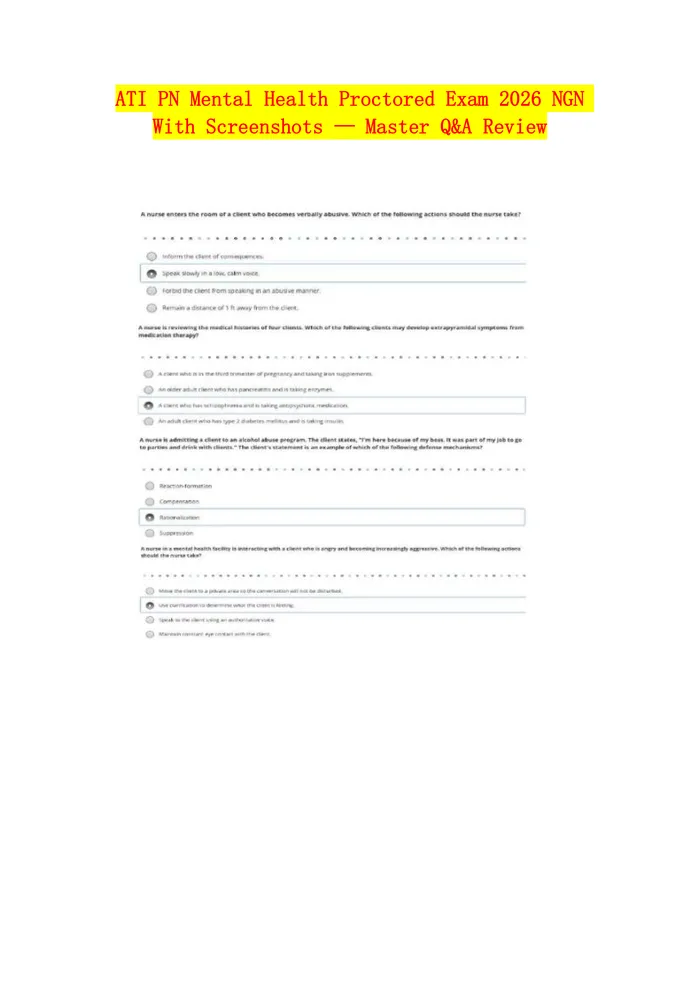
ATI PN Mental Health Proctored Exam 2026 NGN With Screenshots — Master Q&A Review
Walden University · Medicine
Exam Elaborations · 42 pages · PDFUndergraduate