BIOS-251 Exam 2 Review | Questions and | Anatomy and Physiology I | Latest Update
Click to enlarge Pages 2–5 · locked
Click to enlarge Pages 7–17 · locked
Click to enlarge Pages 19–21 · locked
Click to enlarge Pages 23–38 · locked
Click to enlarge Pages 40–49 · locked
Click to enlarge Pages 51–58 · locked
Click to enlarge Pages 60–65 · locked
Click to enlarge
62 more pages in the full document
8 of 70 pages free to preview
PDF · 70 pages
About this document
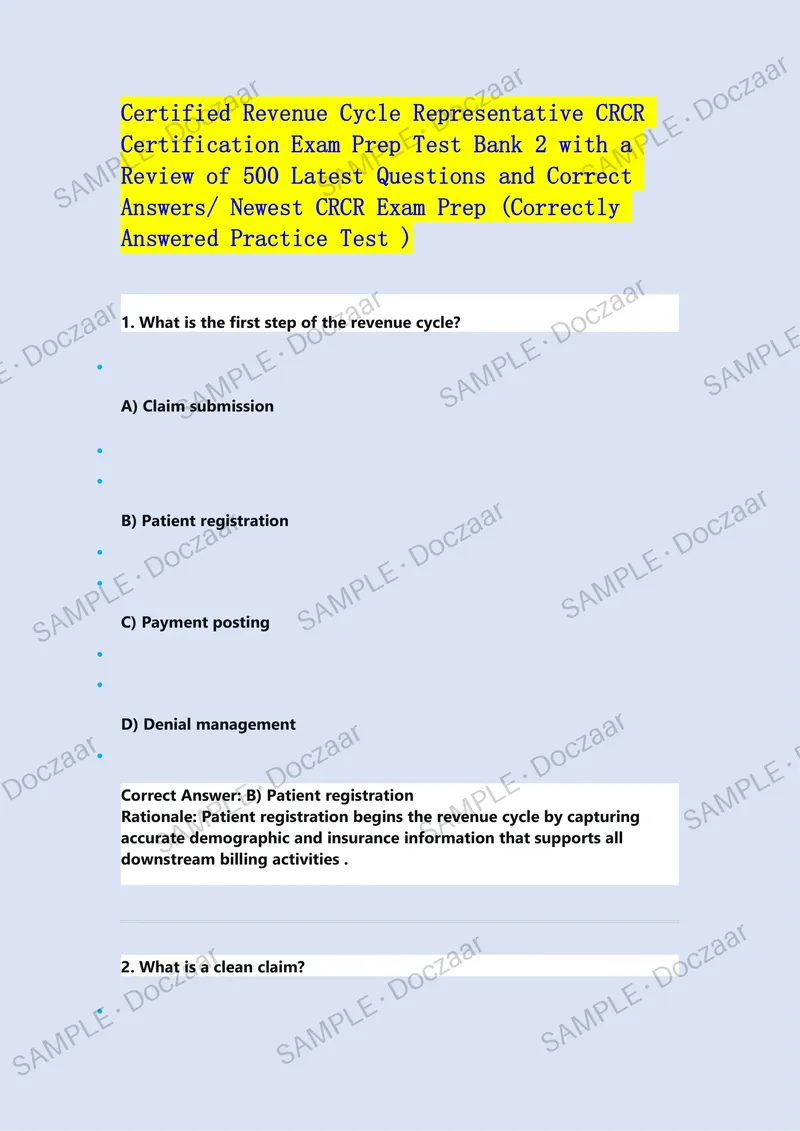
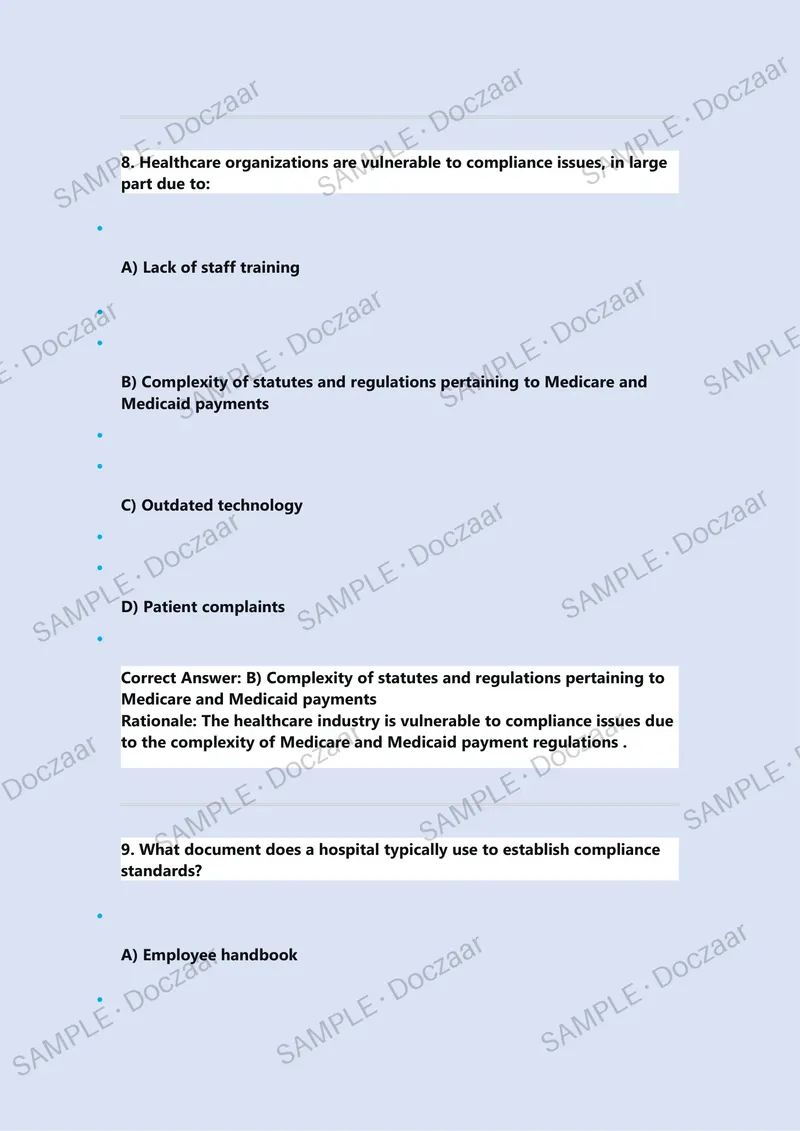
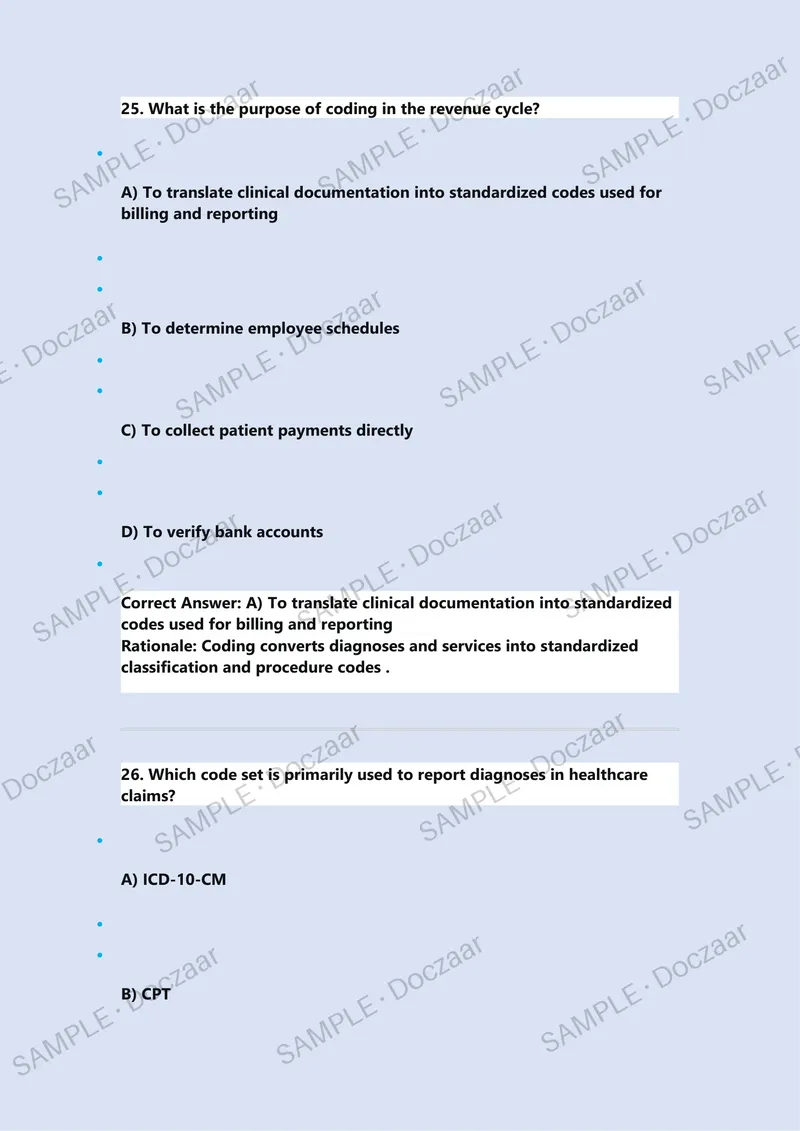
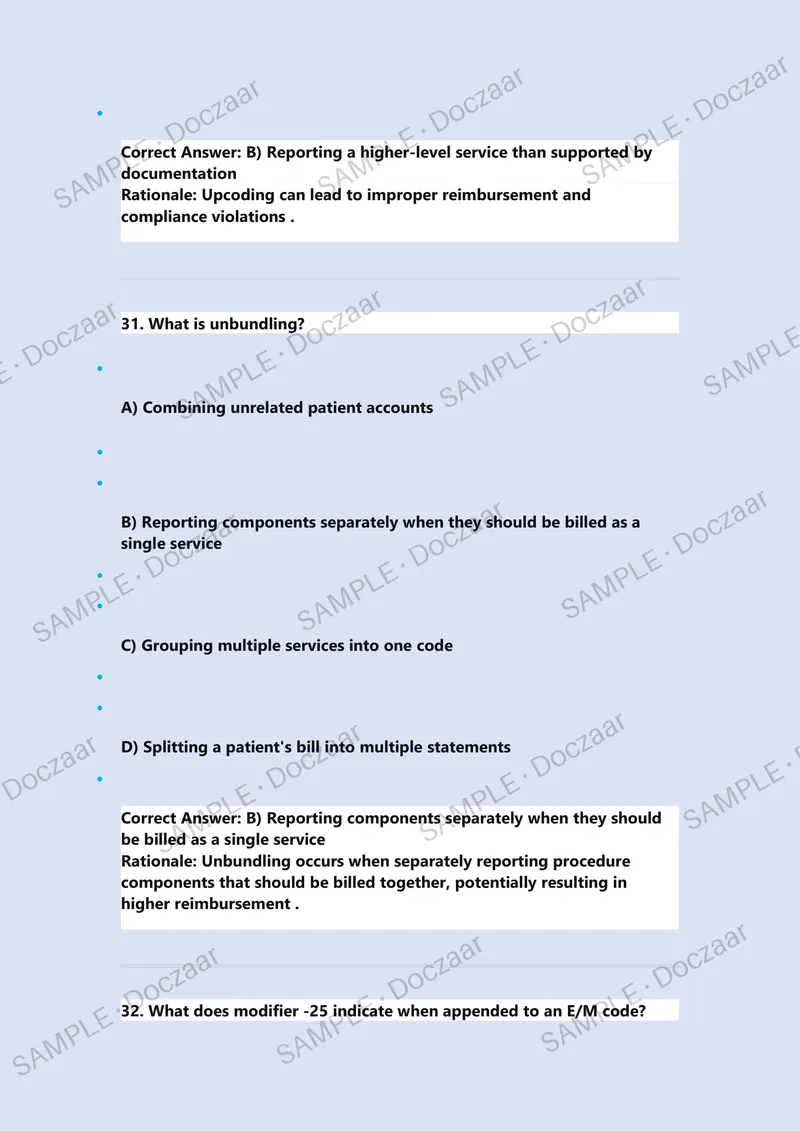
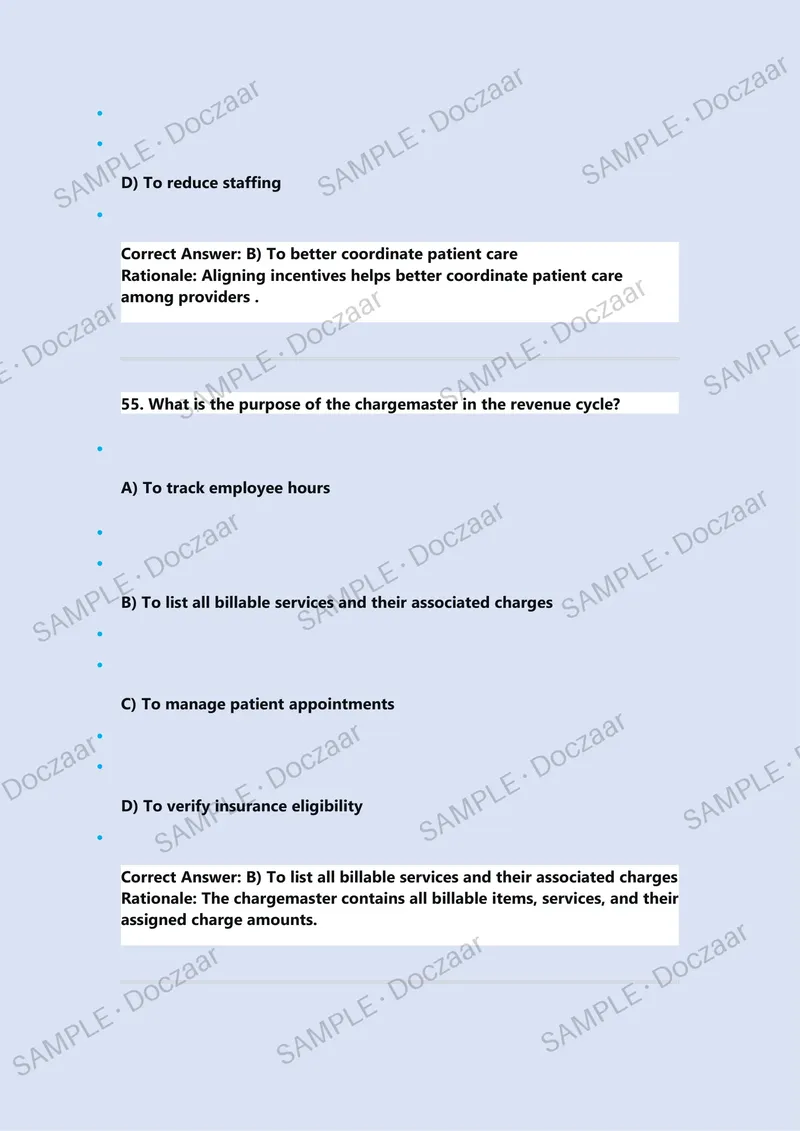
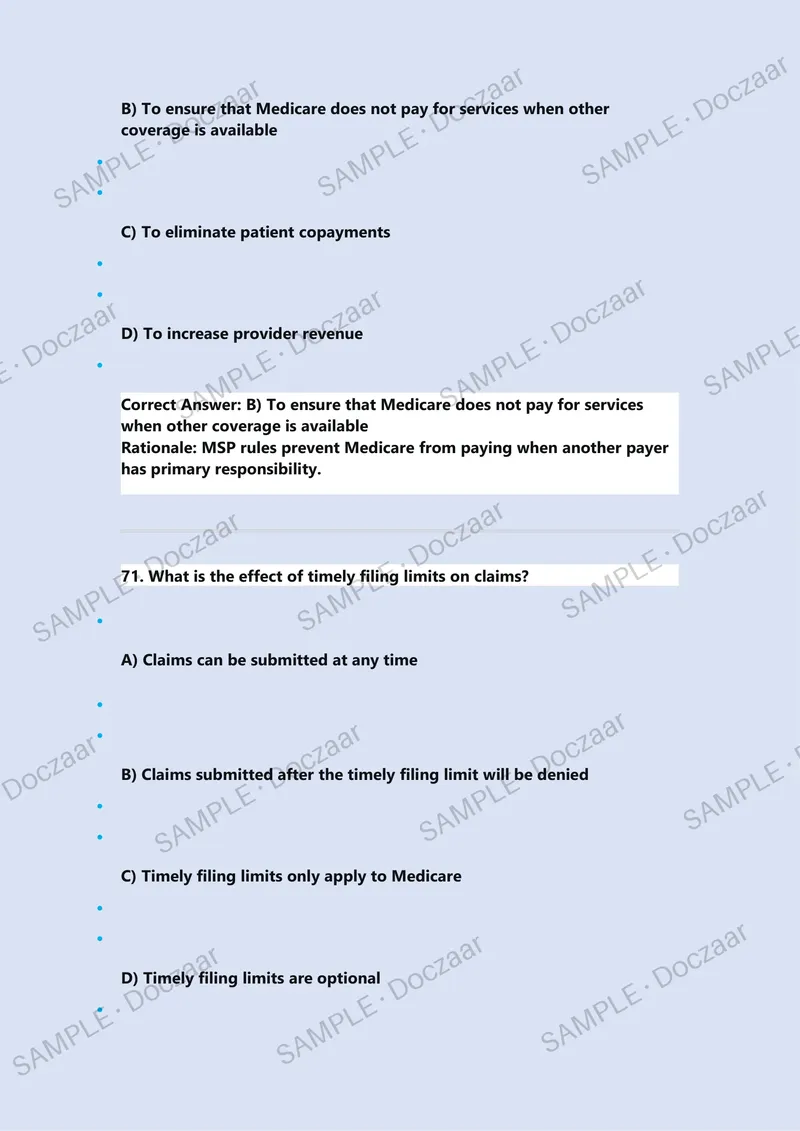
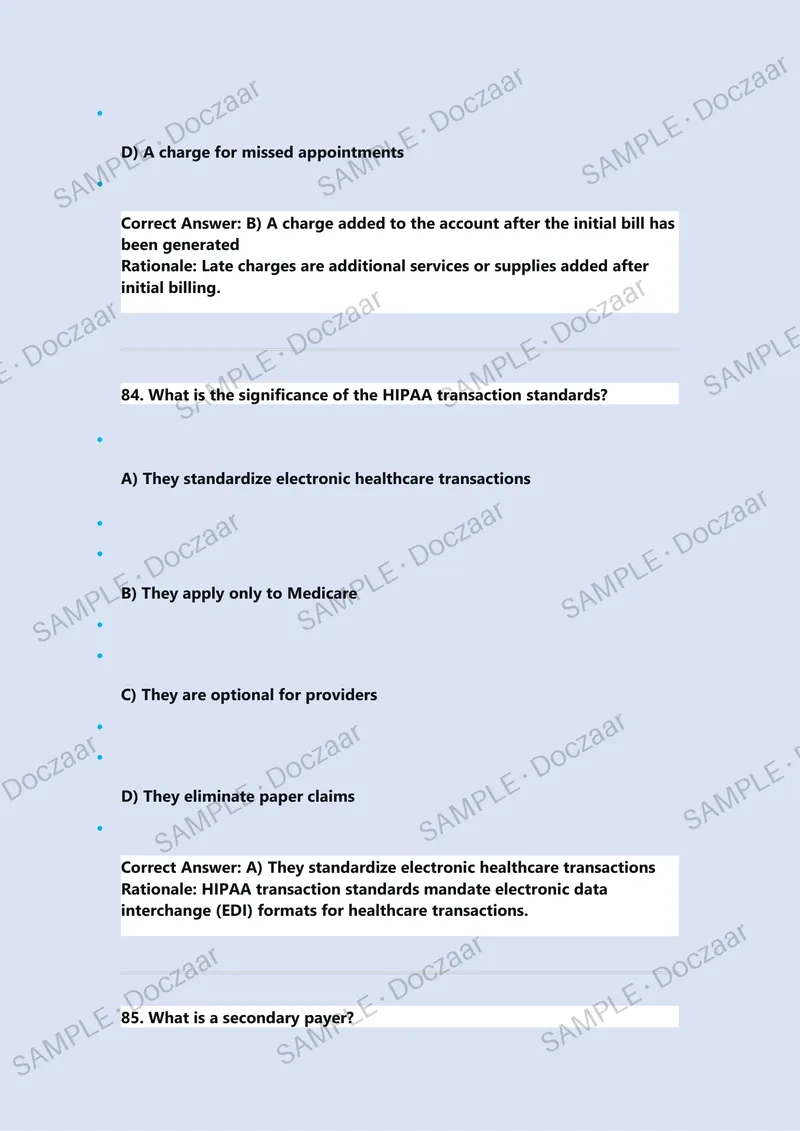
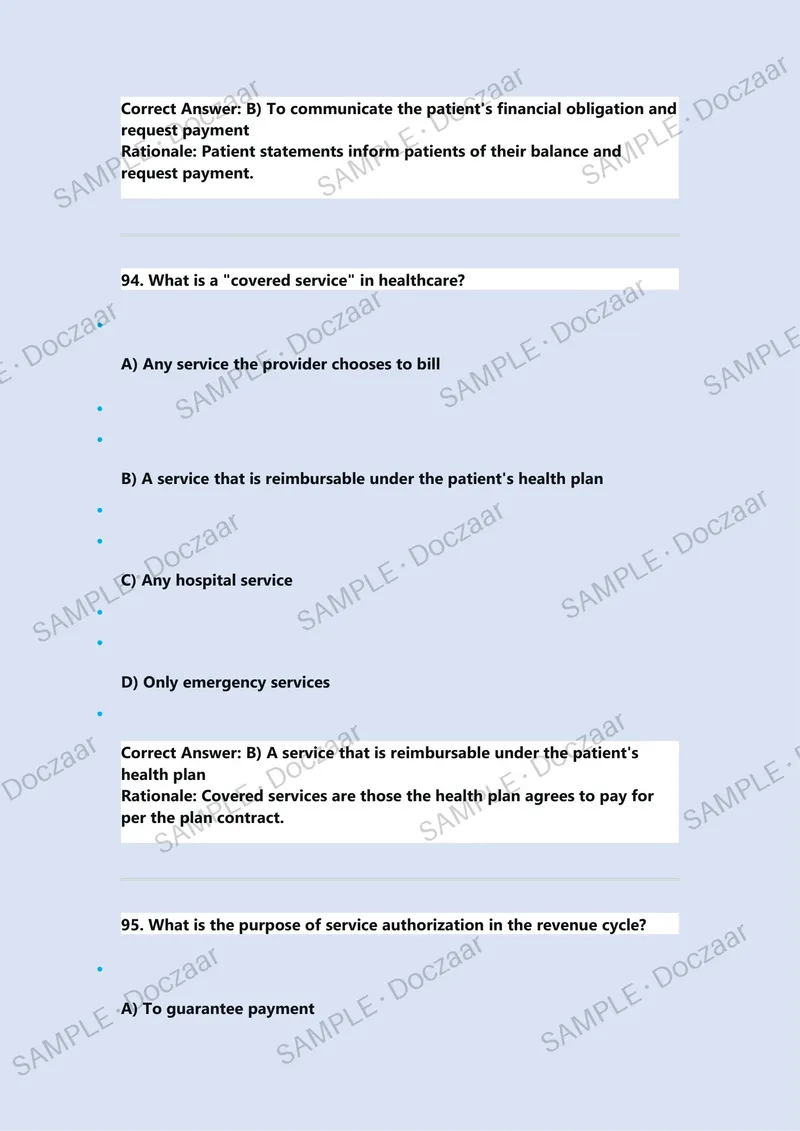
The document focuses on the Certified Revenue Cycle Representative (CRCR) certification exam preparation. It includes a test bank with 500 questions and correct answers, covering various aspects of the revenue cycle in healthcare.
Key topics include:
- The first step of the revenue cycle, identified as patient registration, which involves capturing demographic and insurance information.
- The concept of a clean claim and its relevance to Medicare payments.
- Revenue cycle activities at the point-of-service, highlighting what is and isn't included in charge monitoring and submission.
- The daily cash reconciliation process, starting with obtaining payments received each day.
- Aging reports, which categorize accounts receivable by the time they have been outstanding.
- The significance of the 5010 transaction standard as the HIPAA-mandated version for electronic claim transactions.
- The role of CAQH ProView in provider credentialing and demographic data management.
- The National Provider Identifier (NPI), a unique 10-digit identifier for healthcare providers mandated by HIPAA.
The document also emphasizes the importance of medical necessity documentation in the revenue cycle.
Reviews
No reviews yet.
Reviews come from people who bought the document.
Related documents
ATI RN Nutrition Proctored Exam with Questions and Verified Answers, 100% Guaranteed Pass With Appropriate Explanations
Walden University · Medicine
Exam Elaborations · 77 pages · PDFUndergraduate
Florida Nursing Home Administrator Exam (FL NHA) Practice Test Bank (2026 / 2027)REVIEW WITH COMPLETE REAL EXAM QUESTION
Walden University · Medicine
Exam Elaborations · 47 pages · PDFUndergraduate
4003 Variations Questions and Verified Answers, 100% Guarantee Pass Complete A+ Guide
Walden University · Medicine
Exam Elaborations · 72 pages · PDFUndergraduate
Advanced Life Support (ALS) Online Session Final Exam – New Questions and Verified Answers (2026 / 2027 Update)| Grad
Walden University · Medicine
Exam Elaborations · 35 pages · PDFUndergraduate
ALBERTA HEALTH CARE AIDE PROVINCIAL EXAM 250 Practice Questions & Detailed Answers CLHA AHRE | A+ GRADED
Walden University · Medicine
Exam Elaborations · 58 pages · PDFUndergraduate
ALF CORE TRAINING FLORIDA EXAM 2026/2027 ASSISTED LIVING FACILITY ADMINISTRATOR CERTIFICATION – FLORIDA AHCA | 200 VER
Walden University · Medicine
Exam Elaborations · 35 pages · PDFUndergraduate
ARKANSAS JURISPRUDENCE COUNSELING UPDATED STUDY GUIDE | ACTUAL EXAM WITH ACCURATE SOLUTIONS A+ GRADED!
Walden University · Medicine
Exam Elaborations · 169 pages · PDFUndergraduate
ATI PN Mental Health Proctored Exam 2026 NGN With Screenshots — Master Q&A Review
Walden University · Medicine
Exam Elaborations · 42 pages · PDFUndergraduate