Clemson ECON 3150 Final Examination – Intermediate Macroeconomics – Clemson University – 2026/2027 Academic Year – 100
Click to enlarge Pages 2–5 · locked
Click to enlarge Pages 7–13 · locked
Click to enlarge Pages 15–17 · locked
Click to enlarge Pages 19–21 · locked
Click to enlarge Pages 23–29 · locked
Click to enlarge
28 more pages in the full document
6 of 34 pages free to preview
PDF · 34 pages
About this document
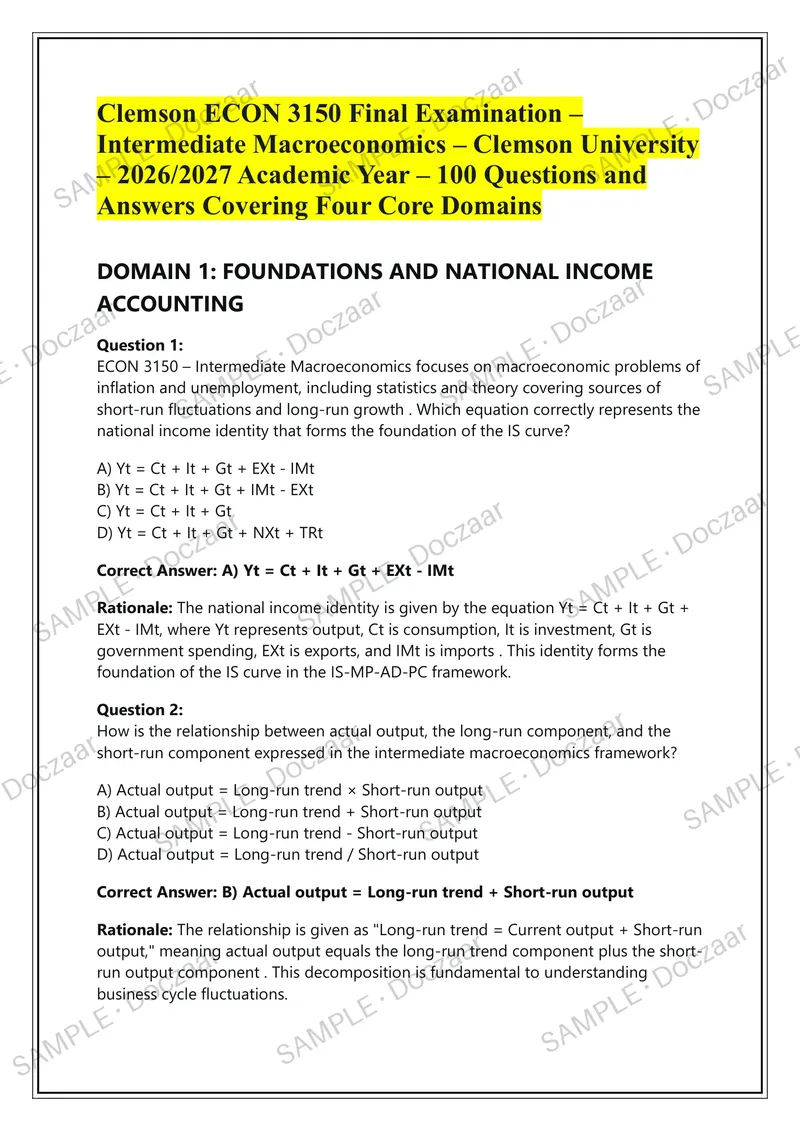
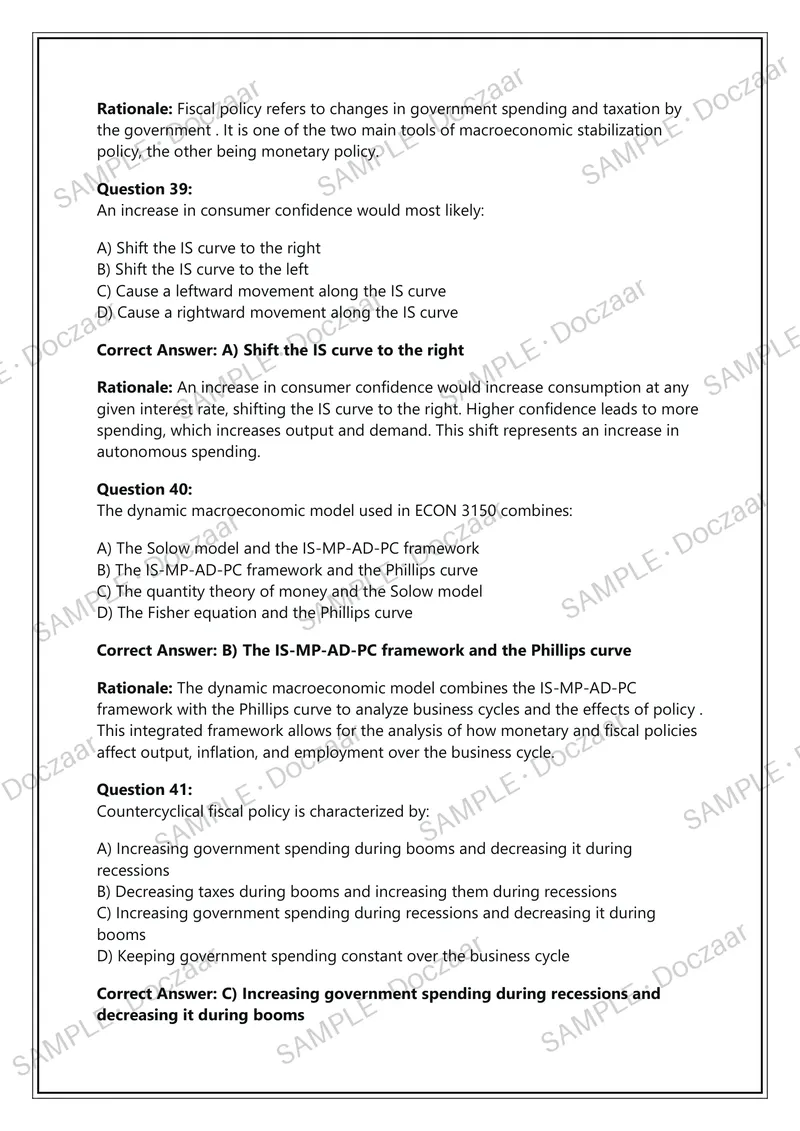
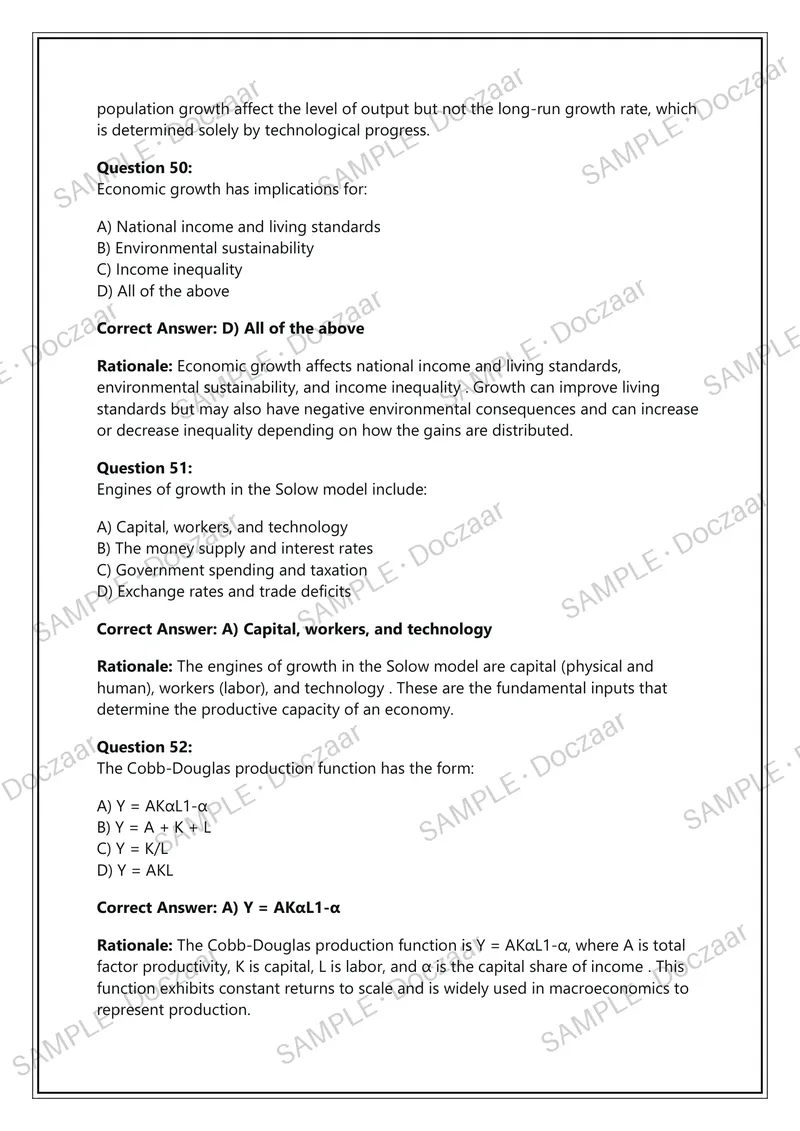
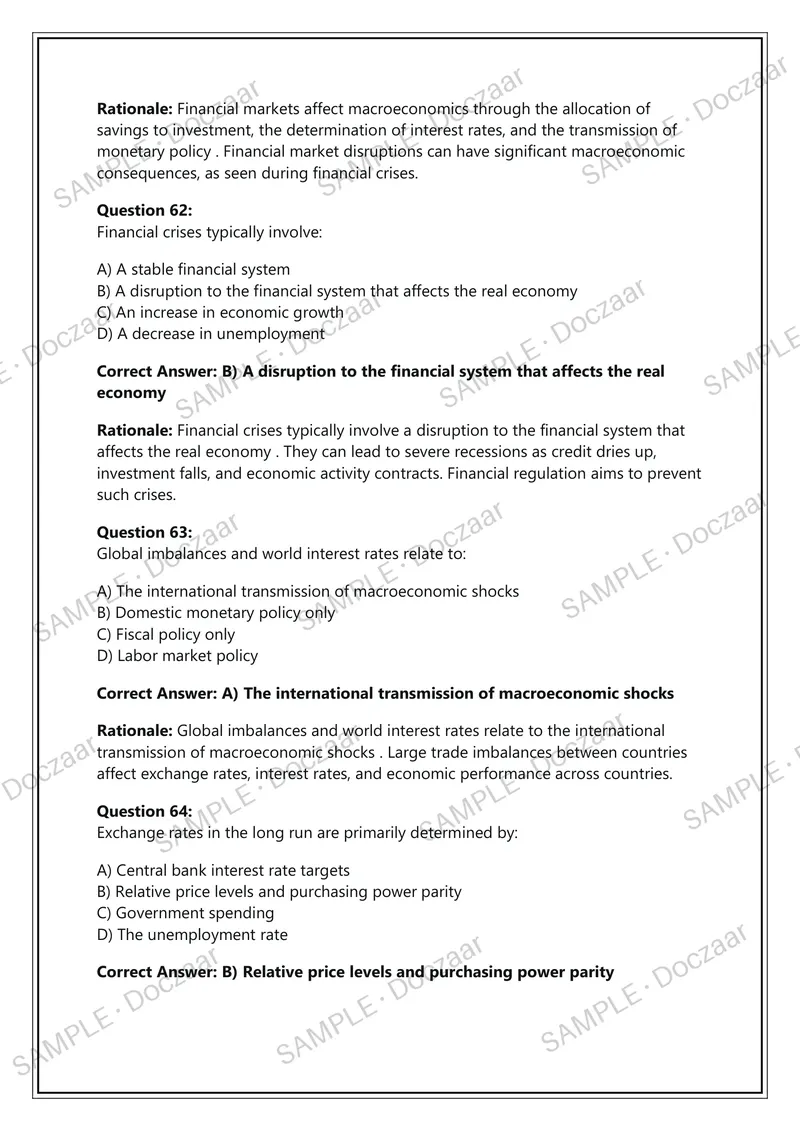
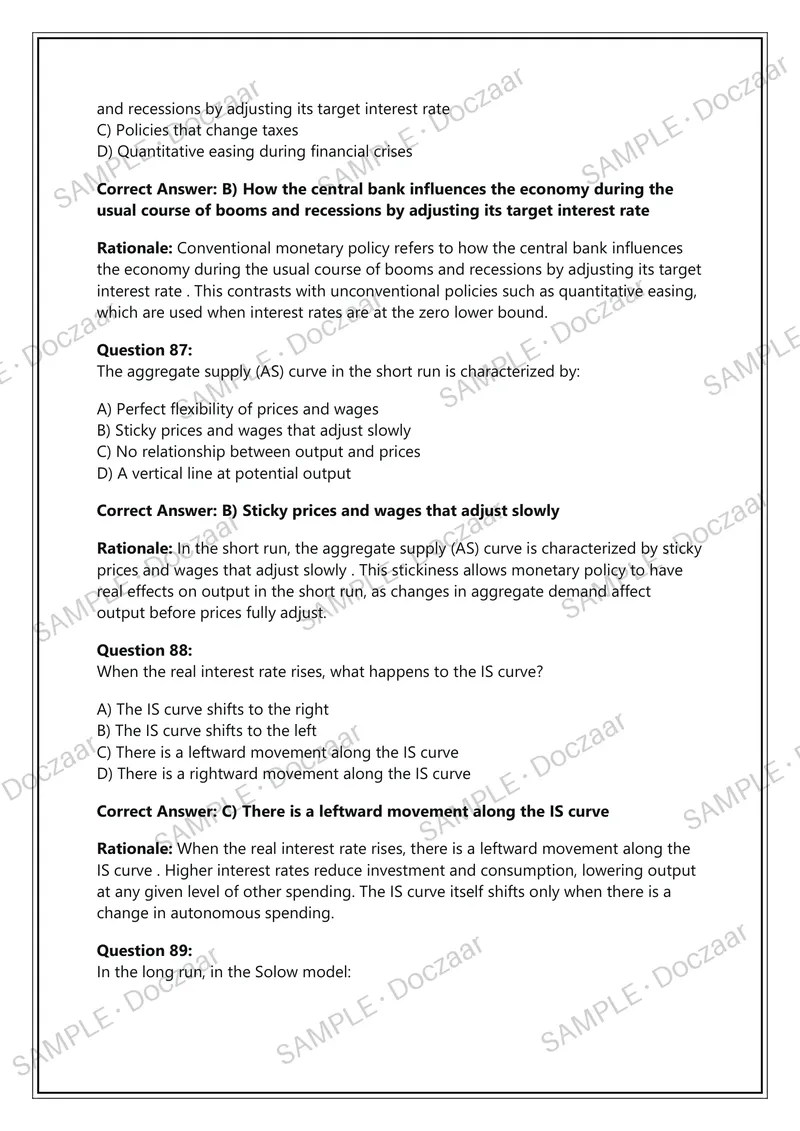
The Clemson ECON 3150 Final Examination for Intermediate Macroeconomics at Clemson University covers 100 questions and answers across four core domains. The exam addresses key macroeconomic issues such as inflation, unemployment, short-run fluctuations, and long-run growth.
Domain 1 focuses on Foundations and National Income Accounting. It includes questions about the national income identity, which is represented by the equation Yt = Ct + It + Gt + EXt - IMt, forming the foundation of the IS curve in the IS-MP-AD-PC framework. Other questions explore the relationship between actual output, long-run trends, and short-run components, emphasizing the decomposition of business cycle fluctuations.
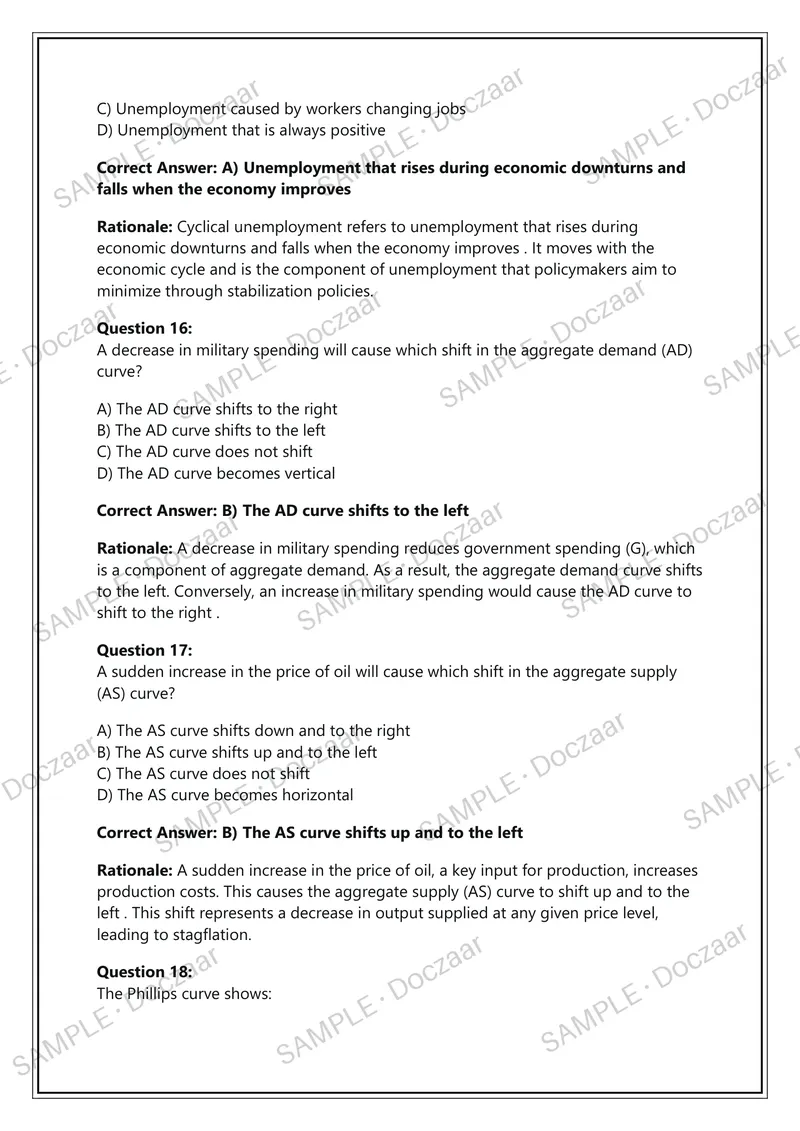
The exam also covers the Phillips curve, illustrating the negative relationship between output fluctuations and changes in inflation. It addresses concepts like "sticky inflation," where inflation does not react directly to monetary policy, and central bank independence, which aims to prevent fiscal considerations from causing excessive inflation.
Additionally, the exam includes questions on fiscal policy, defined as changes in government spending and taxation, and explores the primary goals of Federal Reserve policy.
Reviews
No reviews yet.
Reviews come from people who bought the document.
Related documents
ATI RN Nutrition Proctored Exam with Questions and Verified Answers, 100% Guaranteed Pass With Appropriate Explanations
Walden University · Medicine
Exam Elaborations · 77 pages · PDFUndergraduate
Florida Nursing Home Administrator Exam (FL NHA) Practice Test Bank (2026 / 2027)REVIEW WITH COMPLETE REAL EXAM QUESTION
Walden University · Medicine
Exam Elaborations · 47 pages · PDFUndergraduate
4003 Variations Questions and Verified Answers, 100% Guarantee Pass Complete A+ Guide
Walden University · Medicine
Exam Elaborations · 72 pages · PDFUndergraduate
Advanced Life Support (ALS) Online Session Final Exam – New Questions and Verified Answers (2026 / 2027 Update)| Grad
Walden University · Medicine
Exam Elaborations · 35 pages · PDFUndergraduate
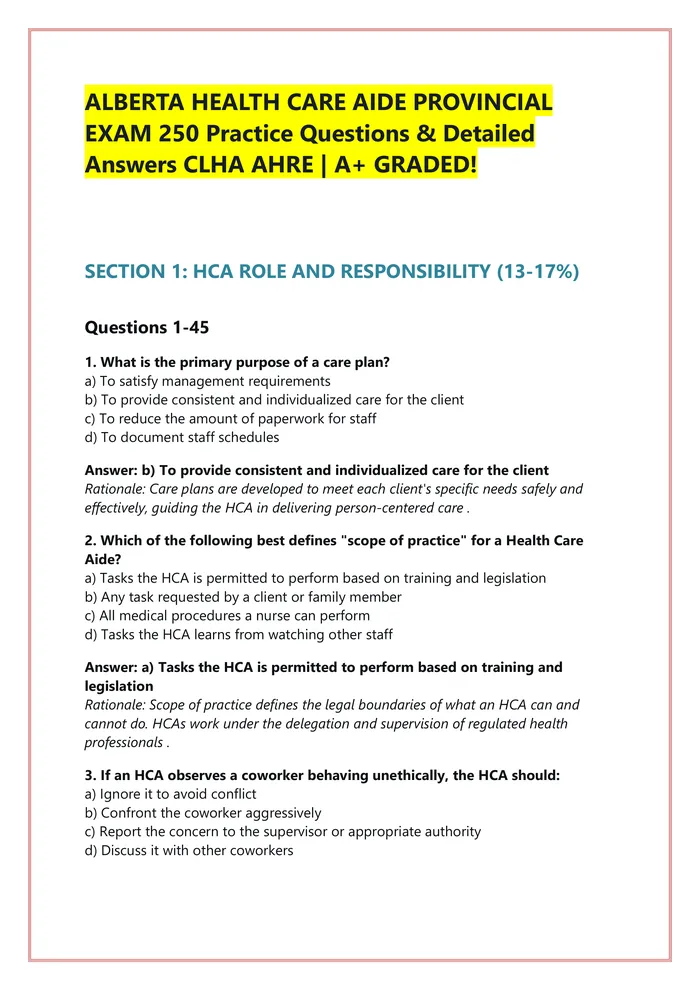
ALBERTA HEALTH CARE AIDE PROVINCIAL EXAM 250 Practice Questions & Detailed Answers CLHA AHRE | A+ GRADED
Walden University · Medicine
Exam Elaborations · 58 pages · PDFUndergraduate
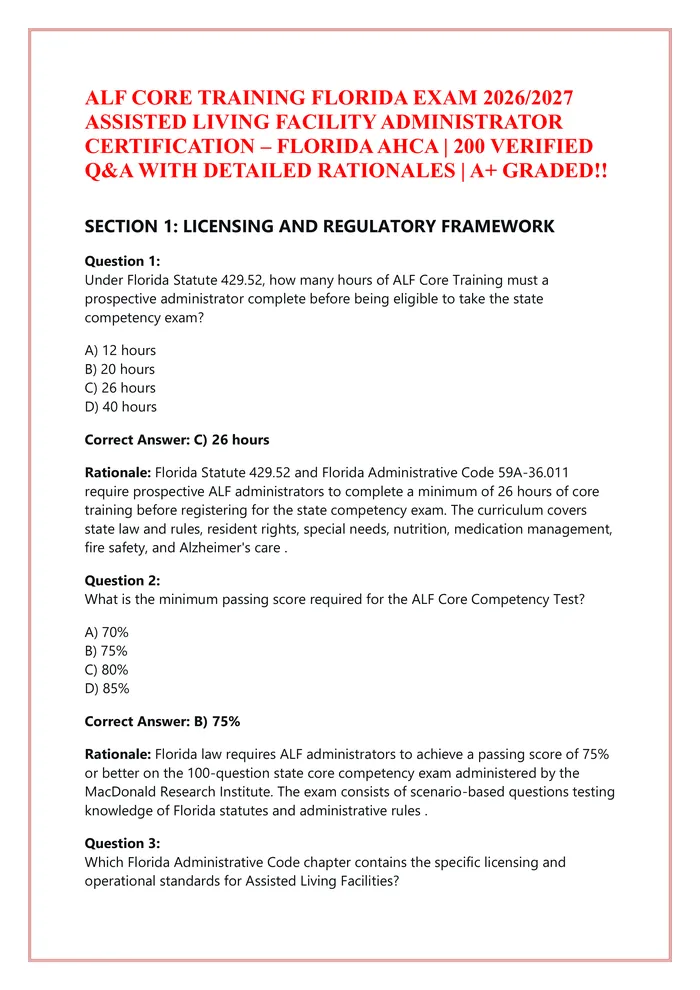
ALF CORE TRAINING FLORIDA EXAM 2026/2027 ASSISTED LIVING FACILITY ADMINISTRATOR CERTIFICATION – FLORIDA AHCA | 200 VER
Walden University · Medicine
Exam Elaborations · 35 pages · PDFUndergraduate
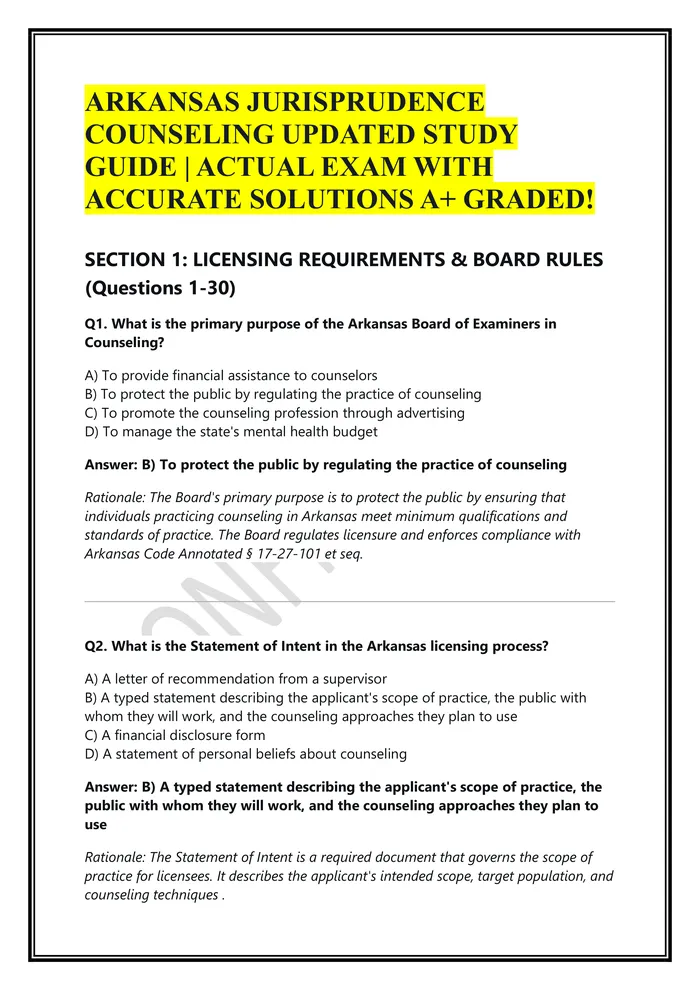
ARKANSAS JURISPRUDENCE COUNSELING UPDATED STUDY GUIDE | ACTUAL EXAM WITH ACCURATE SOLUTIONS A+ GRADED!
Walden University · Medicine
Exam Elaborations · 169 pages · PDFUndergraduate
ATI PN Mental Health Proctored Exam 2026 NGN With Screenshots — Master Q&A Review
Walden University · Medicine
Exam Elaborations · 42 pages · PDFUndergraduate