Exam Elaborations
Forensic Science Final Exam 2026/2027 NEWEST TESTBANK EXAM 250 COMPREHENSIVE QUESTIONS /FREQUENTLY MOST TESTED QUESTIO
Walden University
0 reviewsPreview
Page 1 of 75
Sample · 8/75
Click to enlarge Pages 2–3 · locked
Click to enlarge Pages 5–21 · locked
Click to enlarge Pages 23–31 · locked
Click to enlarge Pages 33–42 · locked
Click to enlarge Pages 44–47 · locked
Click to enlarge Pages 49–60 · locked
Click to enlarge Pages 62–73 · locked
Click to enlarge
Continued
67 more pages
Locked · Full 75-page document
About this document
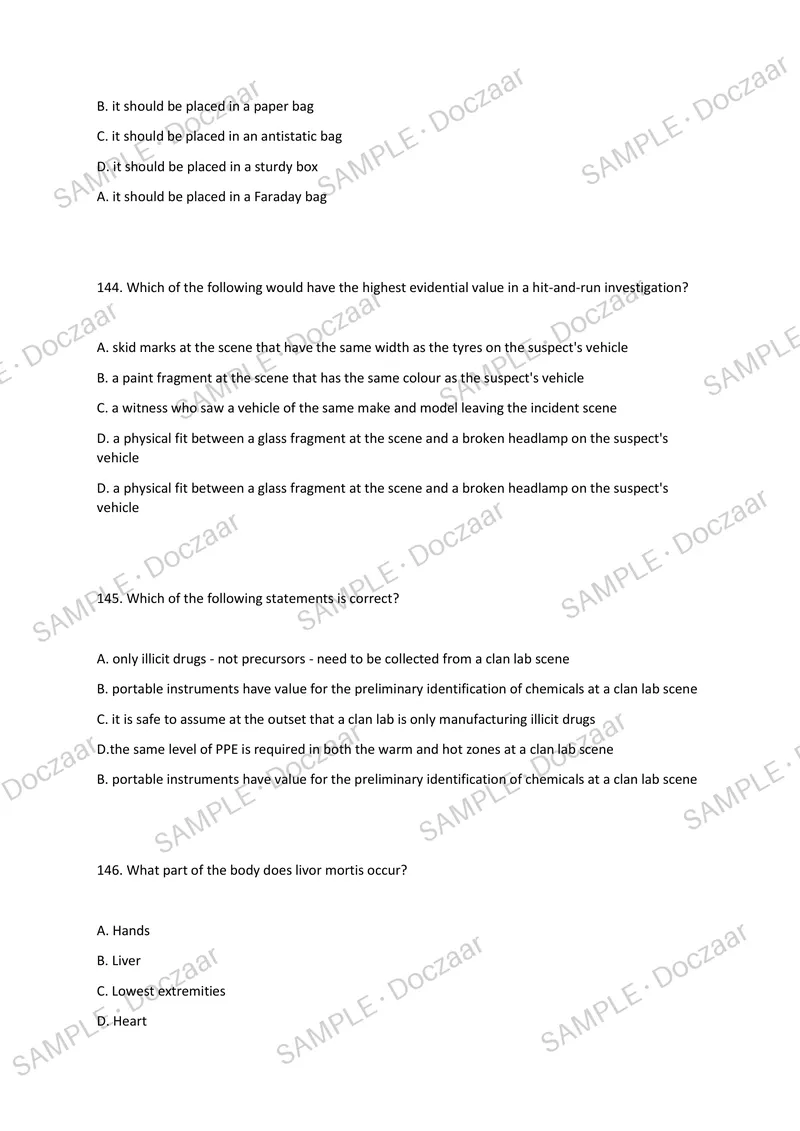
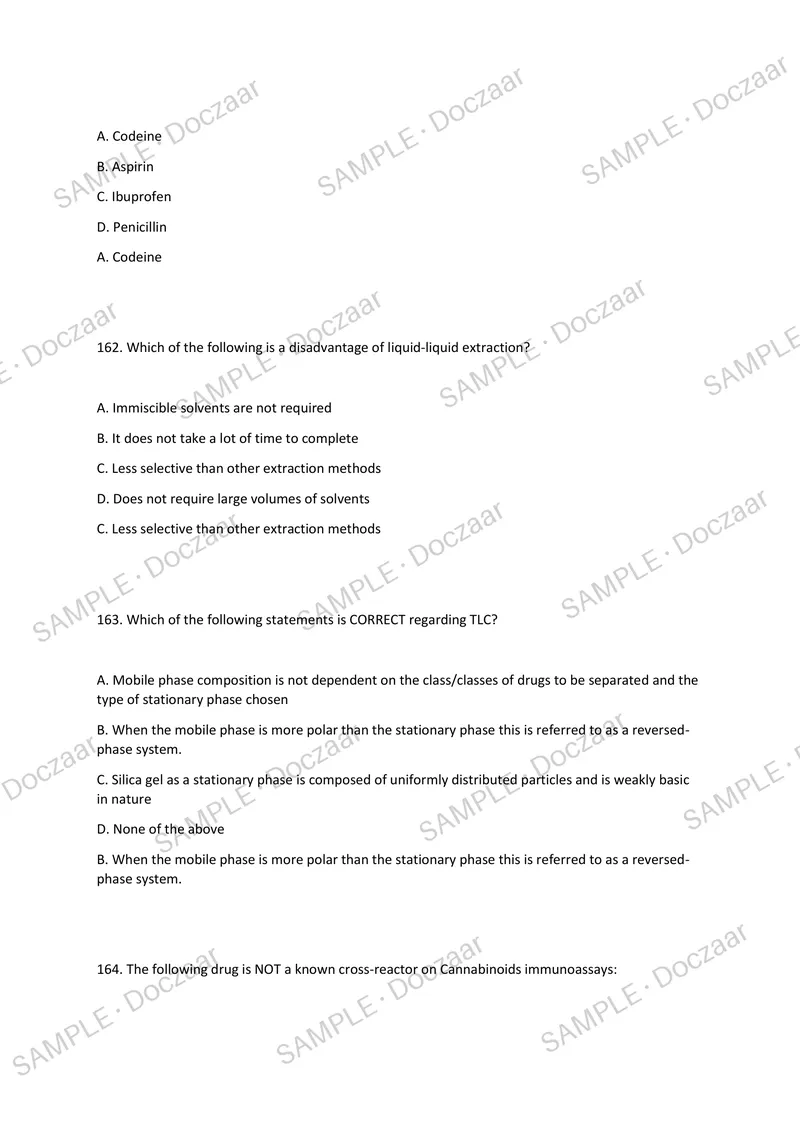
The "Forensic Science Final Exam 2026/2027 Newest Testbank" document is an extensive collection of 250 comprehensive questions and verified solutions designed to prepare students for their forensic science final exams. The testbank covers a wide range of topics essential for aspiring forensic professionals, emphasizing the importance of quality assurance and control (QA/QC) programs in laboratories. Key reasons for implementing QA/QC programs include producing sound scientific data, utilizing appropriate standards and controls, and ensuring validated methods and procedures are in place.
The document also delves into the organizational aspects of forensic science, such as the merger of the ANSI-ASQ National Accreditation Board (ANAB) from ASCLAD and LAB in 2016. Students will learn about common laboratory errors due to poor quality management, including issues related to sample control and results verification. The testbank highlights the significance of descriptive statistics in routine laboratory analyses, such as measuring pesticide levels in soil or creatinine in blood.
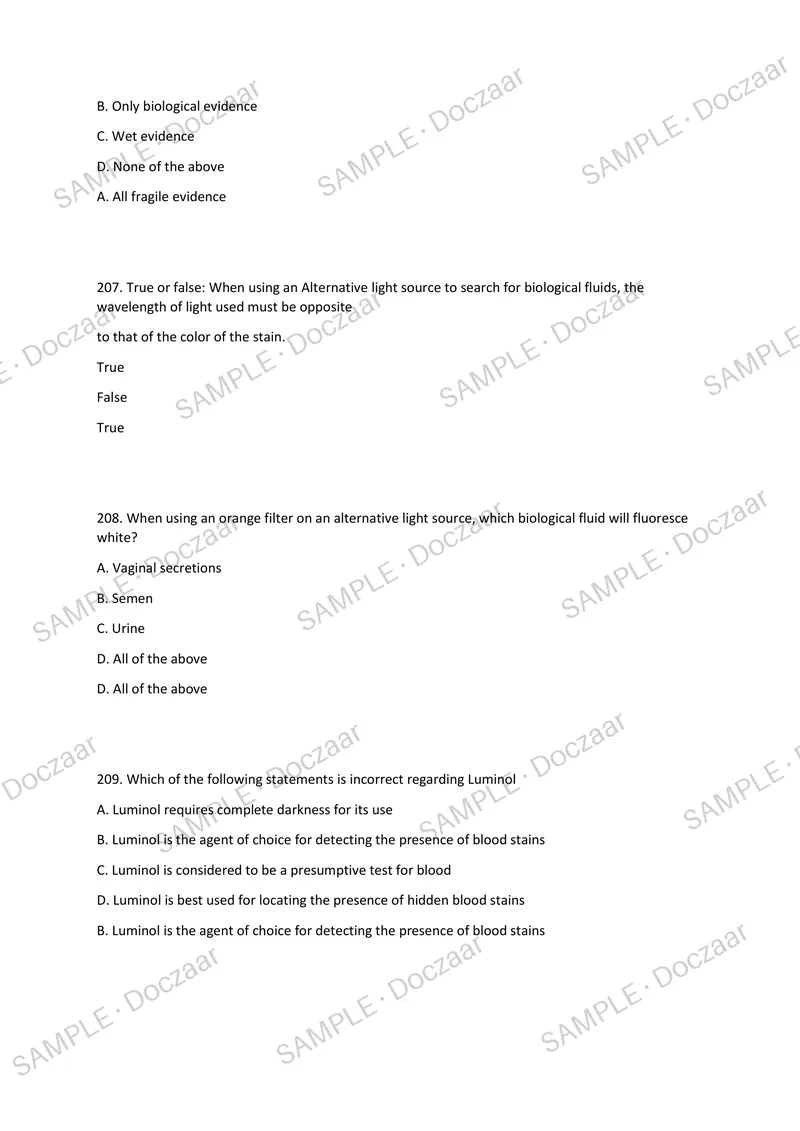
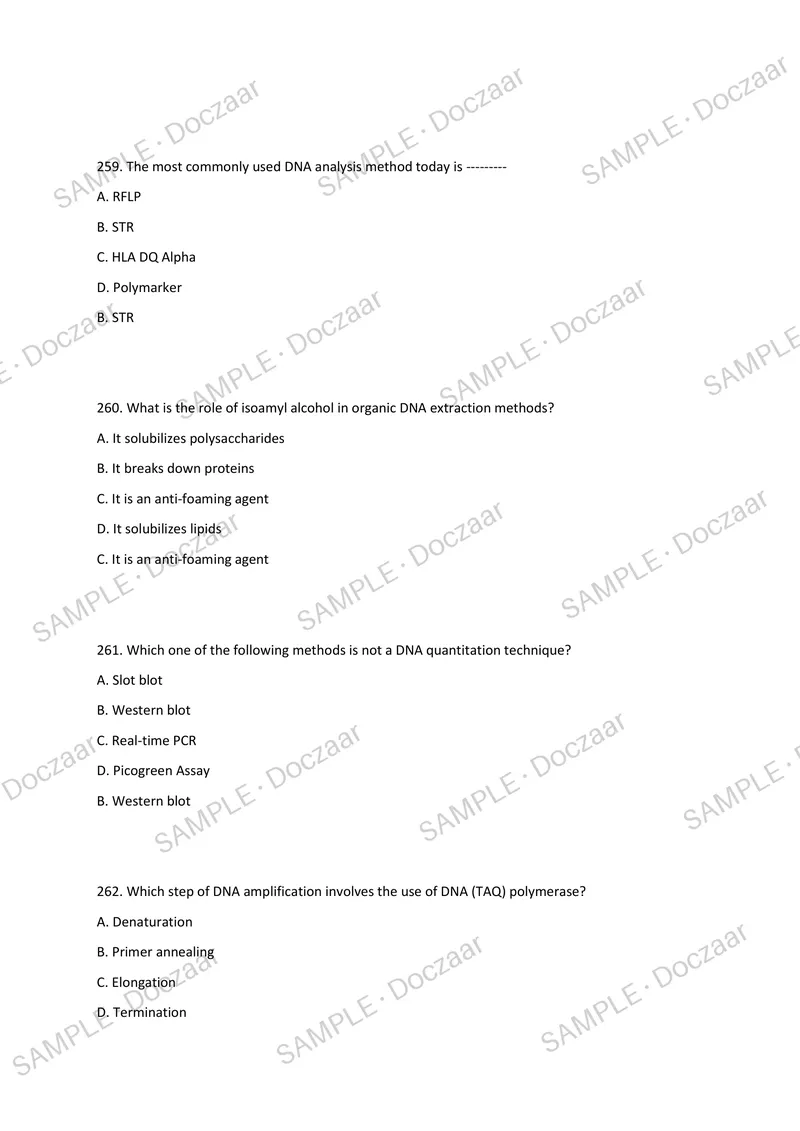
Furthermore, the exam discusses various forensic techniques, including photography at crime scenes, the use of fingerprint powders, and the visualization of protein bands using stains like Coomassie blue, Ponceau red, and Amido black. It also covers topics on biological evidence, such as the activation of platelets when blood loss occurs and DNA quantitation techniques like slot blot and real-time PCR. The document encourages students to understand the application of alternative light sources for detecting biological fluids, providing insights into which fluids fluoresce under specific filters.
Reviews
No reviews yet.
Be the first — reviews come from verified buyers.