Exam Elaborations
NYC Food Protection Final 2026/2027 NEWEST TEST EXAM 100 COMPREHENSIVE QUESTIONS /FREQUENTLY MOST TESTED QUESTIONS AN
Preview
Page 1 of 26
Sample · 4/26
Click to enlarge Pages 2–3 · locked
Click to enlarge Pages 5–12 · locked
Click to enlarge Pages 14–19 · locked
Click to enlarge
Continued
22 more pages
Locked · Full 26-page document
About this document
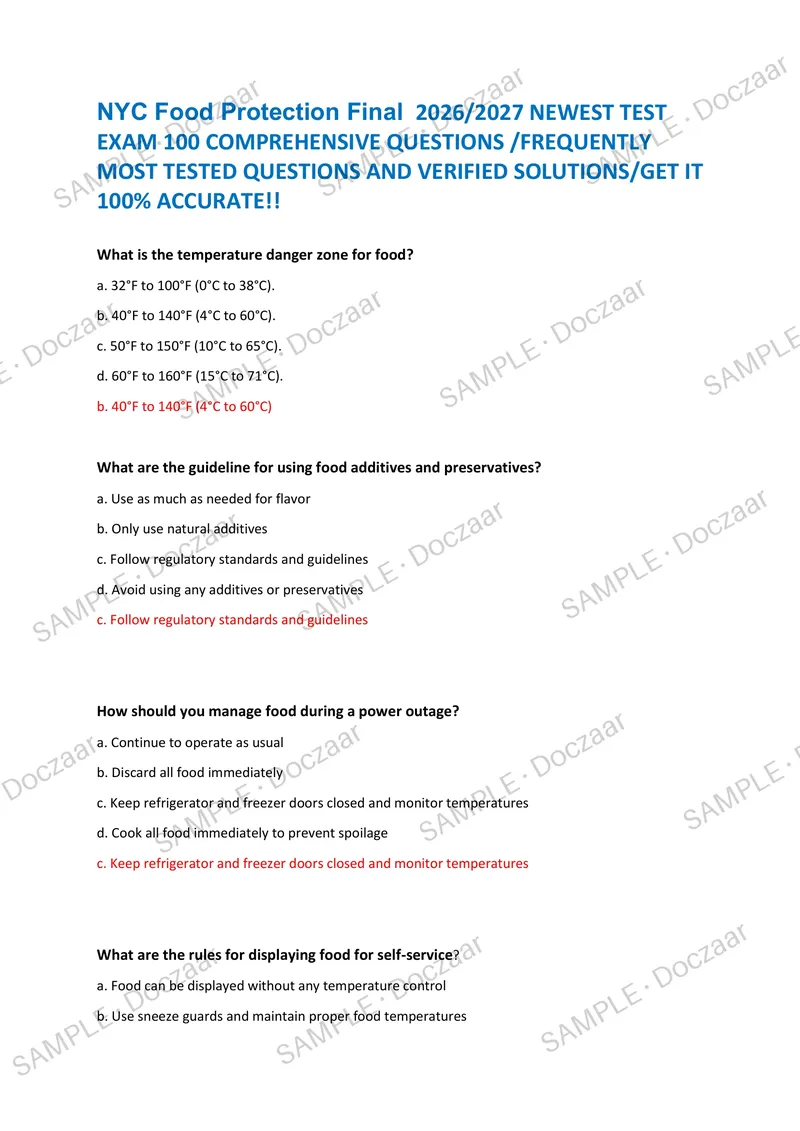
The NYC Food Protection Final Exam for 2026/2027 is a comprehensive test designed to assess knowledge and skills in food safety and protection. This document contains 100 of the most frequently tested questions, complete with verified solutions, ensuring students can achieve 100% accuracy in their preparation. The exam covers critical topics such as the temperature danger zone for food, which is identified as 40°F to 140°F (4°C to 60°C), a range where bacteria can grow rapidly. Understanding the correct use of food additives and preservatives is also crucial, with an emphasis on adhering to regulatory standards.
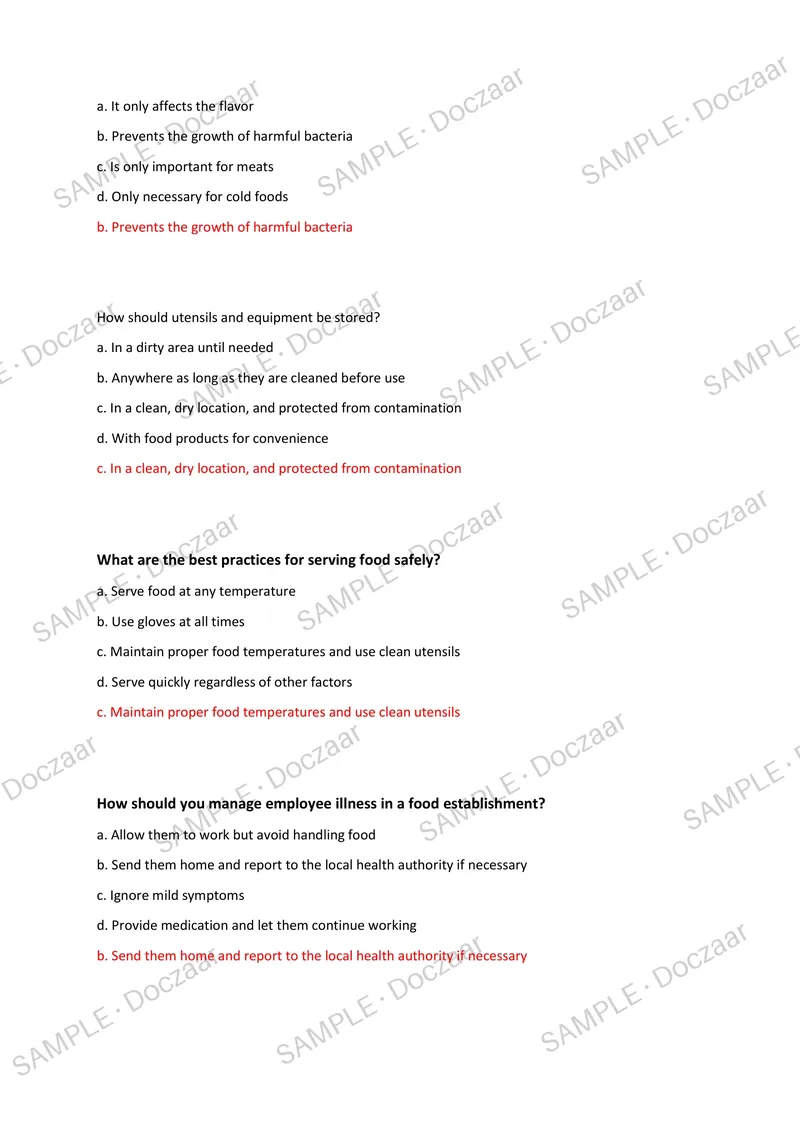
Practical guidelines are provided for managing food safety during power outages, including keeping refrigerator and freezer doors closed to maintain safe temperatures. The document emphasizes the importance of sneeze guards and maintaining proper food temperatures in self-service settings. Students will learn to recognize symptoms of foodborne illnesses, such as nausea, vomiting, and diarrhea, and understand that food should not be left at room temperature for more than 2 hours.
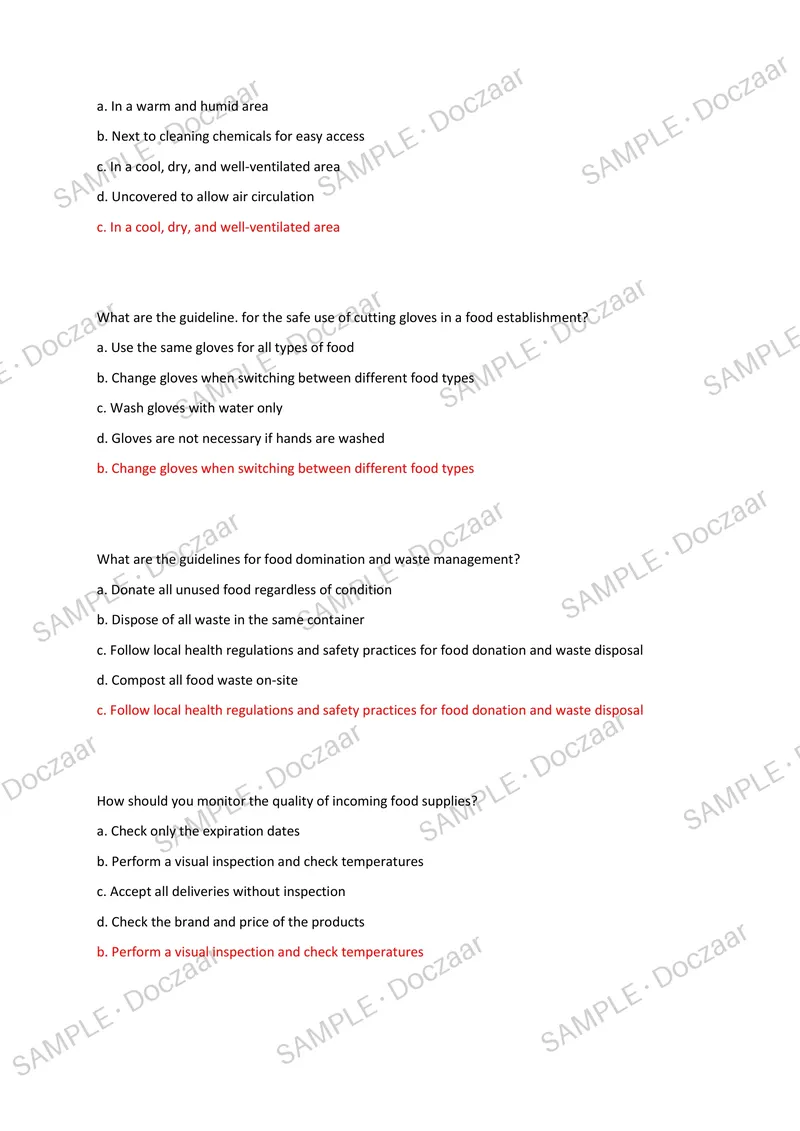
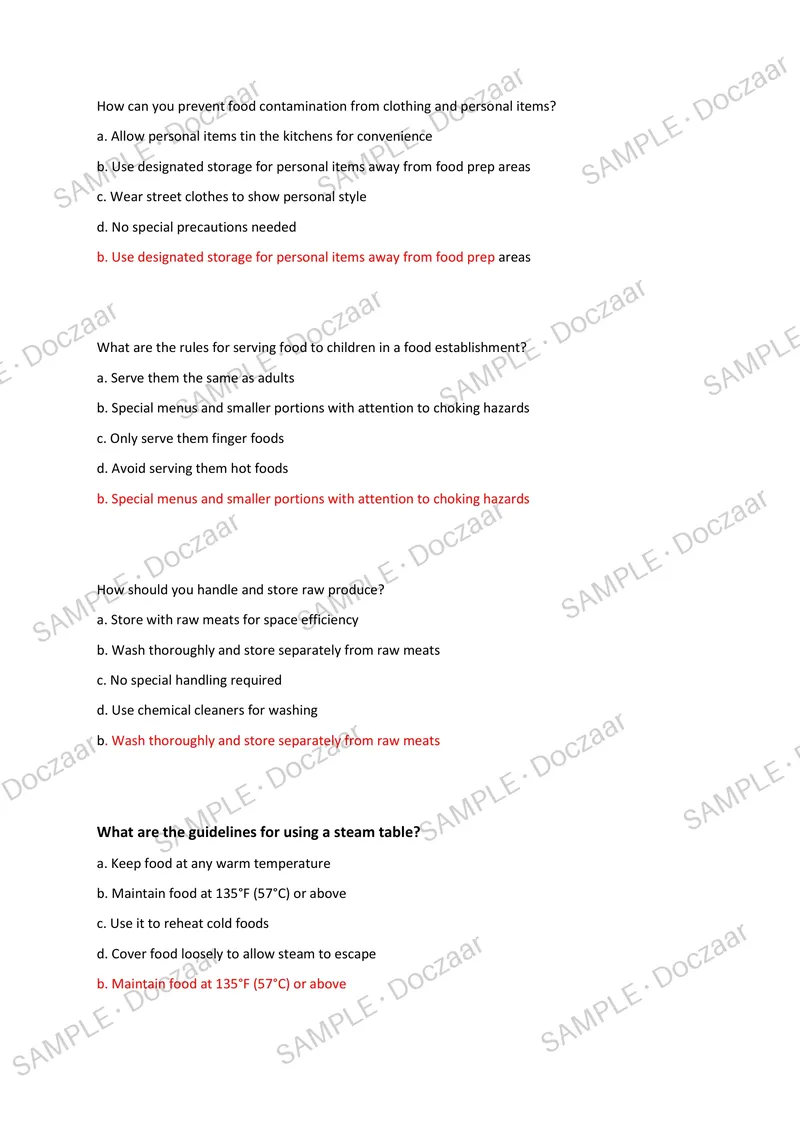
Specific temperature requirements are outlined for both cold holding (below 40°F) and cooking poultry (minimum internal temperature of 165°F). Proper procedures for cooling hot food, handling pest infestations, and serving food to high-risk populations are also detailed. The role of a food protection manager is highlighted, alongside best practices for food repackaging and the regular recording of food temperatures. Additionally, cleaning and sanitizing equipment like meat slicers every 4 hours is stressed to prevent contamination.
This document is an essential resource for students aiming to excel in food protection and ensure the safety and quality of food in various service settings. It provides a solid foundation for understanding and implementing effective food safety measures.
Reviews
No reviews yet.
Be the first — reviews come from verified buyers.