Exam Elaborations
PATHOPHYSIOLOGY EXAM 1 2026/2027 | 180 HIGH-YIELD QUESTIONS & VERIFIED ANSWERS | UPDATED TEST PREP | RECENT & MOST TEST
Preview
Page 1 of 42
Sample · 7/42
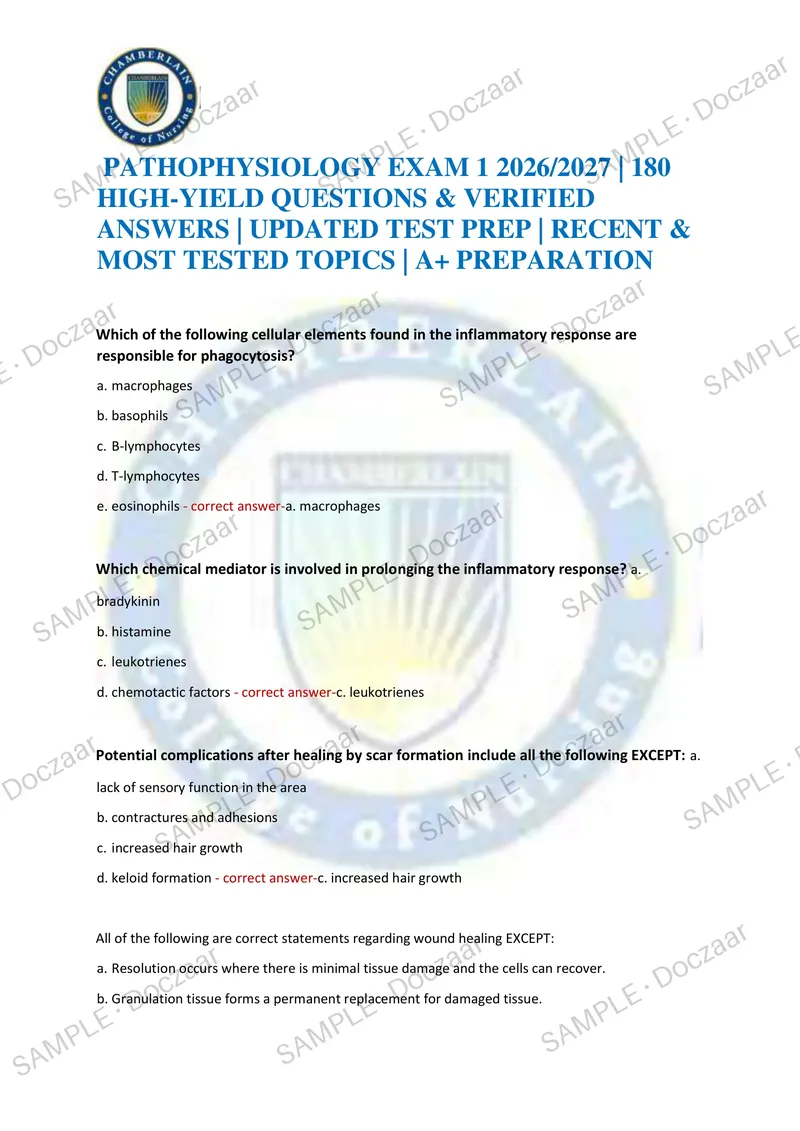
Click to enlarge Pages 2–3 · locked
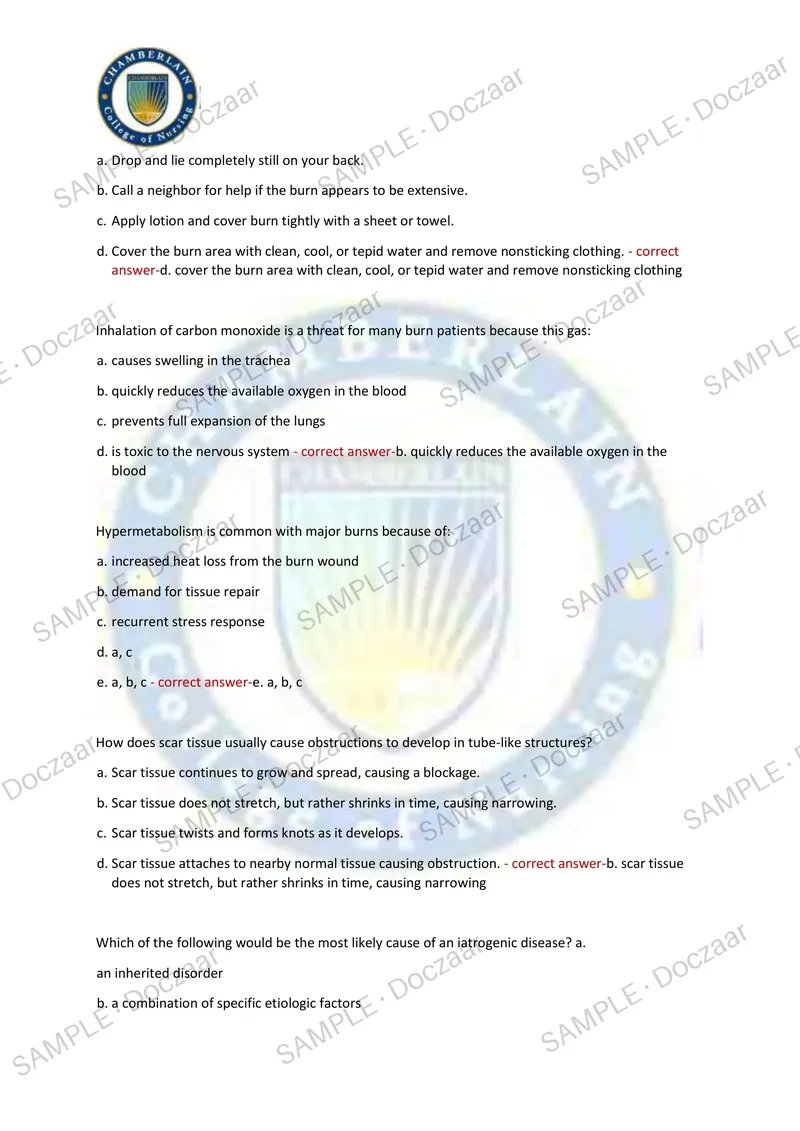
Click to enlarge Pages 5–8 · locked
Click to enlarge Pages 10–15 · locked
Click to enlarge Pages 17–27 · locked
Click to enlarge Page 29 · locked
Click to enlarge Pages 31–36 · locked
Click to enlarge
Continued
35 more pages
Locked · Full 42-page document
About this document
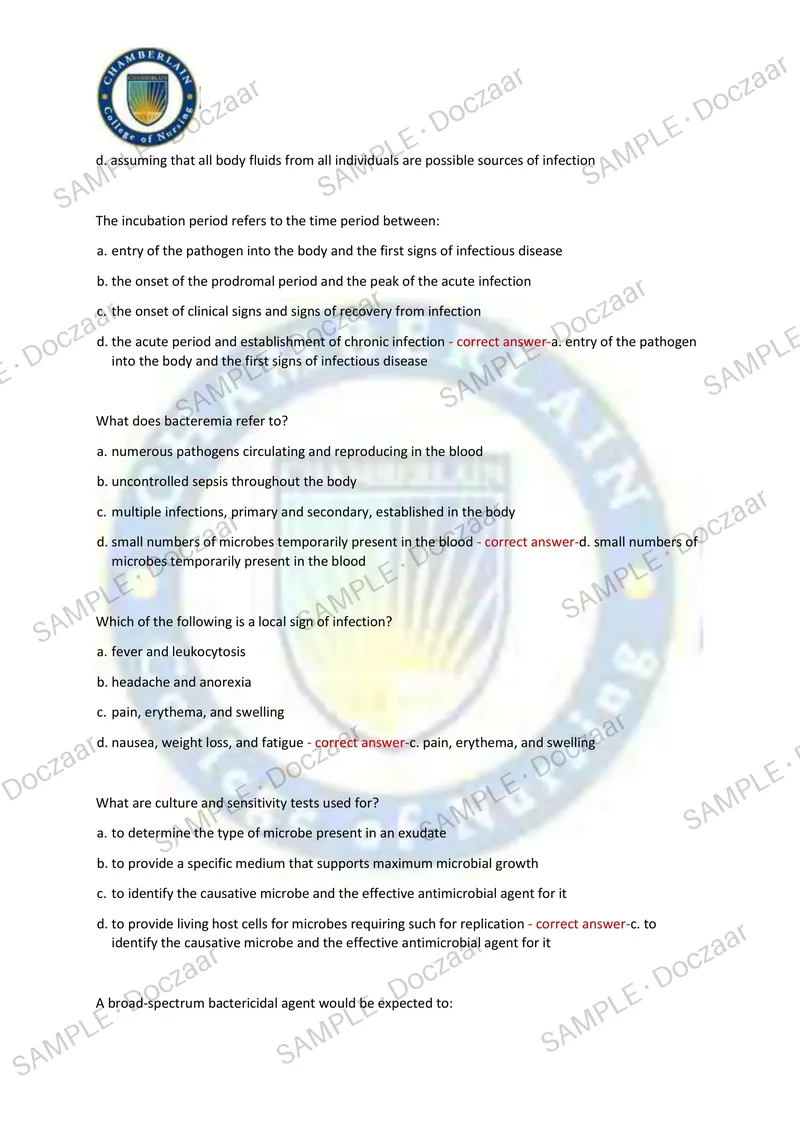
This document serves as a comprehensive study guide for the Pathophysiology Exam 1, covering the academic year 2026/2027. It features 180 high-yield questions with verified answers, focusing on recent and most tested topics to ensure A+ preparation for students. Key areas addressed include the inflammatory response, with questions highlighting the role of macrophages in phagocytosis and the involvement of leukotrienes in prolonging inflammation.
The document also explores potential complications following scar formation, emphasizing the absence of increased hair growth as a complication. It provides insights into wound healing processes, noting that granulation tissue comprises fibroblasts and vascular endothelial cells.
Students will gain an understanding of epidemiology as the science of tracking the occurrence and distribution of diseases. The guide outlines various causes of cell injury or death, including hypoxia, excessive cold, and chemical toxins, categorized under comprehensive multiple-choice questions.
Furthermore, it includes essential health guidelines, excluding strenuous exercise as part of the Seven Steps to Health. The document clarifies disease definitions and discusses glucocorticoid usage in treating inflammation due to their ability to decrease capillary permeability.
Additionally, it differentiates between drugs like acetaminophen, which relieve fever and pain but are not anti-inflammatory agents. Students are also educated on the classification of burn injuries, highlighting scenarios involving epidermis and dermis damage. Finally, the guide stresses the critical nature of anaphylaxis due to rapid bronchoconstriction and systemic vasodilation.
Reviews
No reviews yet.
Be the first — reviews come from verified buyers.
Related documents
NGR 5149 ADVANCED PATHOPHYSIOLOGY EXAM 2026/2027 | 75 HIGH-YIELD QUESTIONS & VERIFIED ANSWERS | LATEST TEST PREP | RECEN
Walden University · Pathophysiology
13 pagesUndergraduate
NIGHTINGALE PATHOPHYSIOLOGY MIDTERM EXAM 2026/2027 | 75 HIGH-YIELD QUESTIONS & VERIFIED ANSWERS | LATEST TEST PREP | REC
Walden University · Pathophysiology
14 pagesUndergraduate
ADVANCED PATHOPHYSIOLOGY NS 838 EXAM 2026/2027 | 150 HIGH-YIELD QUESTIONS & VERIFIED ANSWERS | LATEST TEST PREP | RECENT
Walden University · Pathophysiology
26 pagesUndergraduate