Exam Elaborations
NIGHTINGALE PATHOPHYSIOLOGY MIDTERM EXAM 2026/2027 | 75 HIGH-YIELD QUESTIONS & VERIFIED ANSWERS | LATEST TEST PREP | REC
Preview
Page 1 of 14
Sample · 3/14
Click to enlarge Pages 2–4 · locked
Click to enlarge Pages 6–9 · locked
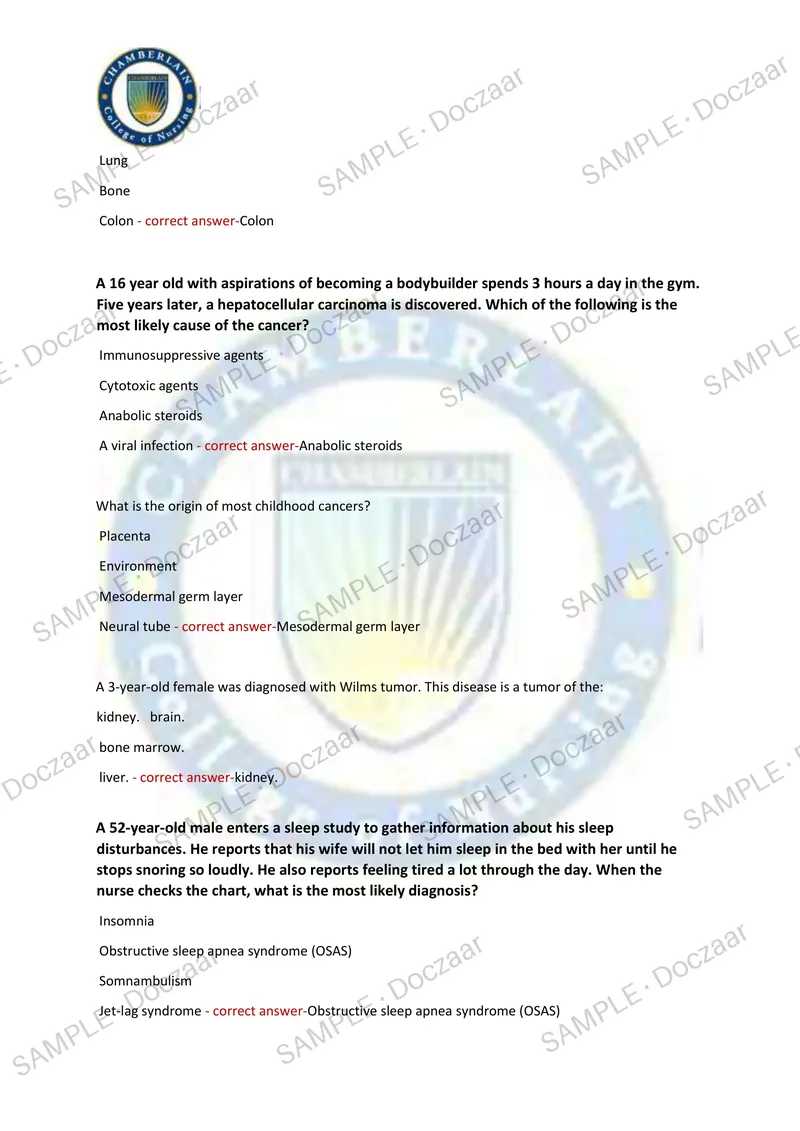
Click to enlarge
Continued
11 more pages
Locked · Full 14-page document
About this document
The "Nightingale Pathophysiology Midterm Exam 2026/2027" is a comprehensive study resource designed to aid students in their preparation for a critical exam in pathophysiology. This document contains 75 high-yield questions, each with verified answers, ensuring that students focus on the most recent and frequently tested topics in the field. It is a crucial tool for achieving A+ preparation and success.
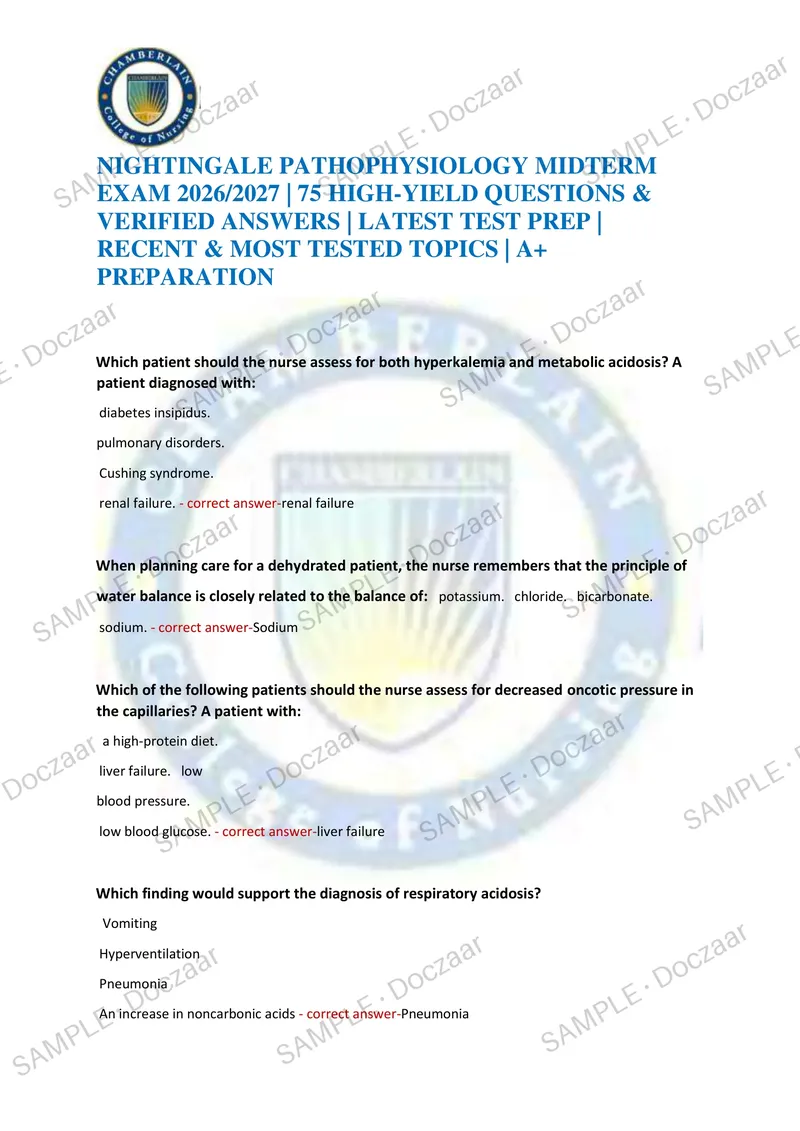
Key areas covered include the assessment of conditions such as hyperkalemia and metabolic acidosis, particularly in patients with renal failure. It emphasizes the importance of understanding water and sodium balance in dehydrated patients and highlights the significance of assessing decreased oncotic pressure, especially in those with liver failure.
The document also addresses respiratory acidosis, identifying pneumonia as a supportive finding. Blood type compatibility, particularly in type O patients with anti-A and anti-B antibodies, and the nature of attenuated antigens in vaccines are also explored. The pathophysiological aspects of autoimmune disorders, like systemic lupus erythematosus (SLE), are discussed, with a focus on autoantibodies.
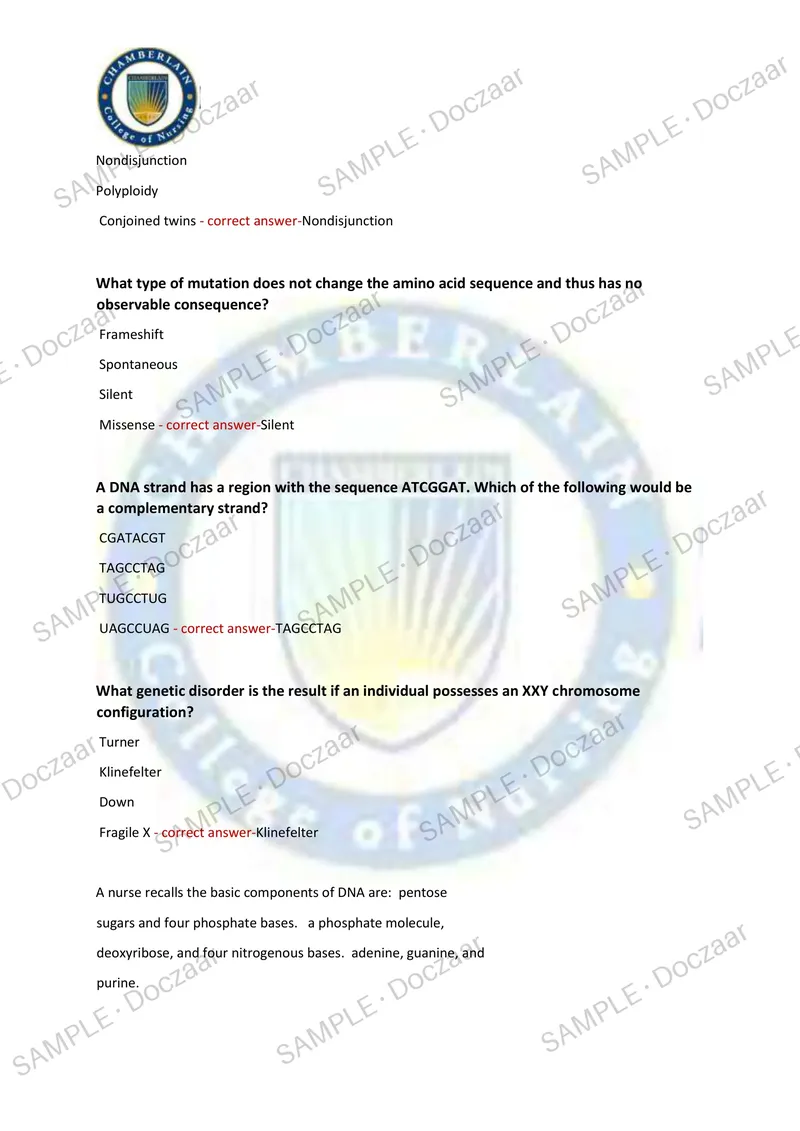
Additional topics include the nature of delayed hypersensitivity reactions, the genetic basis of conditions like partial trisomy, and the mechanisms of cell injury and necrosis, particularly liquefactive necrosis in the brain. The document differentiates between aging and disease processes, focusing on cellular injury, and explains hormonal changes during pregnancy, such as hormonal hyperplasia of the mammary glands.
Finally, the significance of increased intracellular calcium in irreversible cell injury is discussed, alongside the identification of skin cancer risk due to prolonged sun exposure. This document is an invaluable resource for students aiming to excel in their pathophysiology exams and is optimized with keywords essential for SEO, ensuring its visibility and accessibility to students seeking comprehensive exam preparation materials.
Reviews
No reviews yet.
Be the first — reviews come from verified buyers.
Related documents
PATHOPHYSIOLOGY EXAM 1 2026/2027 | 180 HIGH-YIELD QUESTIONS & VERIFIED ANSWERS | UPDATED TEST PREP | RECENT & MOST TEST
Walden University · Pathophysiology
42 pagesUndergraduate
NGR 5149 ADVANCED PATHOPHYSIOLOGY EXAM 2026/2027 | 75 HIGH-YIELD QUESTIONS & VERIFIED ANSWERS | LATEST TEST PREP | RECEN
Walden University · Pathophysiology
13 pagesUndergraduate
ADVANCED PATHOPHYSIOLOGY NS 838 EXAM 2026/2027 | 150 HIGH-YIELD QUESTIONS & VERIFIED ANSWERS | LATEST TEST PREP | RECENT
Walden University · Pathophysiology
26 pagesUndergraduate