Exam Elaborations
NR 302 exam 3 NEWEST TEST EXAM 180 COMPREHENSIVE QUESTIONS /FREQUENTLY MOST TESTED QUESTIONS AND VERIFIED SOLUTIONS/GE
Preview
Page 1 of 41
Sample · 7/41
Click to enlarge Page 2 · locked
Click to enlarge Pages 4–13 · locked
Click to enlarge Pages 15–20 · locked
Click to enlarge Page 22 · locked
Click to enlarge Pages 24–29 · locked
Click to enlarge Pages 31–36 · locked
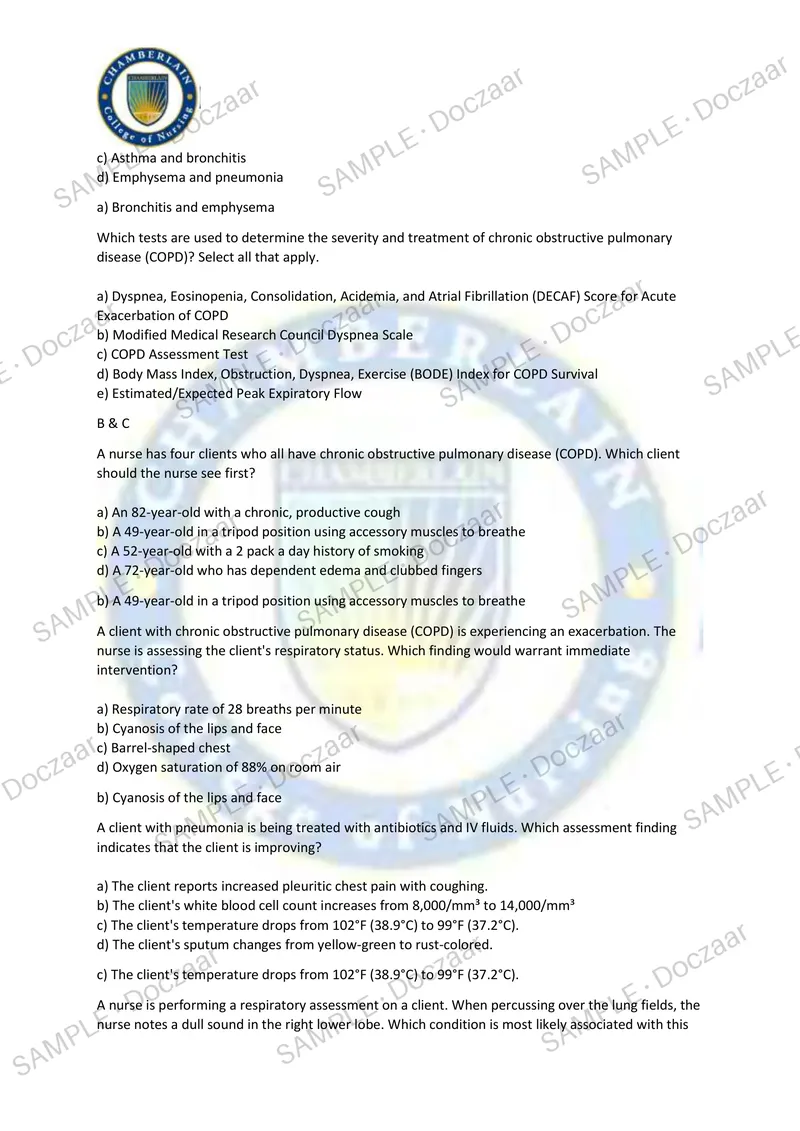
Click to enlarge
Continued
34 more pages
Locked · Full 41-page document
About this document
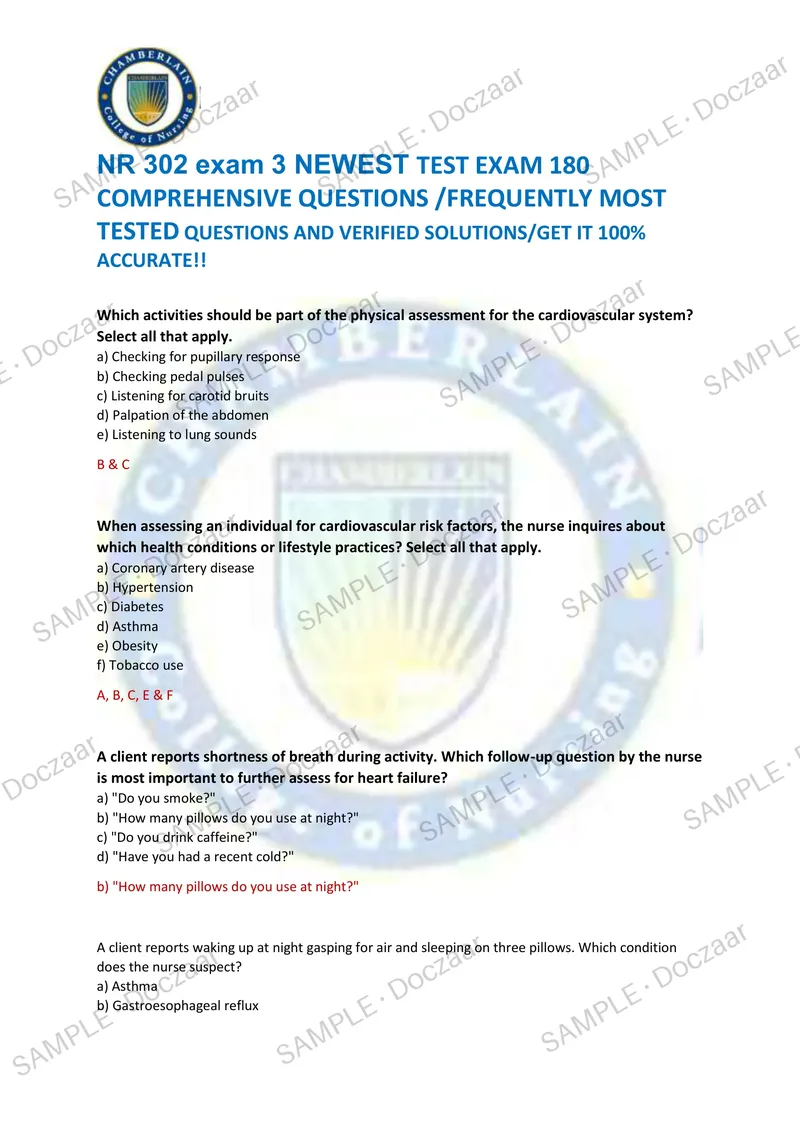
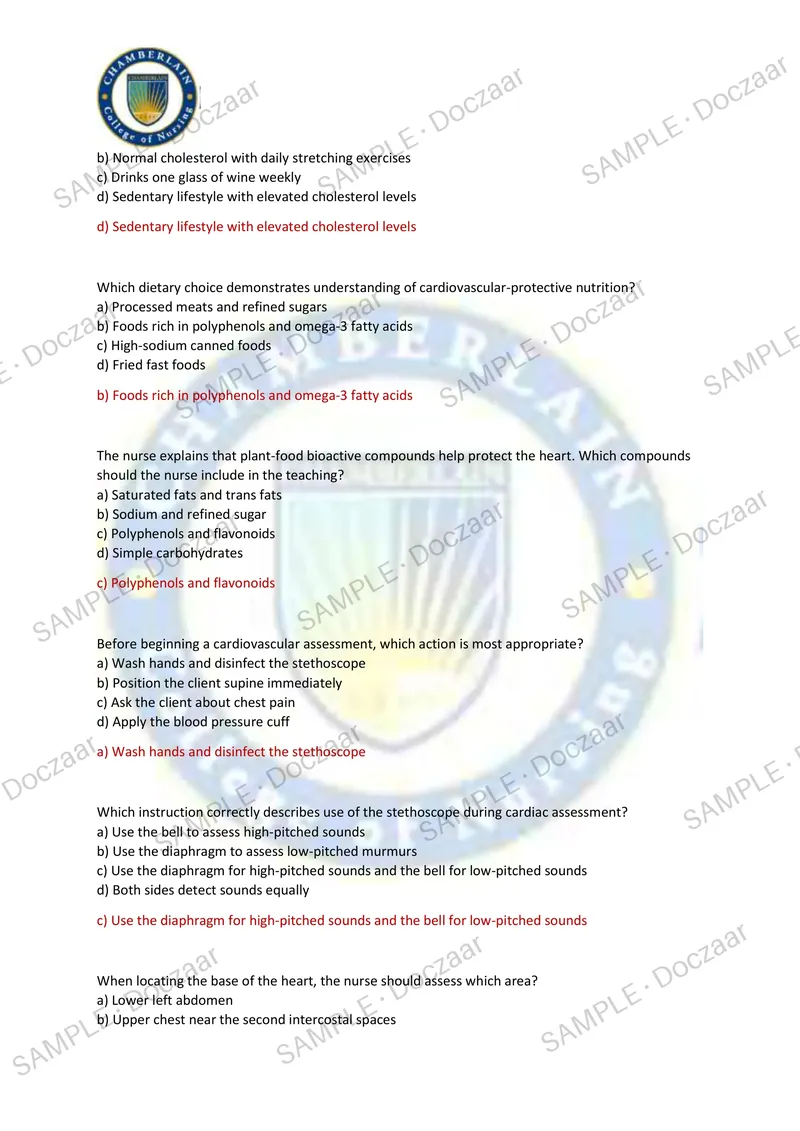
This document is a comprehensive resource designed to aid students in preparing for the NR 302 exam, specifically focusing on cardiovascular and respiratory assessments. It includes a collection of 180 frequently tested questions and their verified solutions, ensuring a high level of accuracy for exam preparation. Key topics covered involve essential activities in the physical assessment of the cardiovascular system, such as checking pedal pulses and listening for carotid bruits. It emphasizes the importance of identifying cardiovascular risk factors, including coronary artery disease, hypertension, diabetes, obesity, and tobacco use.
The document also explores crucial follow-up questions for assessing heart failure, like inquiring about the number of pillows used at night to determine orthopnea. Students are guided on recognizing symptoms that may suggest conditions such as asthma or gastroesophageal reflux, based on patient reports of nighttime breathing issues.
In-depth coverage is provided on the anatomical and physiological aspects of the heart, including the blood flow direction through the mitral valve and the expected sounds during auscultation, such as S1 being louder than S2 in the mitral area. The resource further instructs on gathering a comprehensive cardiovascular health history, addressing elements like family history of cardiovascular disease, chest pain, dyspnea, fatigue, and edema.
The document highlights significant landmarks in respiratory assessment, such as the suprasternal notch for locating the trachea and upper mediastinum. For conditions like chronic obstructive pulmonary disease (COPD), students learn about thoracic configuration changes, notably the potential development of a barrel chest. This resource is invaluable for nursing students aiming to excel in their cardiovascular and respiratory examination knowledge.
Reviews
No reviews yet.
Be the first — reviews come from verified buyers.
Related documents
NR 565 - advanced pharmacology midterm – Chamberlain NEWEST TEST EXAM 100 COMPREHENSIVE QUESTIONS /FREQUENTLY MOST TES
Walden University · Nursing and midwifery
14 pagesUndergraduate
NR565 Week 5 DM & Thyroid Meds NEWEST 2026/2027 ACTUAL EXAM 80 QUESTIONS AND CORRECT (VERIFIED ANSWERS) COVERING RECEN
Walden University · Nursing and midwifery
19 pagesUndergraduate
NHCO Phlebotomy Exam 2026/2027 TEST EXAM 100 COMPREHENSIVE QUESTIONS /FREQUENTLY MOST TESTED QUESTIONS AND VERIFIED SO
Walden University · Nursing and midwifery
24 pagesUndergraduate
NCCT - Patient Intake and Care Exam 2026/2027 TEST EXAM 100 COMPREHENSIVE QUESTIONS /FREQUENTLY MOST TESTED QUESTIONS
Walden University · Nursing and midwifery
21 pagesUndergraduate
NR 509 FINAL NEWEST 2026/2027 ACTUAL EXAM 130 QUESTIONS AND CORRECT (VERIFIED ANSWERS) COVERING RECENT AND MOST TESTED
Walden University · Nursing and midwifery
33 pagesUndergraduate
NR 509 Midterm NEWEST 2026/2027 ACTUAL EXAM 130 QUESTIONS AND CORRECT (VERIFIED ANSWERS) COVERING RECENT AND MOST TEST
Walden University · Nursing and midwifery
36 pagesUndergraduate
CMSRN NEWEST 2026/2027 ACTUAL EXAM 80 QUESTIONS AND CORRECT (VERIFIED ANSWERS) COVERING RECENT AND MOST TESTED QUESTIO
Walden University · Nursing and midwifery
18 pagesUndergraduate
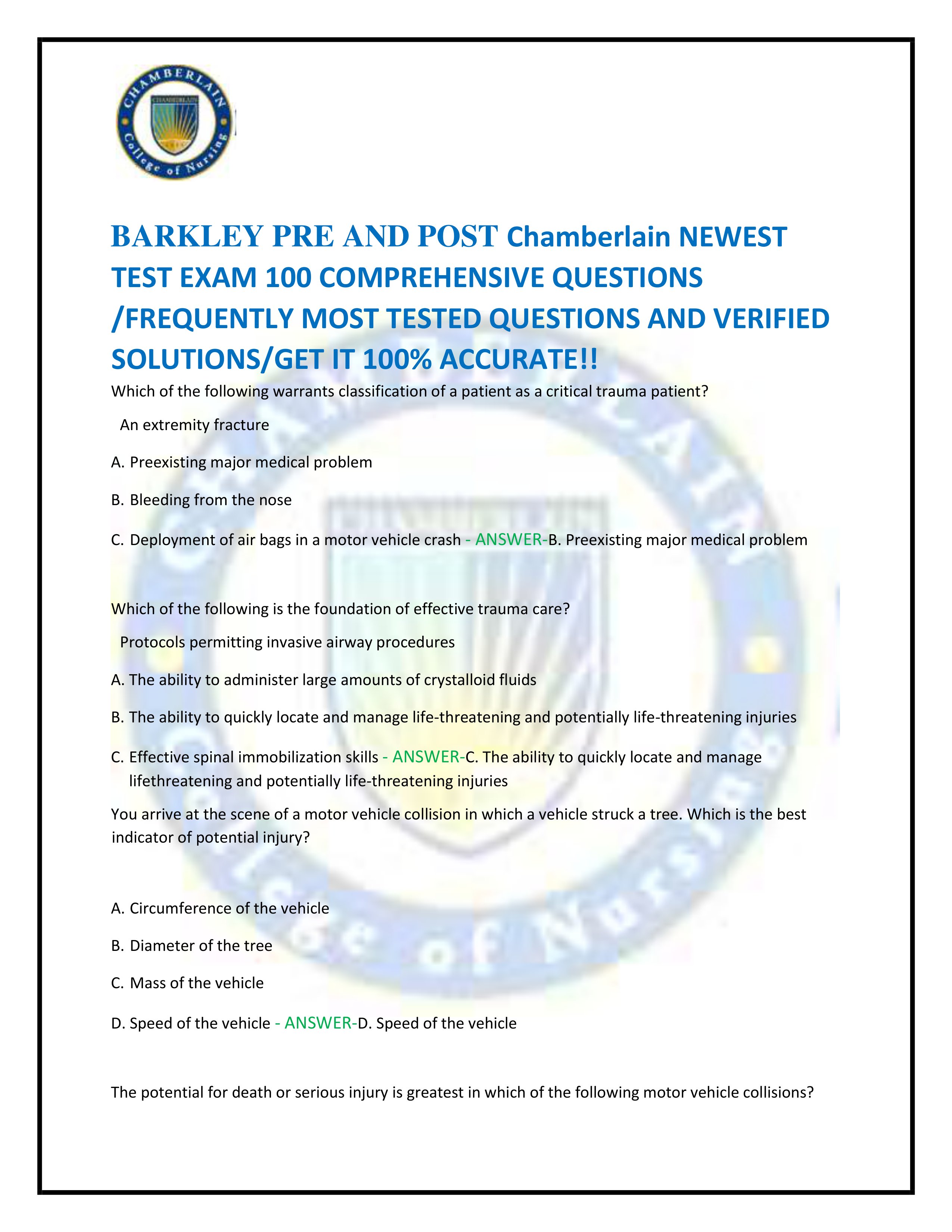
BARKLEY PRE AND POST Chamberlain NEWEST TEST EXAM 100 COMPREHENSIVE QUESTIONS /FREQUENTLY MOST TESTED QUESTIONS AND VE
Walden University · Nursing and midwifery
38 pagesUndergraduate