Past Paper
NHCO Phlebotomy Exam 2026/2027 TEST EXAM 100 COMPREHENSIVE QUESTIONS /FREQUENTLY MOST TESTED QUESTIONS AND VERIFIED SO
Preview
Page 1 of 24
Sample · 4/24
Click to enlarge Pages 2–3 · locked
Click to enlarge Pages 5–11 · locked
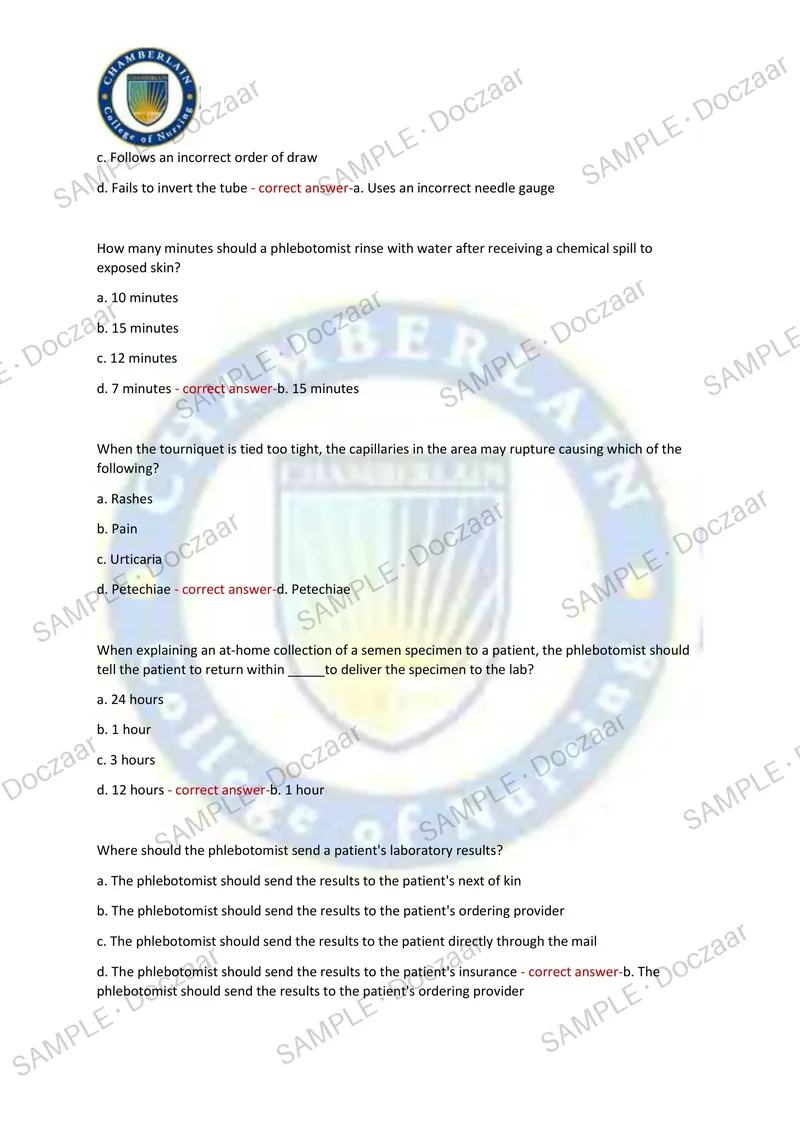
Click to enlarge Pages 13–20 · locked
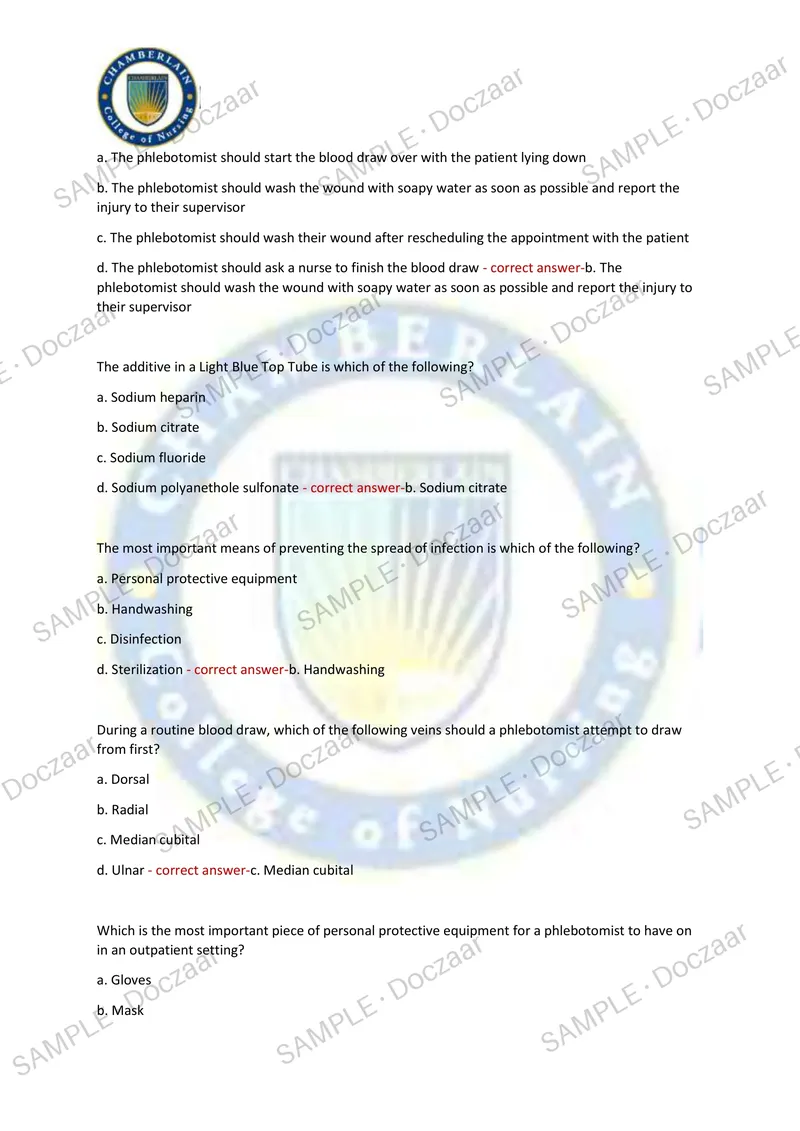
Click to enlarge
Continued
20 more pages
Locked · Full 24-page document
About this document
The "NHCO Phlebotomy Exam 2026/2027" document is a comprehensive guide for students preparing for phlebotomy certification exams. The content covers 100 frequently tested questions with verified solutions, ensuring a thorough understanding of essential phlebotomy procedures and practices. This document is designed to help students achieve accuracy and confidence in their exam preparation.
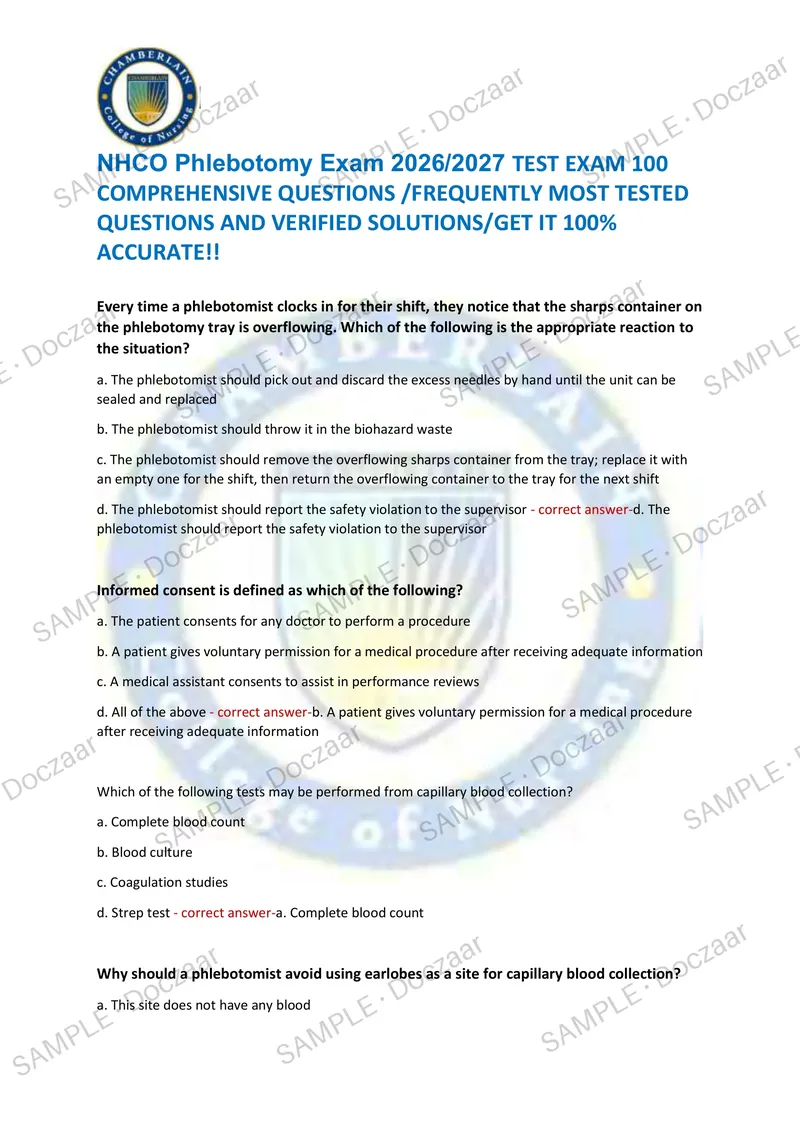
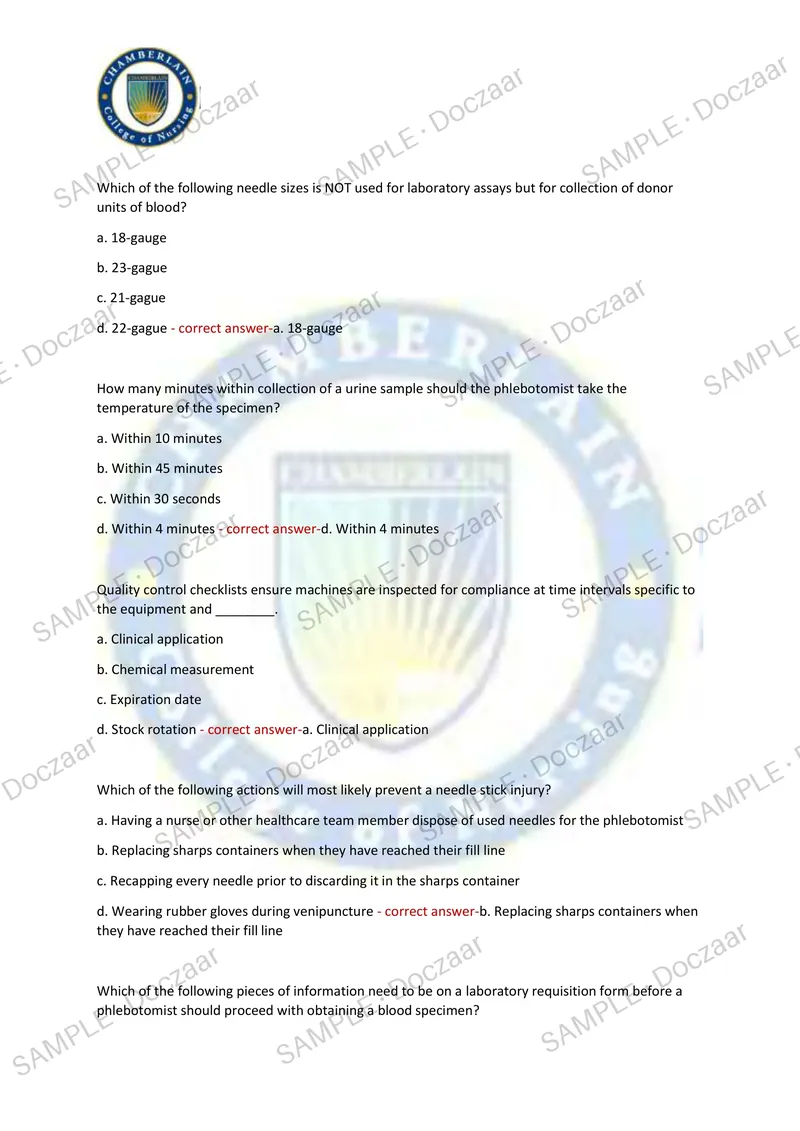
The exam questions address various scenarios and best practices in phlebotomy, such as appropriate actions when encountering an overflowing sharps container, the definition and importance of informed consent, and the proper sites for capillary blood collection. For instance, students learn that the correct response to an overflowing sharps container is to report the safety violation to a supervisor, and informed consent involves a patient giving voluntary permission for a medical procedure after receiving adequate information.
Furthermore, the document provides insights into specific details like the additive used in a Pink Top Tube for blood banking (Potassium EDTA) and the correct procedure if a patient refuses a venipuncture. It also emphasizes effective communication with patients, such as rephrasing explanations and inviting questions if a patient appears hesitant.
Additional topics include identifying the best draw site for a 9-month-old infant (either heel) and understanding the use of thixotropic gel for serum separation. By covering these crucial aspects, the document serves as an invaluable resource for phlebotomy students aiming to excel in their exams and future careers.
Reviews
No reviews yet.
Be the first — reviews come from verified buyers.
Related documents
NR 302 exam 3 NEWEST TEST EXAM 180 COMPREHENSIVE QUESTIONS /FREQUENTLY MOST TESTED QUESTIONS AND VERIFIED SOLUTIONS/GE
Walden University · Nursing and midwifery
41 pagesUndergraduate
NR 565 - advanced pharmacology midterm – Chamberlain NEWEST TEST EXAM 100 COMPREHENSIVE QUESTIONS /FREQUENTLY MOST TES
Walden University · Nursing and midwifery
14 pagesUndergraduate
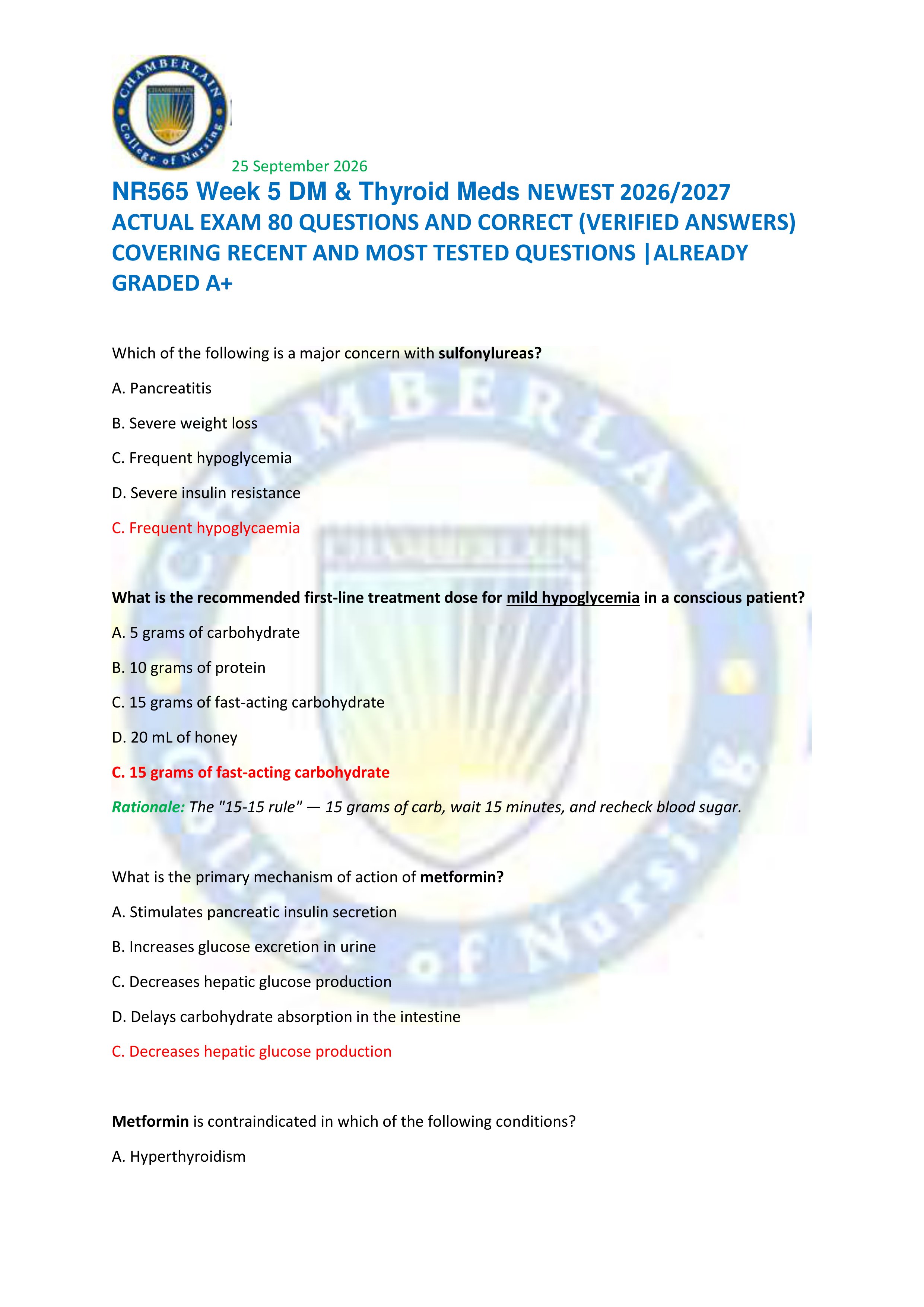
NR565 Week 5 DM & Thyroid Meds NEWEST 2026/2027 ACTUAL EXAM 80 QUESTIONS AND CORRECT (VERIFIED ANSWERS) COVERING RECEN
Walden University · Nursing and midwifery
19 pagesUndergraduate
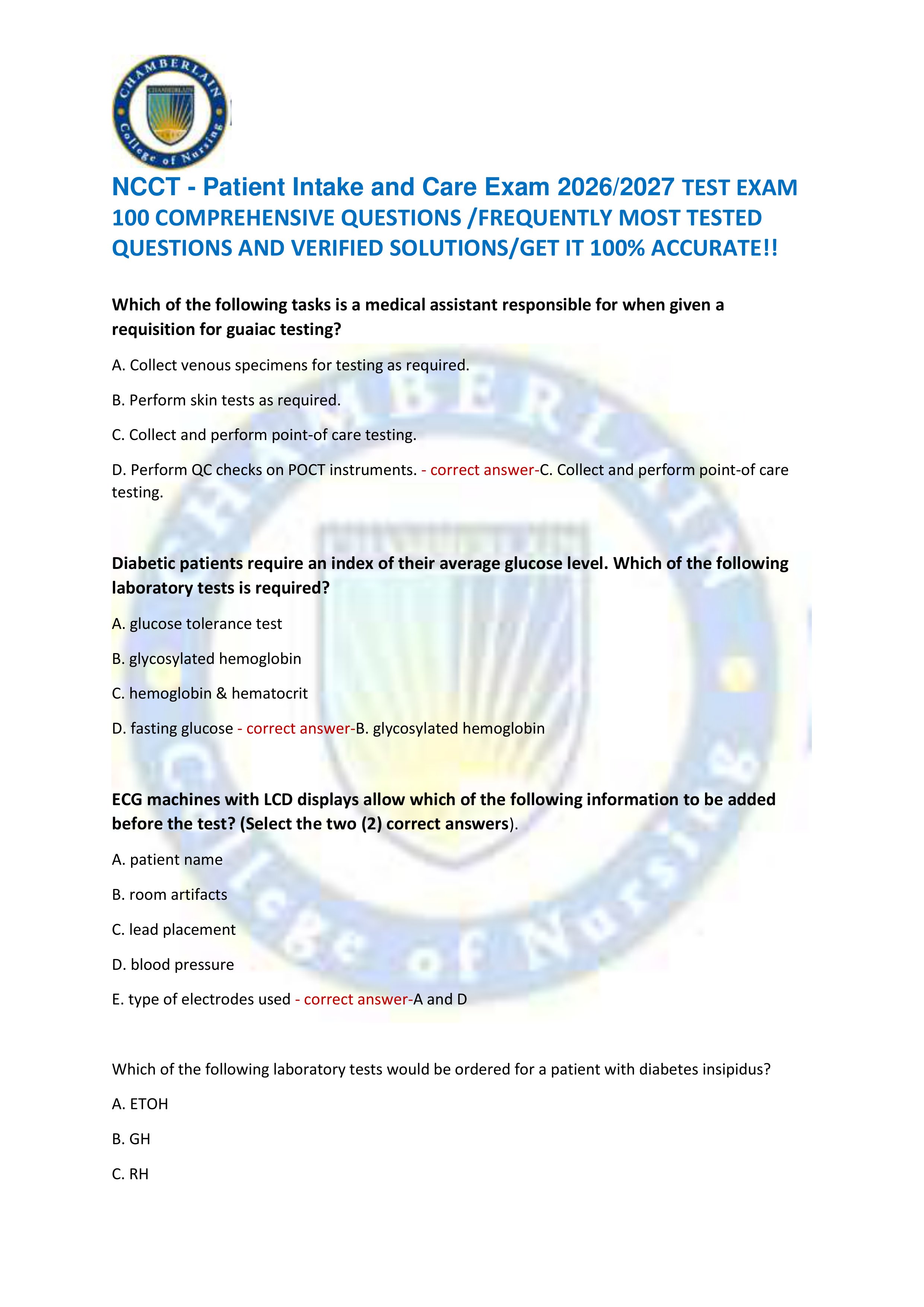
NCCT - Patient Intake and Care Exam 2026/2027 TEST EXAM 100 COMPREHENSIVE QUESTIONS /FREQUENTLY MOST TESTED QUESTIONS
Walden University · Nursing and midwifery
21 pagesUndergraduate
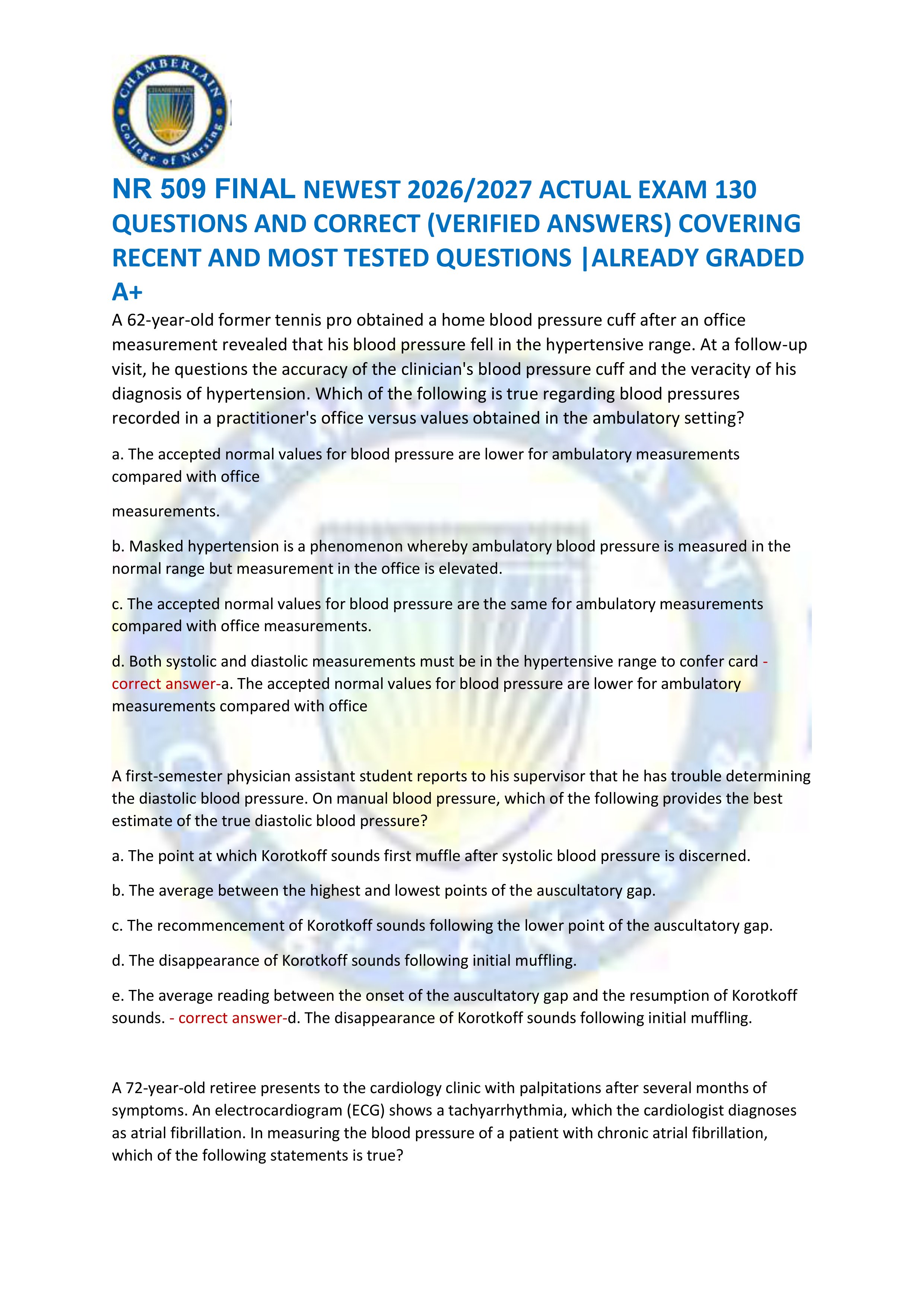
NR 509 FINAL NEWEST 2026/2027 ACTUAL EXAM 130 QUESTIONS AND CORRECT (VERIFIED ANSWERS) COVERING RECENT AND MOST TESTED
Walden University · Nursing and midwifery
33 pagesUndergraduate
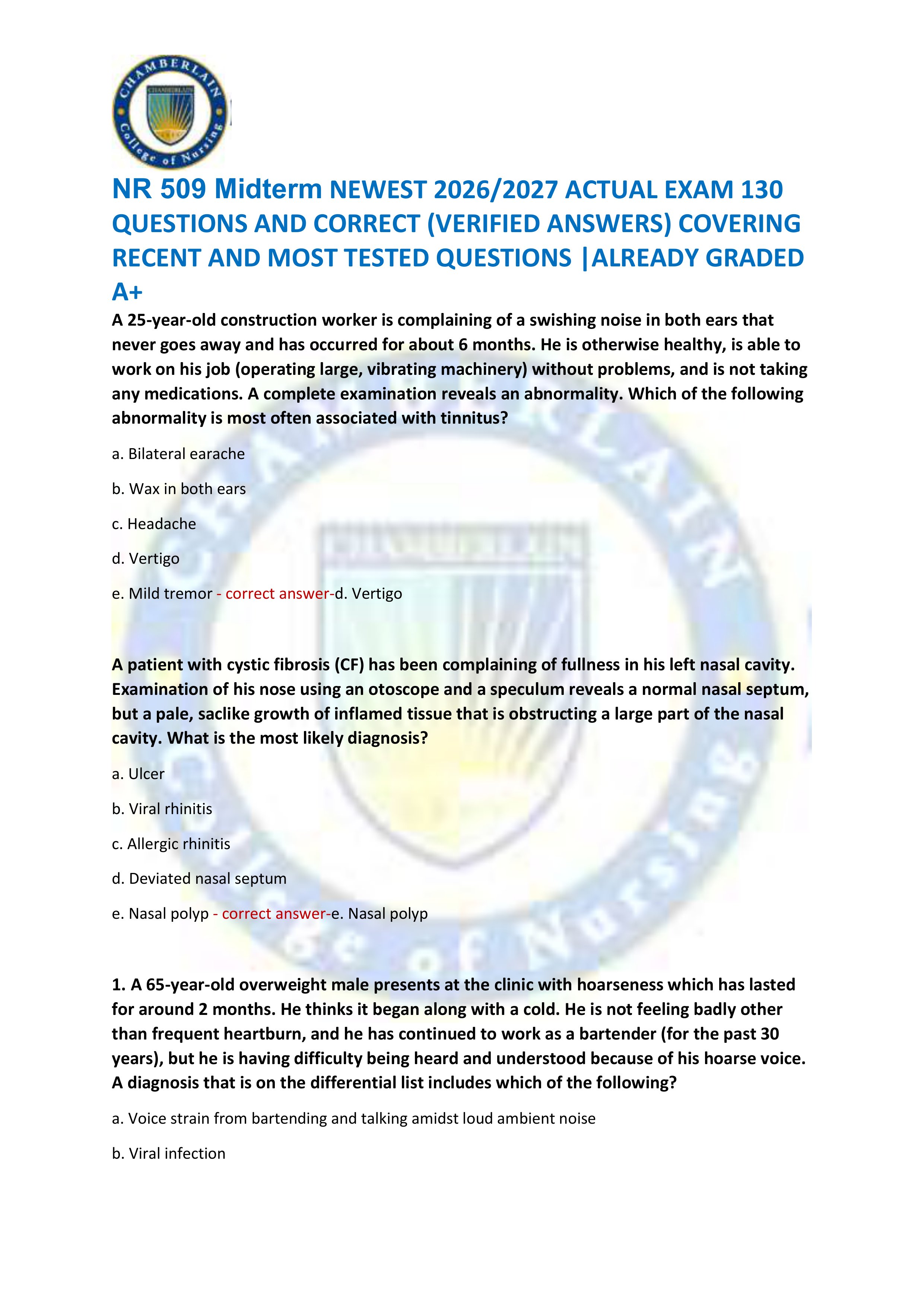
NR 509 Midterm NEWEST 2026/2027 ACTUAL EXAM 130 QUESTIONS AND CORRECT (VERIFIED ANSWERS) COVERING RECENT AND MOST TEST
Walden University · Nursing and midwifery
36 pagesUndergraduate
CMSRN NEWEST 2026/2027 ACTUAL EXAM 80 QUESTIONS AND CORRECT (VERIFIED ANSWERS) COVERING RECENT AND MOST TESTED QUESTIO
Walden University · Nursing and midwifery
18 pagesUndergraduate
BARKLEY PRE AND POST Chamberlain NEWEST TEST EXAM 100 COMPREHENSIVE QUESTIONS /FREQUENTLY MOST TESTED QUESTIONS AND VE
Walden University · Nursing and midwifery
38 pagesUndergraduate