Exam Elaborations
BIOS 251 BIO 251 WEEK 8 EXAM 2026/2027 | 150 HIGH-YIELD QUESTIONS & VERIFIED ANSWERS | LATEST TEST PREP | RECENT & MOST
Preview
Page 1 of 14
Sample · 3/14
Click to enlarge Pages 2–3 · locked
Click to enlarge Pages 5–11 · locked
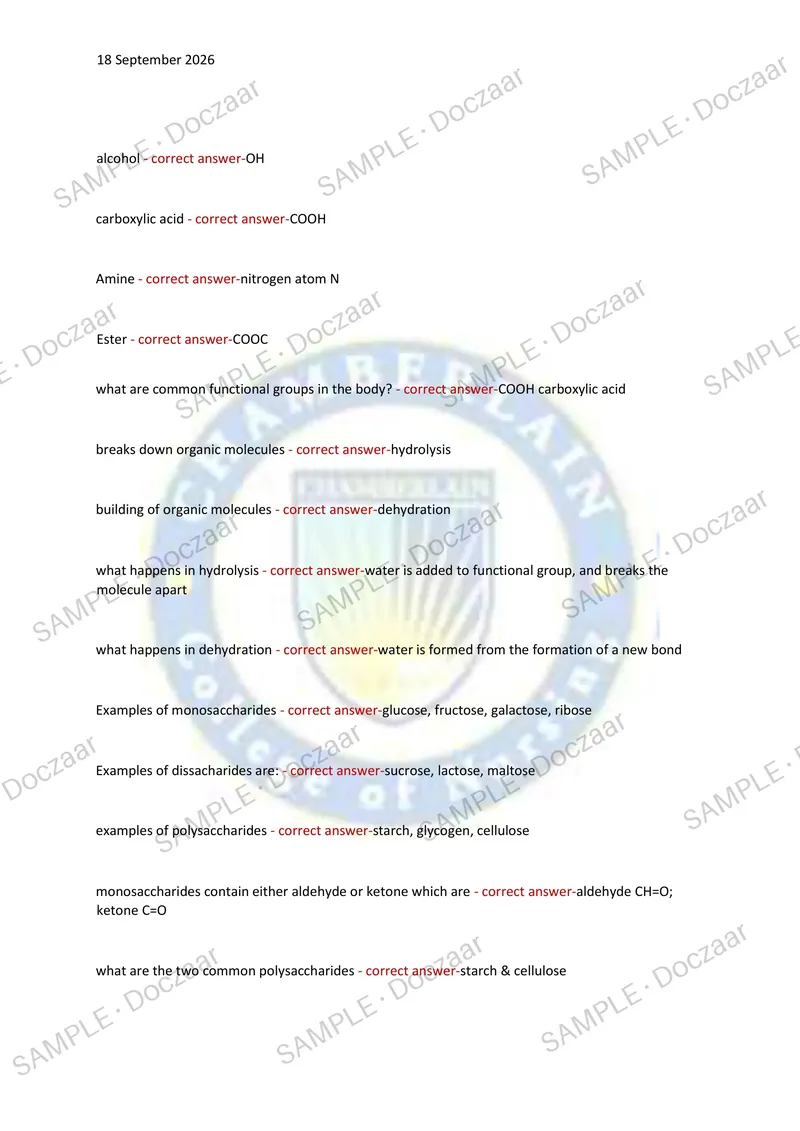
Click to enlarge
Continued
11 more pages
Locked · Full 14-page document
About this document
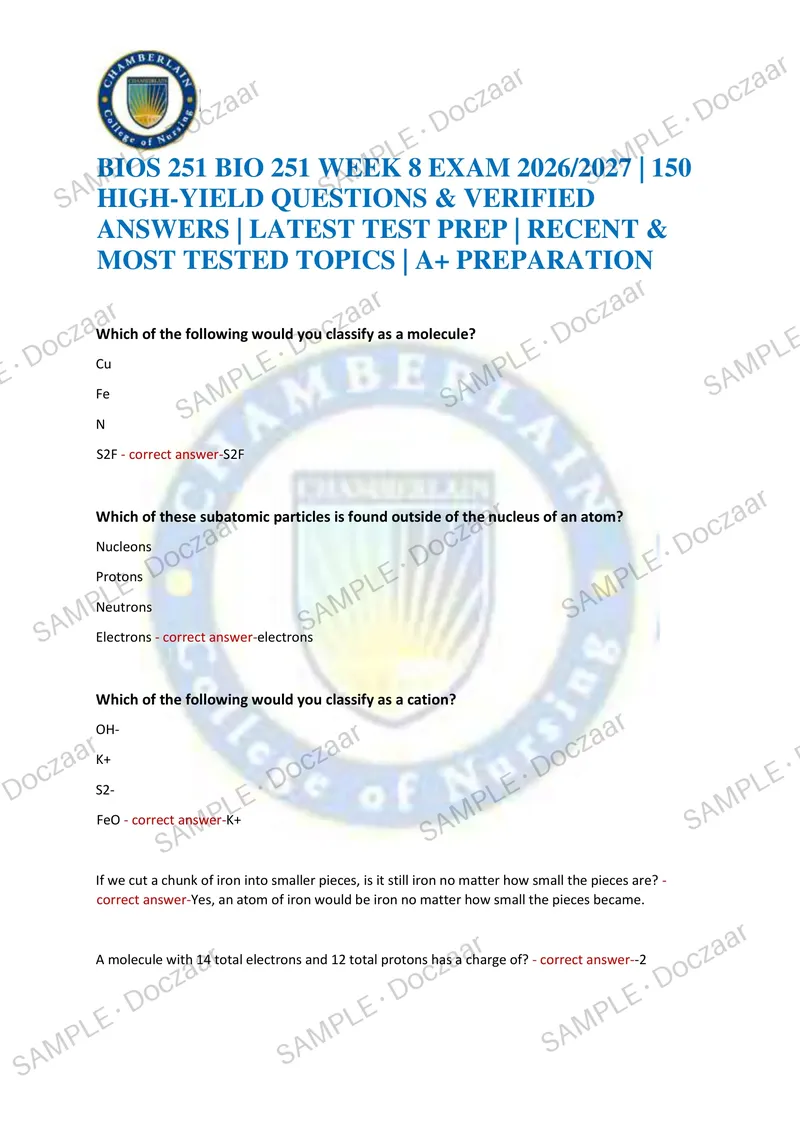
This document serves as an essential exam preparation guide for BIOS 251 or BIO 251, focusing on the Week 8 Exam for the academic years 2026/2027. It covers 150 high-yield questions and verified answers, providing a comprehensive review of recent and most tested topics in biology and chemistry. Students will find this resource invaluable for A+ preparation in understanding fundamental concepts related to molecules, atoms, and ions.
The document delves into the classification of molecules and ions, emphasizing the distinction between subatomic particles like electrons, protons, and neutrons. It discusses the properties of elements, such as iron (Fe), and differentiates between cations and anions, such as K+ and OH-. Additionally, it explains how subatomic particles, particularly electrons, play a crucial role in forming chemical bonds, introducing students to covalent and hydrogen bonding.
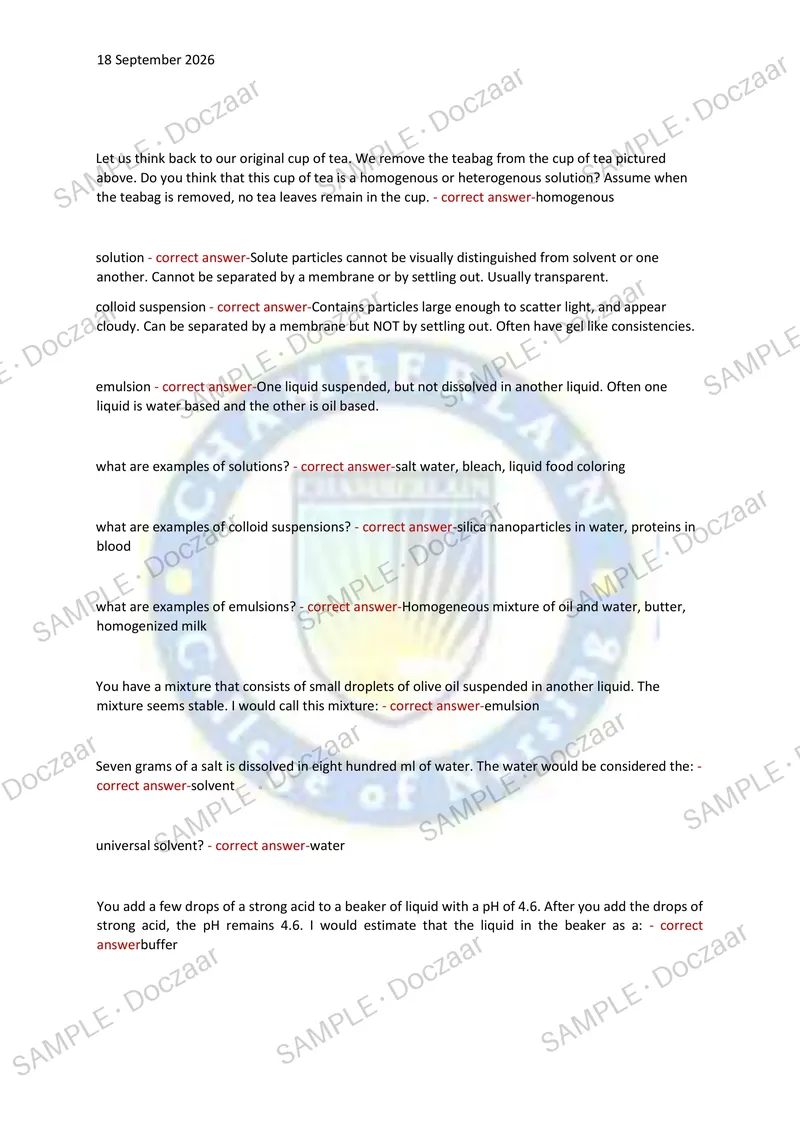
Acidic and basic solutions are explored through pH levels, providing clear examples and explanations. The document also addresses solutions, emulsions, and the concept of solutes, using NaCl as an example. Students learn about polymers and the processes of dehydration and polymerization in protein formation, highlighting carbon's significance in organic chemistry and hydrocarbons as foundational compounds.
Carbohydrates are examined for their role in providing short-term energy, with monosaccharides and polysaccharides such as amylose and glucose discussed. The structure of DNA and RNA is outlined, detailing nucleotides like thymine, uracil, and ribose, while emphasizing the double helix structure of DNA and the hydrogen bonds between nucleic acids.
Overall, this document is an exceptional study tool for students seeking to consolidate their understanding of biological and chemical principles, with keywords like molecules, ions, DNA, RNA, carbohydrates, and bonding helping improve search visibility for those preparing for the BIOS 251 exam.
Reviews
No reviews yet.
Be the first — reviews come from verified buyers.
Related documents
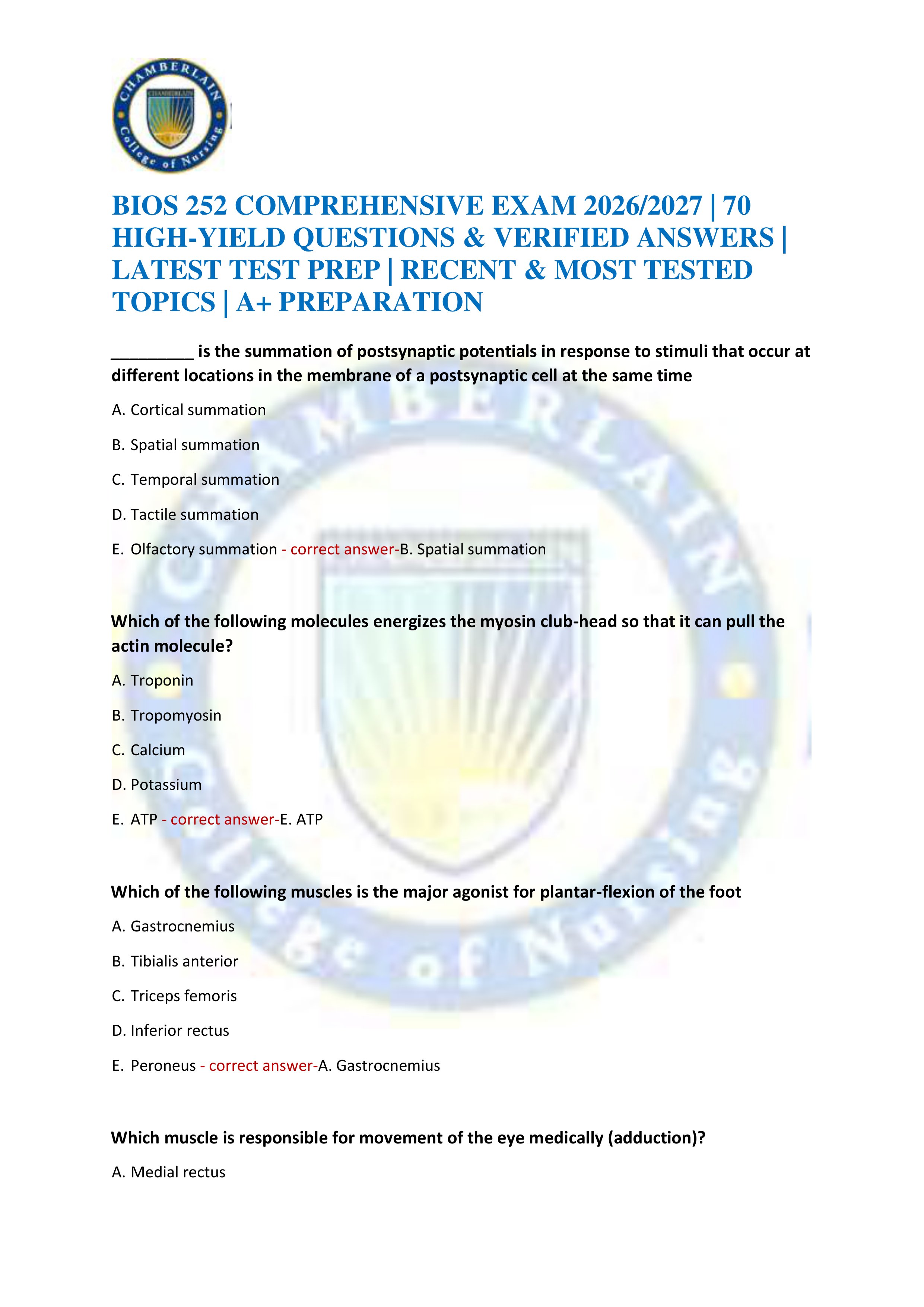
BIOS 252 COMPREHENSIVE EXAM 2026/2027 | 70 HIGH-YIELD QUESTIONS & VERIFIED ANSWERS | LATEST TEST PREP | RECENT & MOST TE
Walden University · Biology
15 pagesUndergraduate
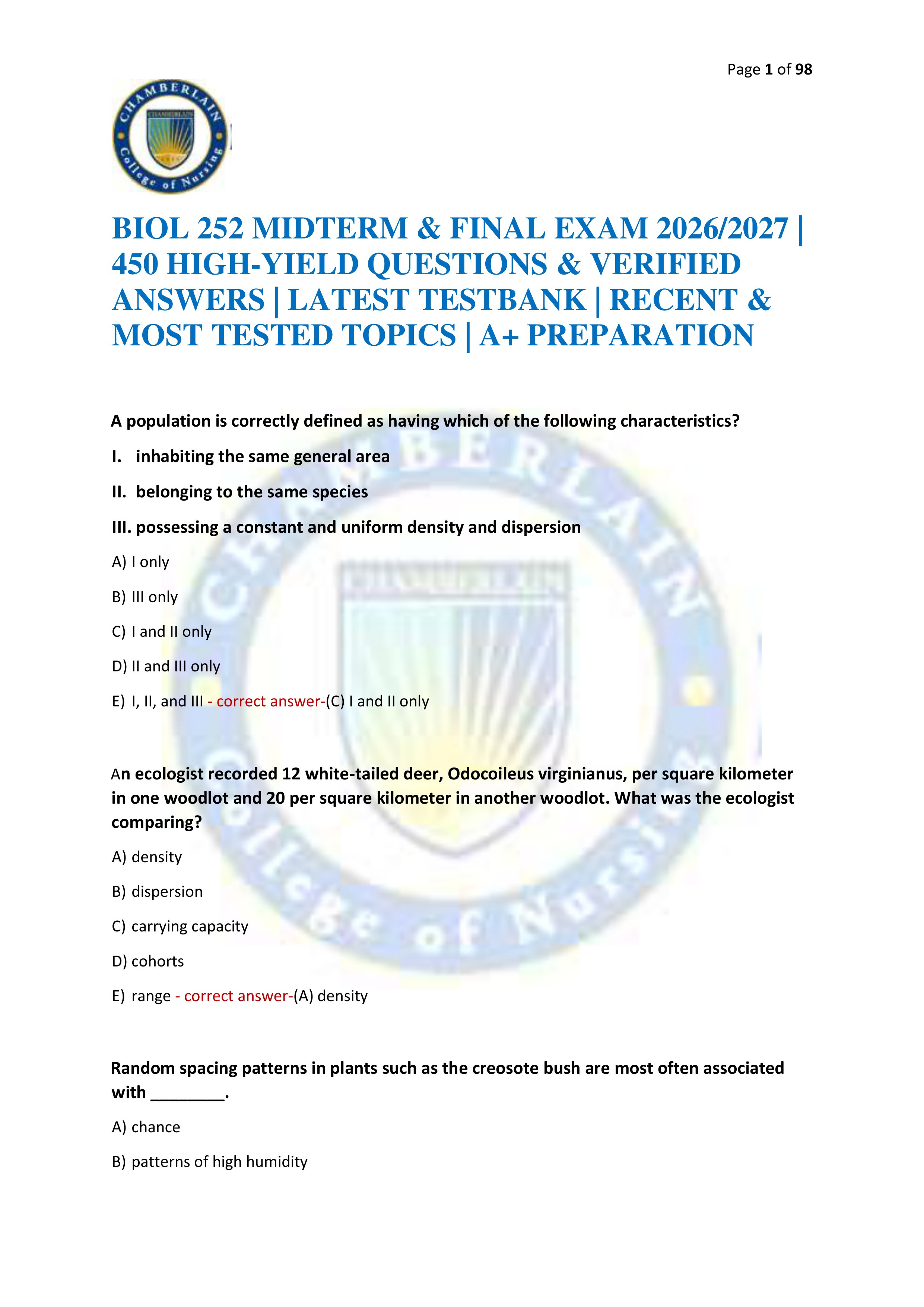
BIOL 252 MIDTERM & FINAL EXAM 2026/2027 | 450 HIGH-YIELD QUESTIONS & VERIFIED ANSWERS | LATEST TESTBANK | RECENT & MOST
Walden University · Biology
98 pagesUndergraduate
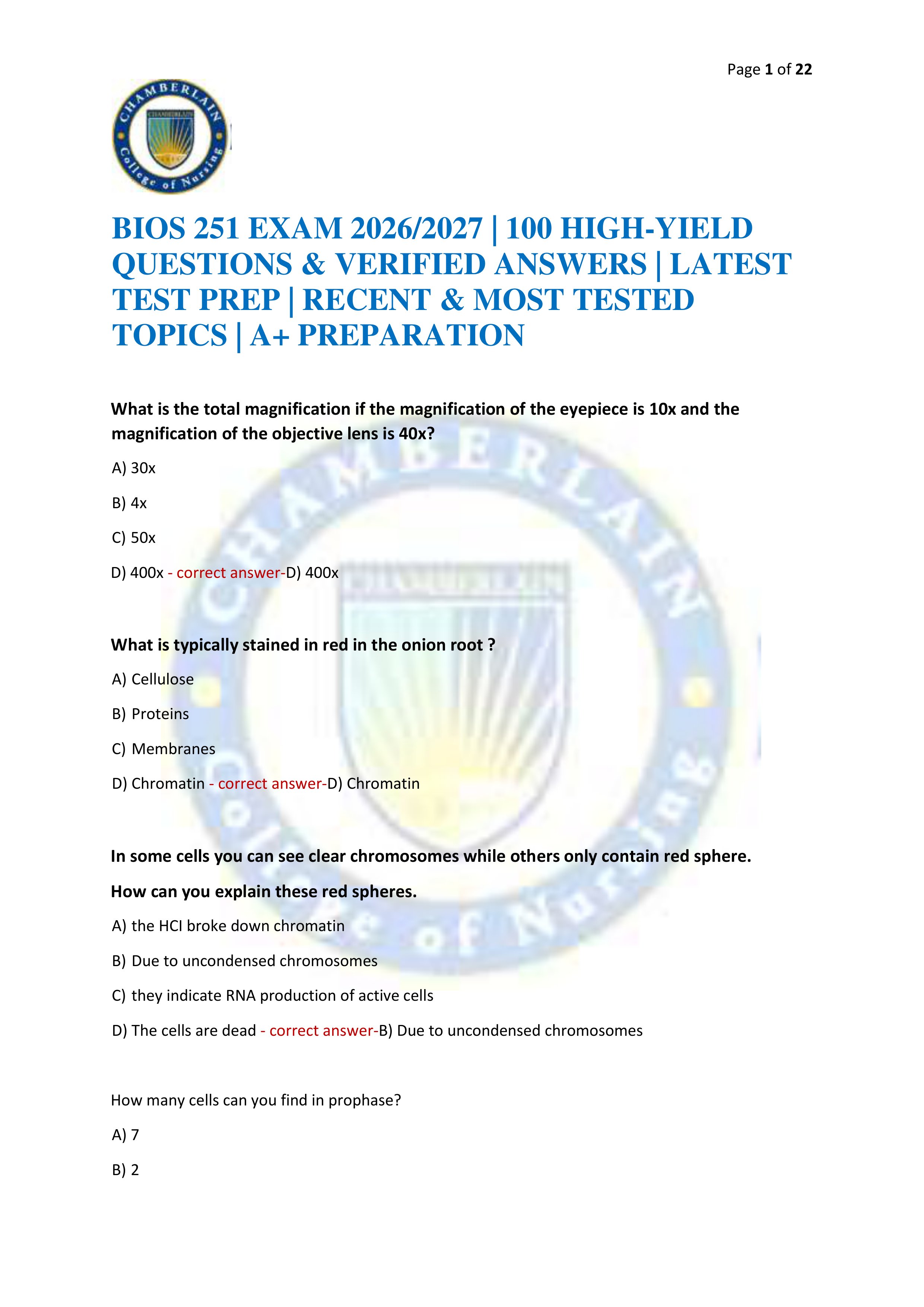
BIOS 251 EXAM 2026/2027 | 100 HIGH-YIELD QUESTIONS & VERIFIED ANSWERS | LATEST TEST PREP | RECENT & MOST TESTED TOPICS |
Walden University · Biology
22 pagesUndergraduate
CHAMBERLAIN UNIVERSITY BIOS 251 EXAM 3 2026/2027 | 150 HIGH-YIELD QUESTIONS & VERIFIED ANSWERS | LATEST TEST PREP | RECE
Walden University · Biology
28 pagesUndergraduate
CHAMBERLAIN UNIVERSITY BIOS 251 EXAM 1 2026/2027 | 150 HIGH-YIELD QUESTIONS & VERIFIED ANSWERS | LATEST TEST PREP | RECE
Walden University · Biology
31 pagesUndergraduate