Exam Elaborations
CHAMBERLAIN UNIVERSITY BIOS 251 EXAM 2 2026/2027 | 150 HIGH-YIELD QUESTIONS & VERIFIED ANSWERS | LATEST TEST PREP | RECE
Preview
Page 1 of 30
Sample · 5/30
Click to enlarge Pages 2–5 · locked
Click to enlarge Pages 7–9 · locked
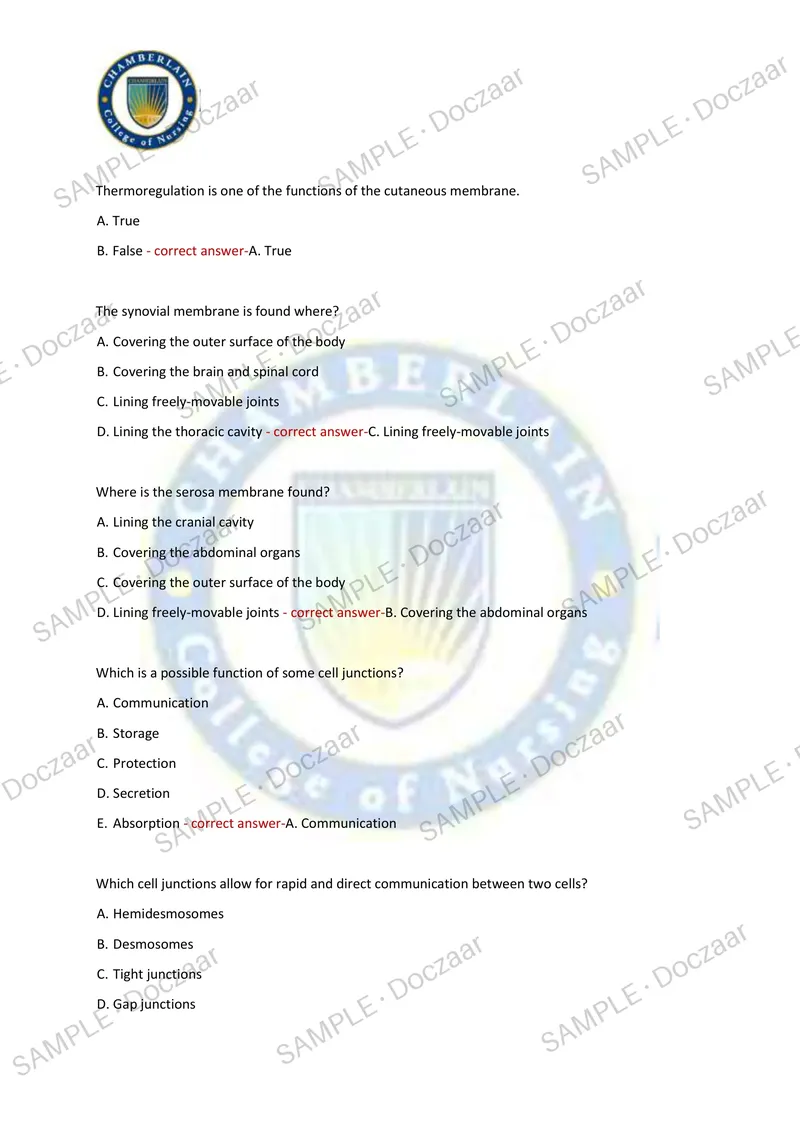
Click to enlarge Pages 11–20 · locked
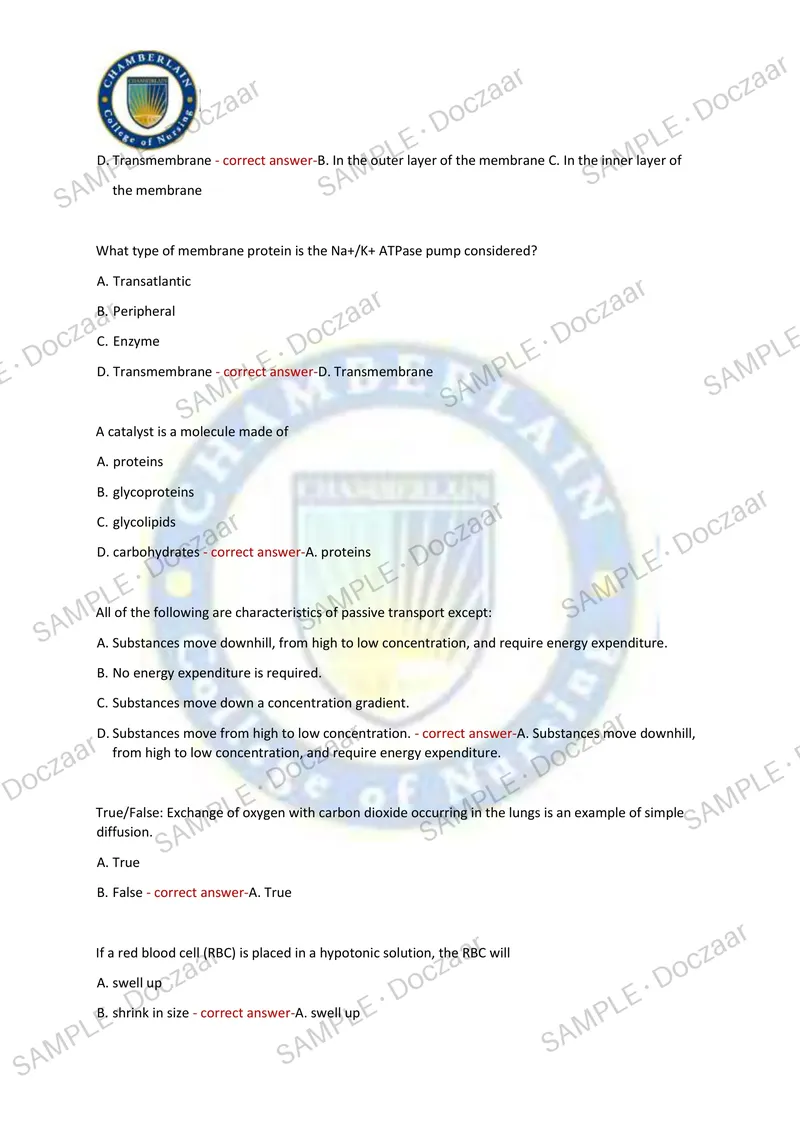
Click to enlarge Pages 22–26 · locked
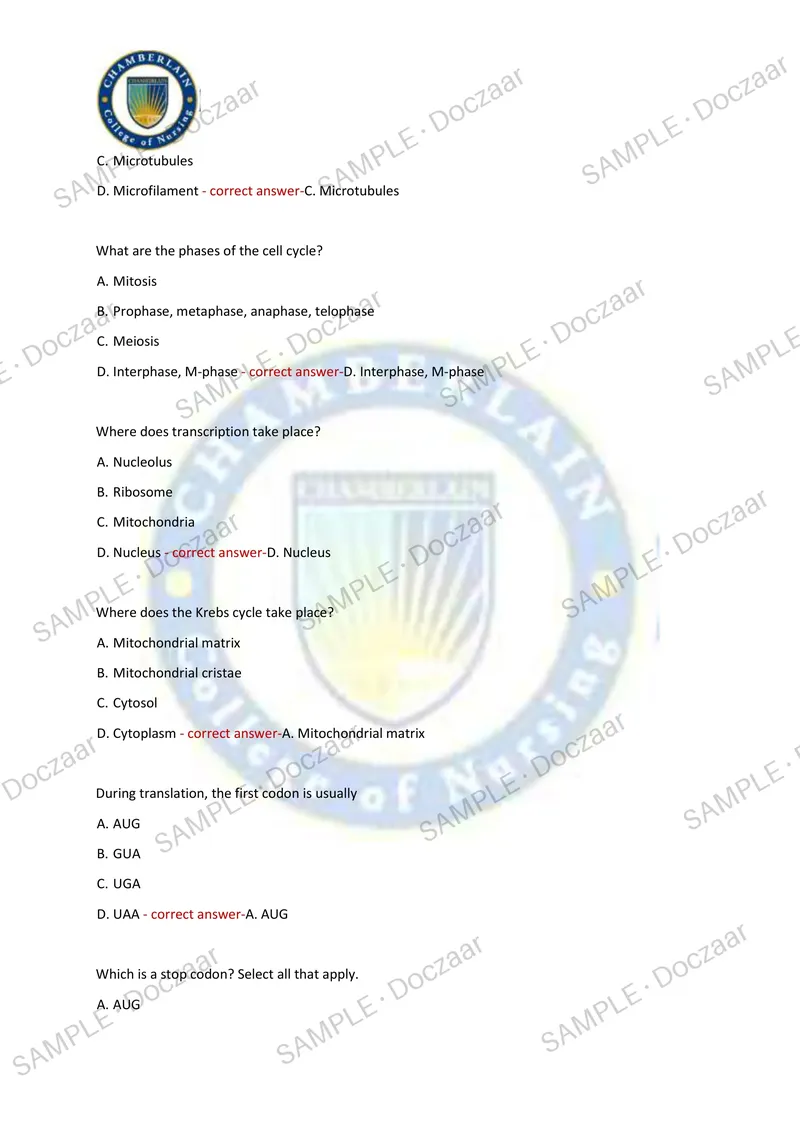
Click to enlarge
Continued
25 more pages
Locked · Full 30-page document
About this document
This document serves as a comprehensive study guide for Chamberlain University's BIOS 251 Exam 2 for the academic years 2026/2027. It features 150 high-yield questions with verified answers, focusing on the latest and most tested topics to ensure A+ preparation for students. The content encompasses a wide range of biological and physiological concepts critical for success in this exam.
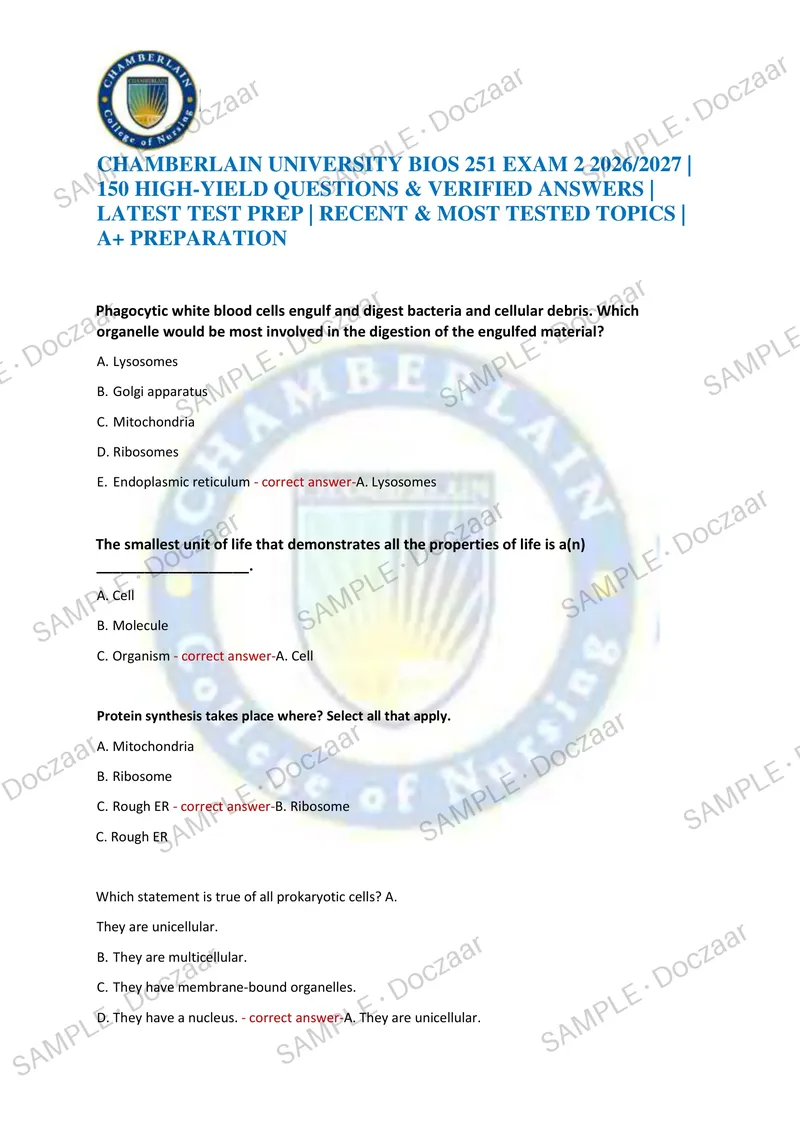
The document covers key areas such as cellular biology, identifying lysosomes as the primary organelle involved in digestion within phagocytic white blood cells, and recognizing the cell as the smallest unit of life. It delves into protein synthesis locations, emphasizing the roles of ribosomes and the rough endoplasmic reticulum.
Further exploration includes the characteristics of prokaryotic cells, the functions of macrophages, and the specialized roles of neurons in conducting nerve impulses. The document outlines the functions of glial cells, such as protecting neurons, acting as housekeeping for the nervous system, and providing nourishment.
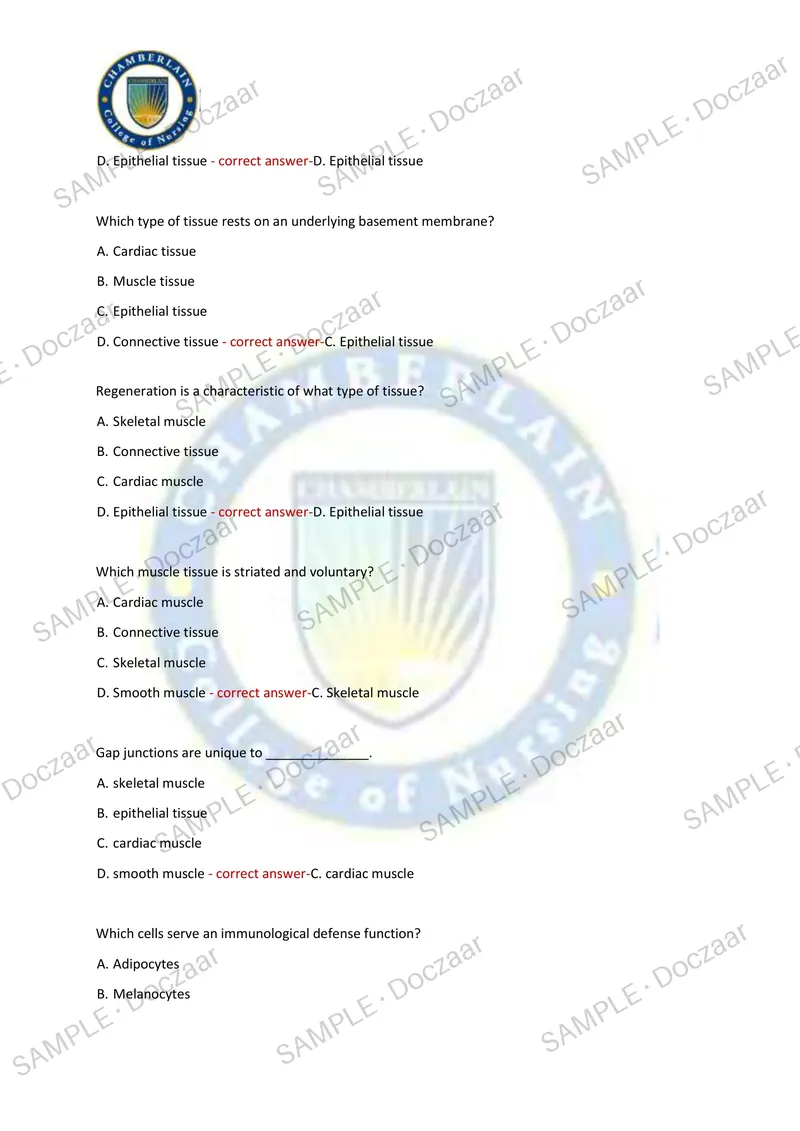
The guide also addresses muscle tissue types—skeletal, cardiac, and smooth—and their functions, while correcting misconceptions about muscle tissue characteristics. Cellular processes like hyperplasia and dysplasia are discussed, with distinctions made between different cellular adaptations like metaplasia, exemplified by Barrett's esophagus.
Topics such as osmosis, the major lipids of plasma membranes (phospholipids), and transport mechanisms including active and passive transport are elucidated. The document also covers endocytosis and pinocytosis as forms of bulk transport, highlighting their relevance in cellular function.
Overall, this exam preparation guide is an invaluable resource for students aiming to excel in BIOS 251, providing thorough insights into essential biological processes and systems.
Reviews
No reviews yet.
Be the first — reviews come from verified buyers.
Related documents
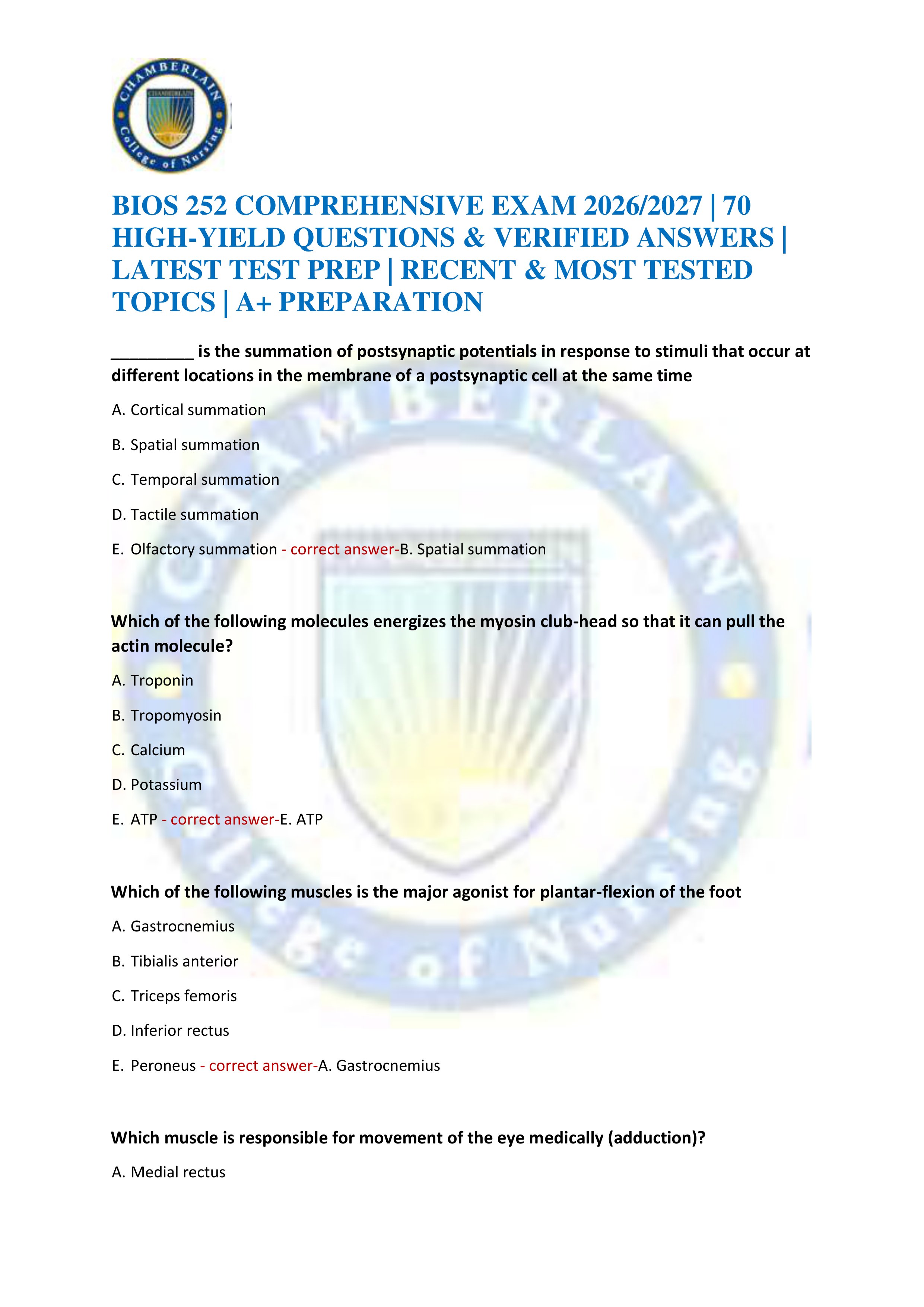
BIOS 252 COMPREHENSIVE EXAM 2026/2027 | 70 HIGH-YIELD QUESTIONS & VERIFIED ANSWERS | LATEST TEST PREP | RECENT & MOST TE
Walden University · Biology
15 pagesUndergraduate
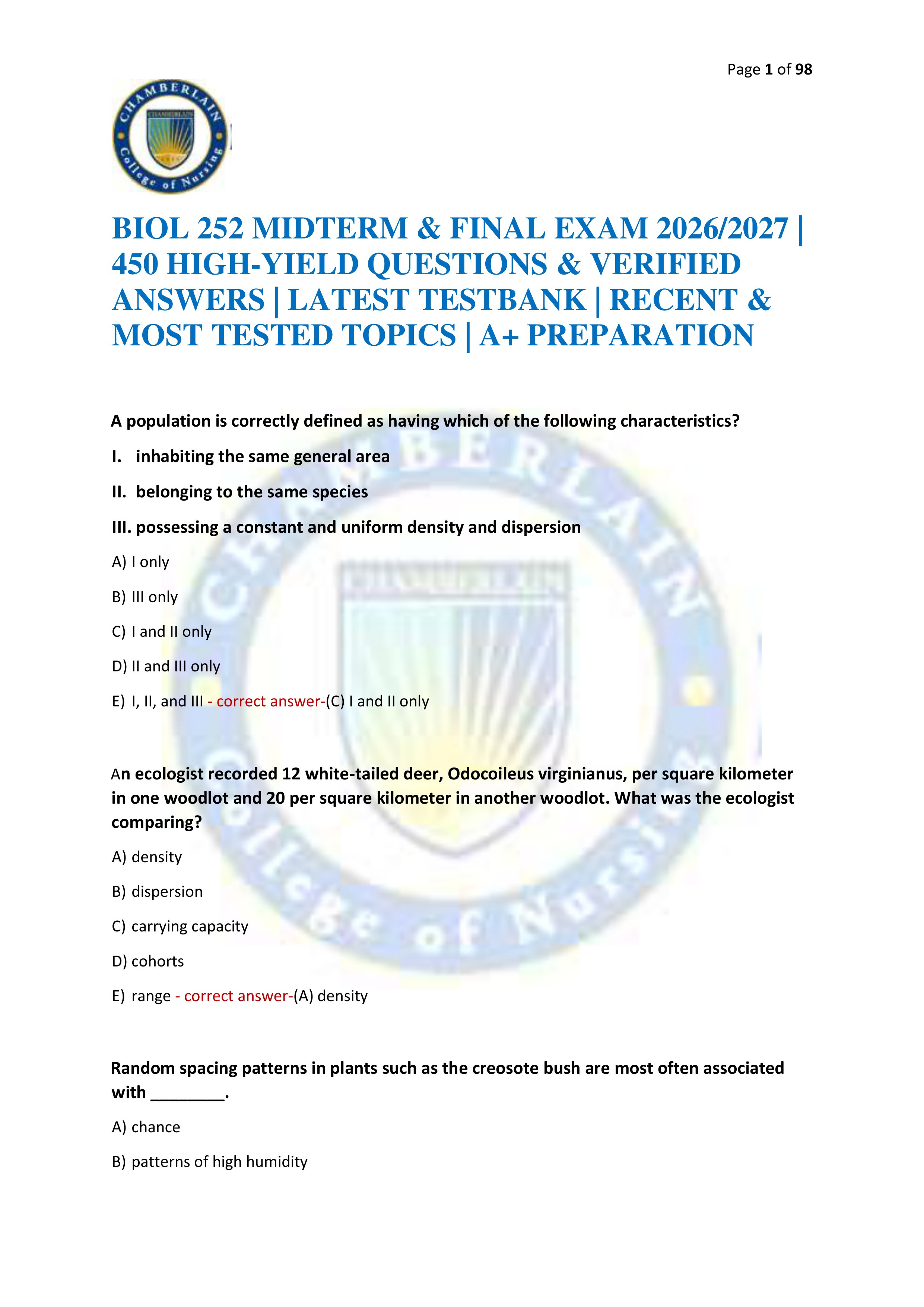
BIOL 252 MIDTERM & FINAL EXAM 2026/2027 | 450 HIGH-YIELD QUESTIONS & VERIFIED ANSWERS | LATEST TESTBANK | RECENT & MOST
Walden University · Biology
98 pagesUndergraduate
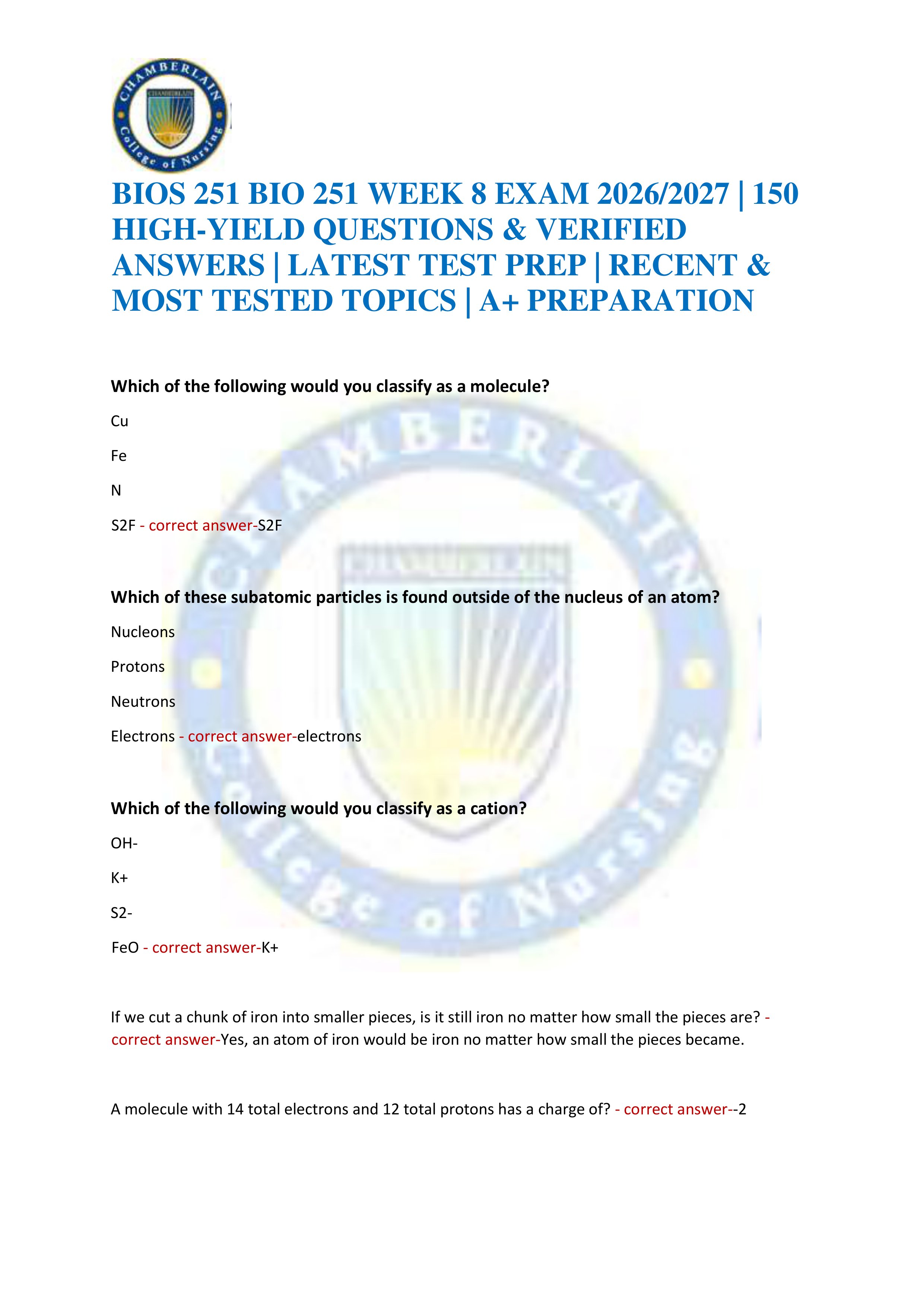
BIOS 251 BIO 251 WEEK 8 EXAM 2026/2027 | 150 HIGH-YIELD QUESTIONS & VERIFIED ANSWERS | LATEST TEST PREP | RECENT & MOST
Walden University · Biology
14 pagesUndergraduate
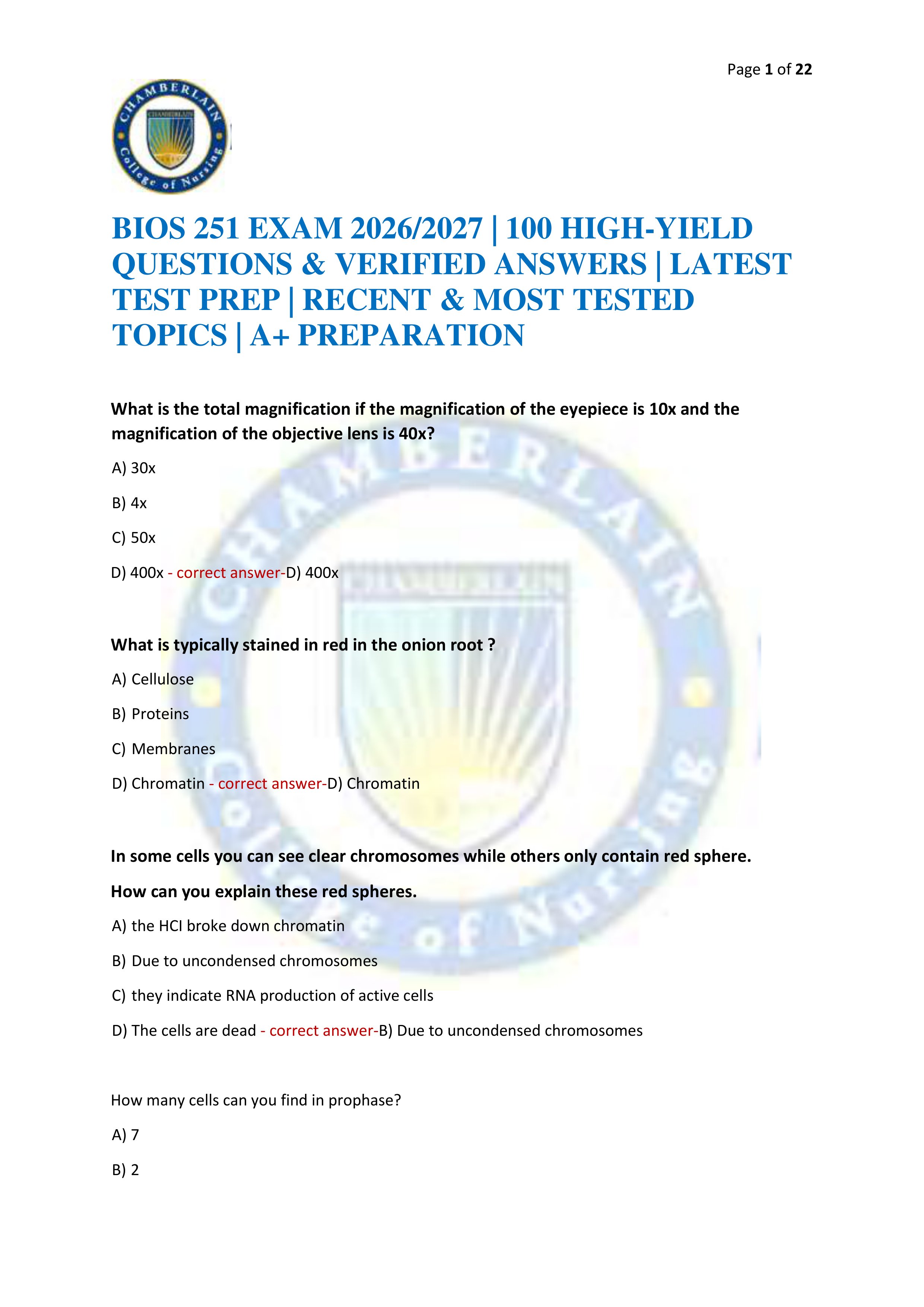
BIOS 251 EXAM 2026/2027 | 100 HIGH-YIELD QUESTIONS & VERIFIED ANSWERS | LATEST TEST PREP | RECENT & MOST TESTED TOPICS |
Walden University · Biology
22 pagesUndergraduate
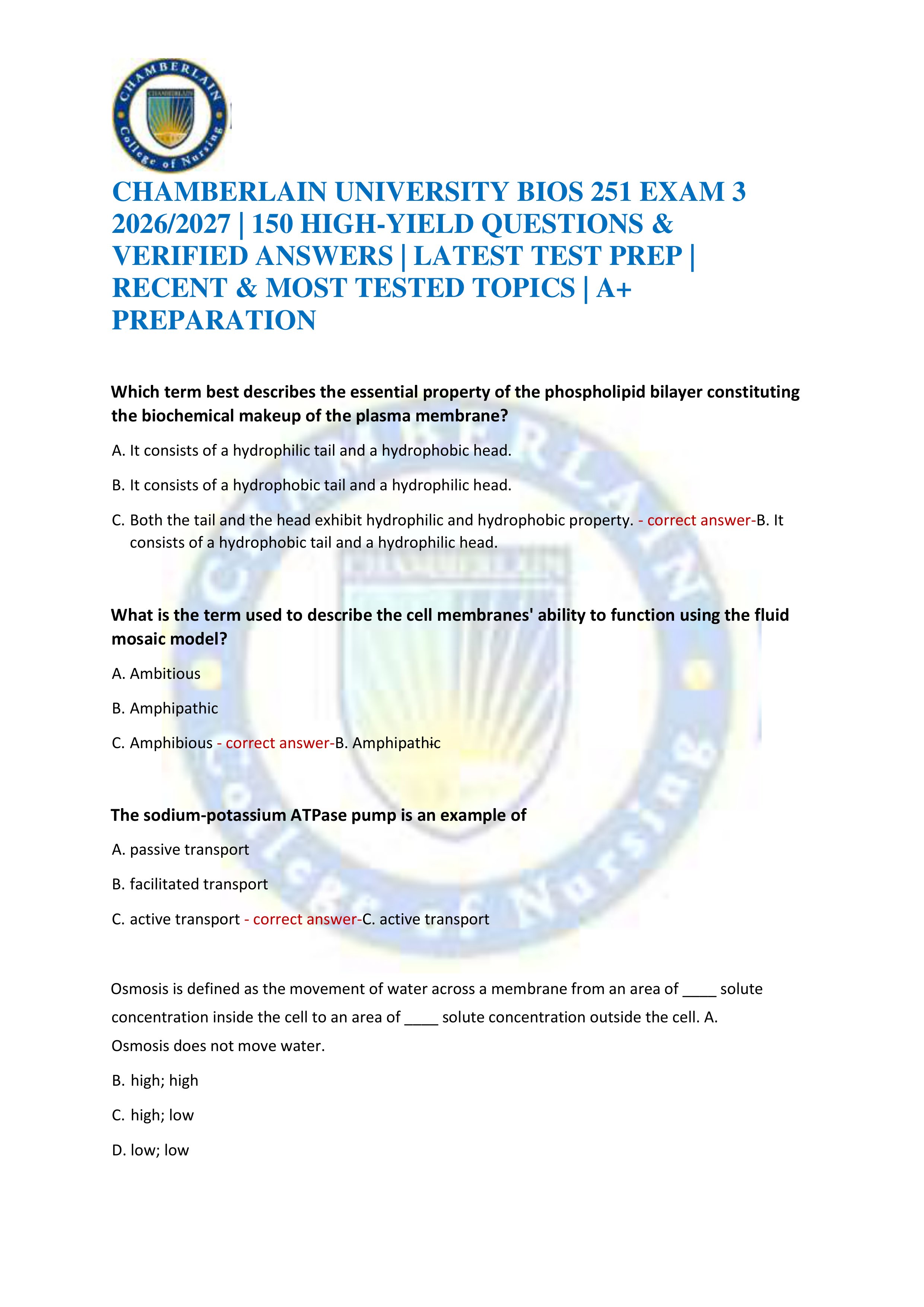
CHAMBERLAIN UNIVERSITY BIOS 251 EXAM 3 2026/2027 | 150 HIGH-YIELD QUESTIONS & VERIFIED ANSWERS | LATEST TEST PREP | RECE
Walden University · Biology
28 pagesUndergraduate