Exam Elaborations
BIOLOGY CELL SIGNALING, HORMONES & NERVOUS SYSTEM EXAM 2026/2027 | 350 HIGH-YIELD QUESTIONS & VERIFIED ANSWERS | LATEST
Preview
Page 1 of 32
Sample · 5/32
Click to enlarge Pages 2–4 · locked
Click to enlarge Pages 6–13 · locked
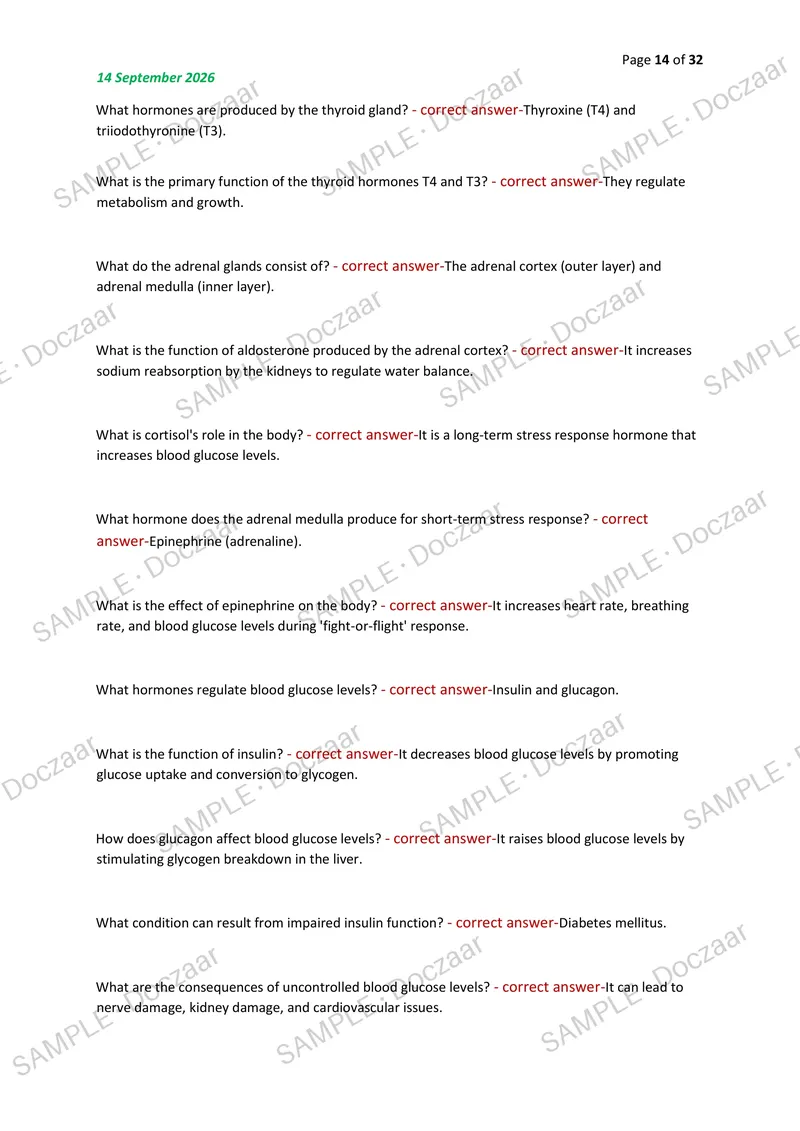
Click to enlarge Pages 15–20 · locked
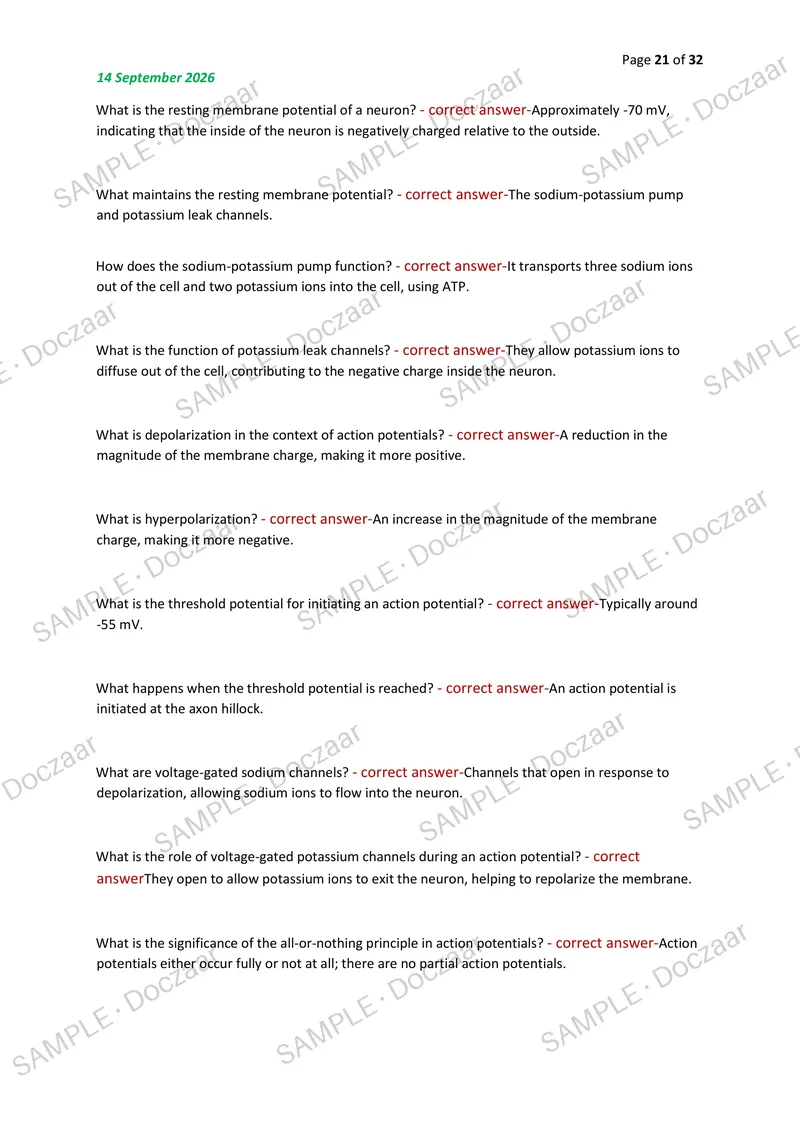
Click to enlarge Pages 22–28 · locked
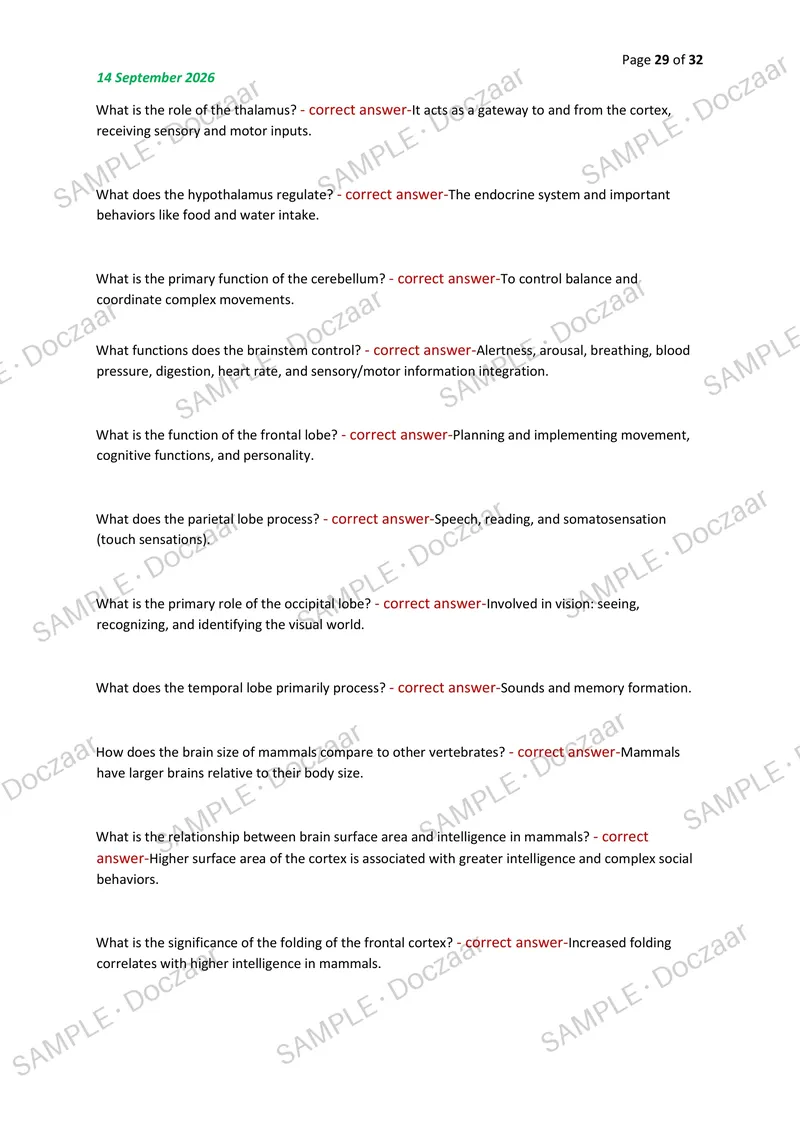
Click to enlarge
Continued
27 more pages
Locked · Full 32-page document
About this document
This document is a comprehensive guide for students preparing for the Biology Cell Signaling, Hormones, and Nervous System Exam for the 2026/2027 academic year. It features 350 high-yield questions along with verified answers, designed to cover the latest exam topics extensively. Students aiming for A+ preparation will find this resource invaluable.
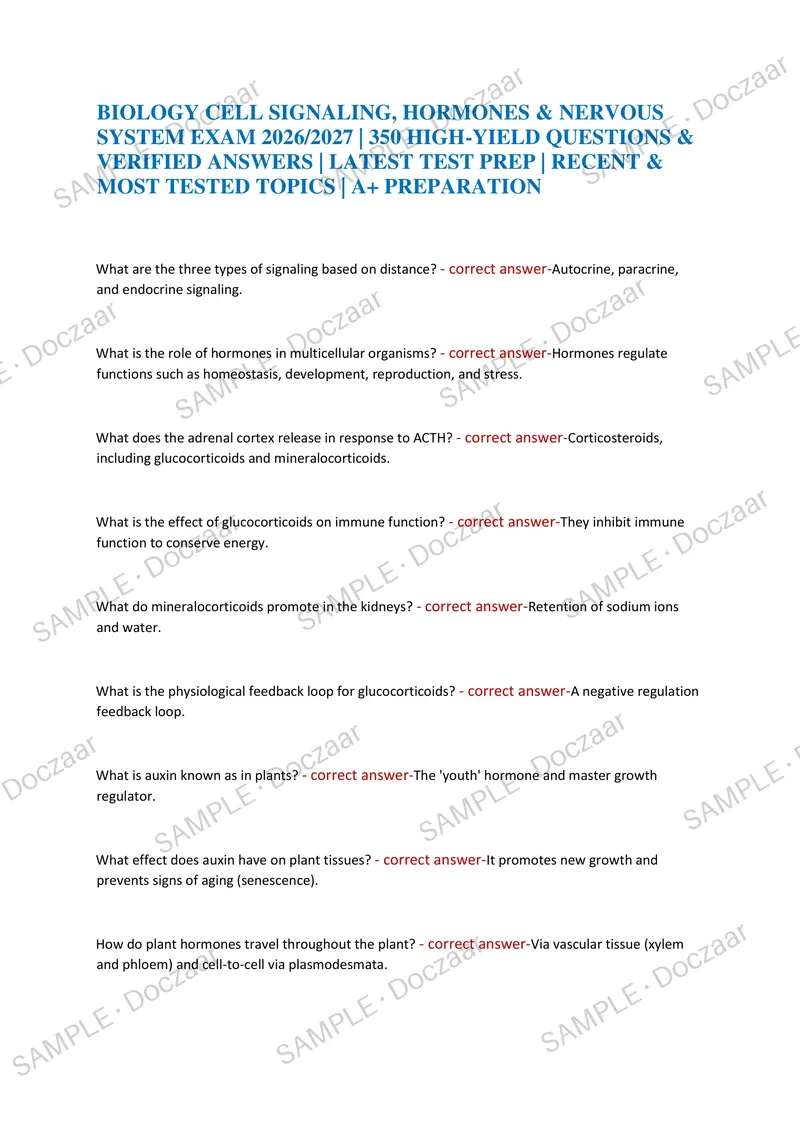
The document delves into the three types of cell signaling based on distance: autocrine, paracrine, and endocrine signaling, providing a strong foundation for understanding cell communication. It explains the critical roles hormones play in multicellular organisms, such as regulating homeostasis, development, reproduction, and stress responses. Specific hormone functions are discussed, including the release of corticosteroids by the adrenal cortex in response to ACTH and their effects on the immune system and kidney function.
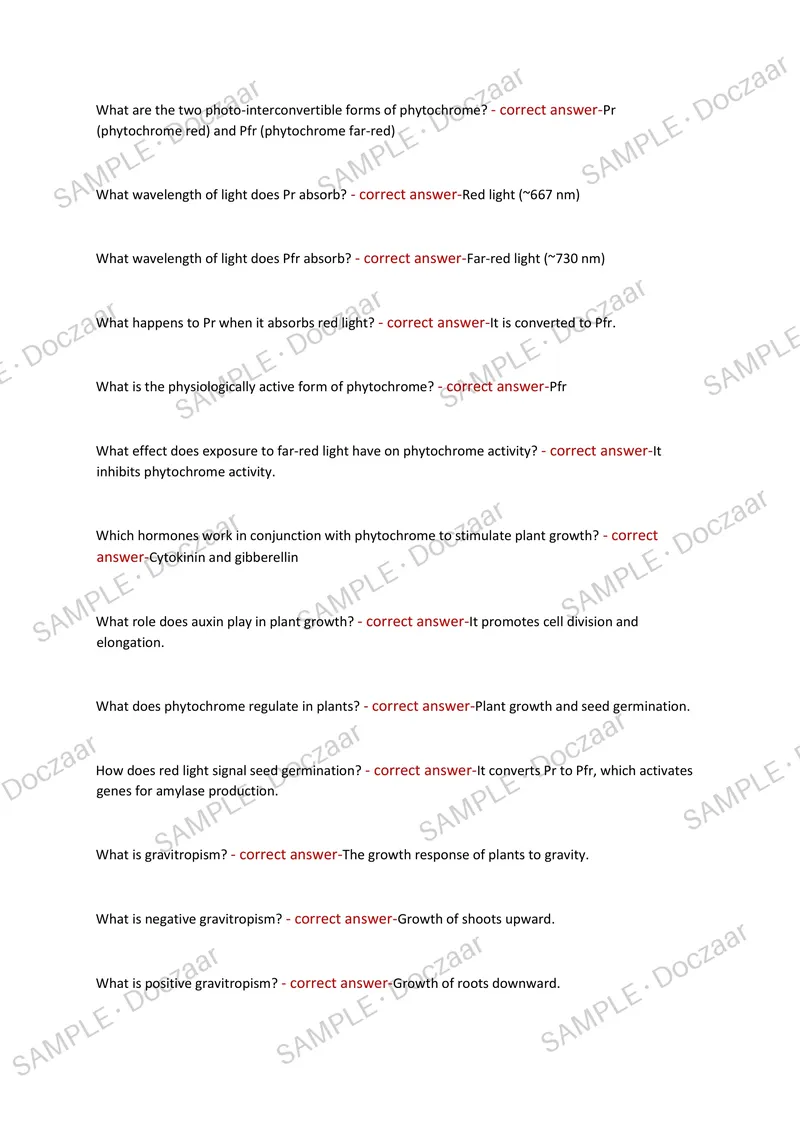
Plant hormones, particularly auxin, are covered, highlighting their role in growth regulation and senescence prevention. The document also explains how plant hormones travel through vascular tissue and cell-to-cell via plasmodesmata.
Key concepts like signal amplification and the roles of second messengers in hormone signaling are explained in detail. The significance of receptor specificity and the final stages of signaling pathways, including feedback loops, are thoroughly explored. The document distinguishes between autocrine and paracrine signaling and describes the roles of intracellular and transmembrane receptors.
Furthermore, students will learn about phosphorylation cascades, examples of negative and positive feedback loops, and the phenomenon of crosstalk in hormone pathways. The document also touches upon the implications of quorum sensing in bacteria and the relationship between biofilms and food safety, presenting opportunities for advanced study in controlling bacterial growth.
Reviews
No reviews yet.
Be the first — reviews come from verified buyers.
Related documents
BIOS 252 COMPREHENSIVE EXAM 2026/2027 | 70 HIGH-YIELD QUESTIONS & VERIFIED ANSWERS | LATEST TEST PREP | RECENT & MOST TE
Walden University · Biology
15 pagesUndergraduate
BIOL 252 MIDTERM & FINAL EXAM 2026/2027 | 450 HIGH-YIELD QUESTIONS & VERIFIED ANSWERS | LATEST TESTBANK | RECENT & MOST
Walden University · Biology
98 pagesUndergraduate
BIOS 251 BIO 251 WEEK 8 EXAM 2026/2027 | 150 HIGH-YIELD QUESTIONS & VERIFIED ANSWERS | LATEST TEST PREP | RECENT & MOST
Walden University · Biology
14 pagesUndergraduate
BIOS 251 EXAM 2026/2027 | 100 HIGH-YIELD QUESTIONS & VERIFIED ANSWERS | LATEST TEST PREP | RECENT & MOST TESTED TOPICS |
Walden University · Biology
22 pagesUndergraduate
CHAMBERLAIN UNIVERSITY BIOS 251 EXAM 3 2026/2027 | 150 HIGH-YIELD QUESTIONS & VERIFIED ANSWERS | LATEST TEST PREP | RECE
Walden University · Biology
28 pagesUndergraduate