Exam Elaborations
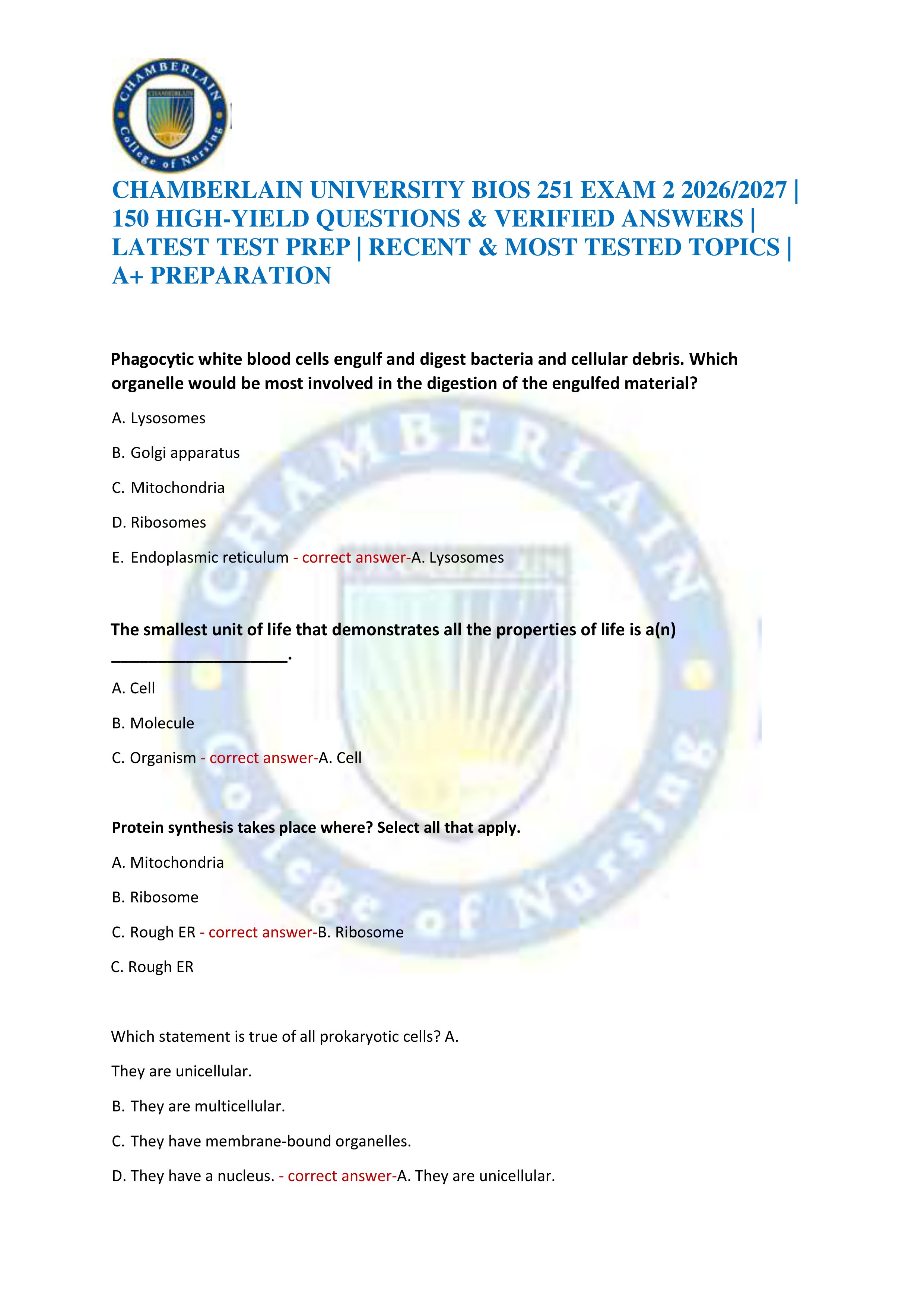
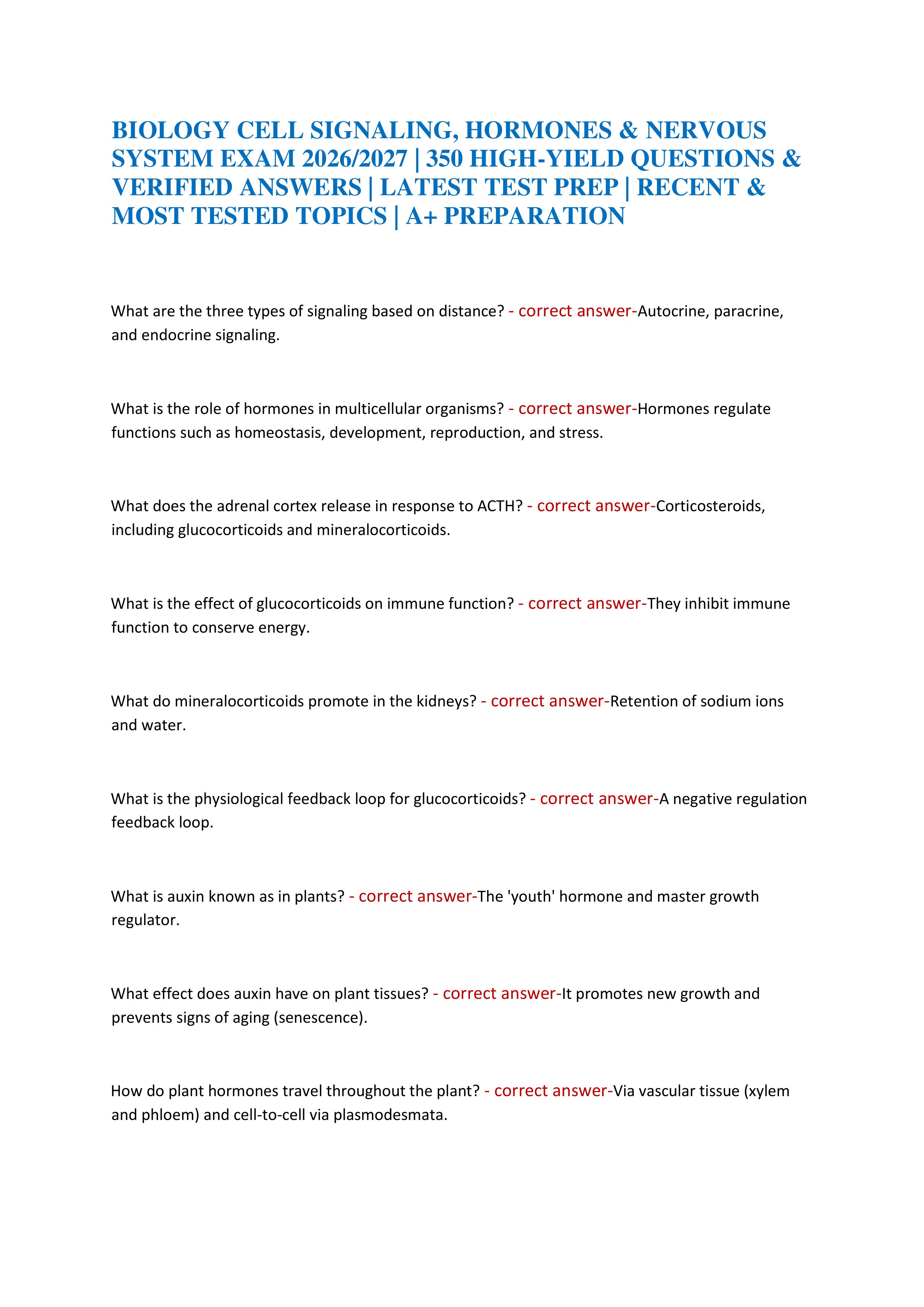
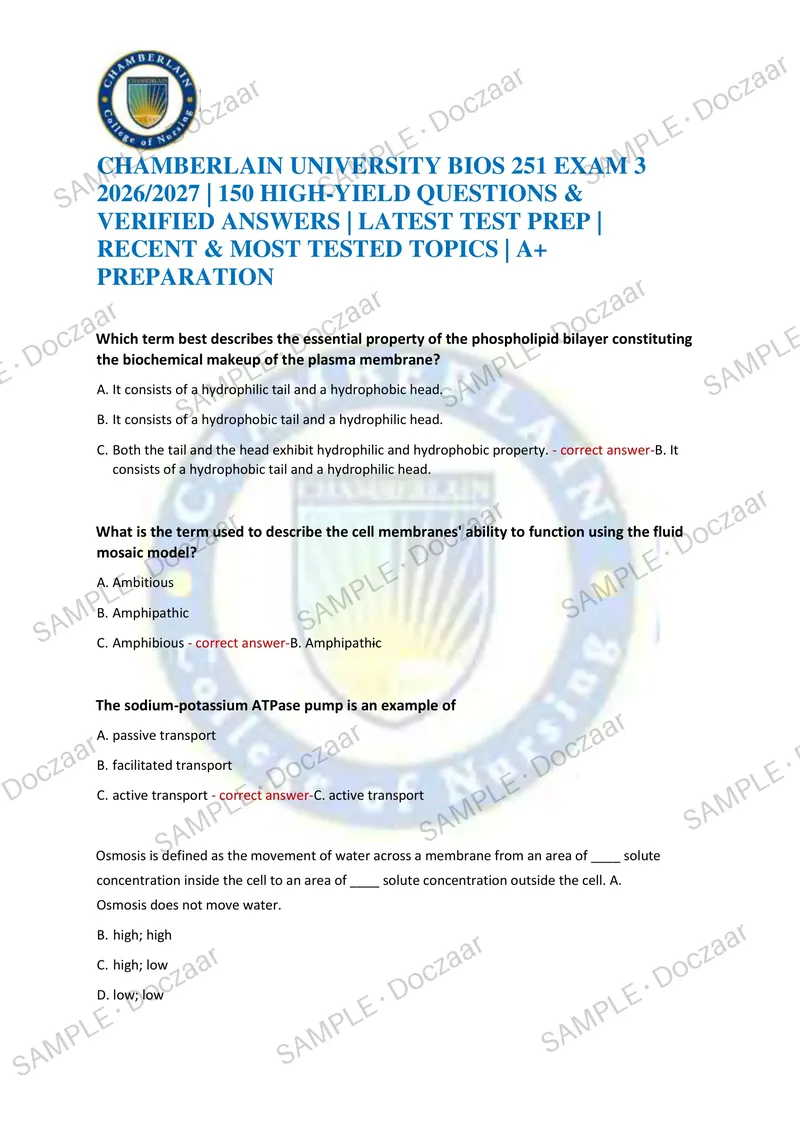
CHAMBERLAIN UNIVERSITY BIOS 251 EXAM 3 2026/2027 | 150 HIGH-YIELD QUESTIONS & VERIFIED ANSWERS | LATEST TEST PREP | RECE
Preview
Page 1 of 28
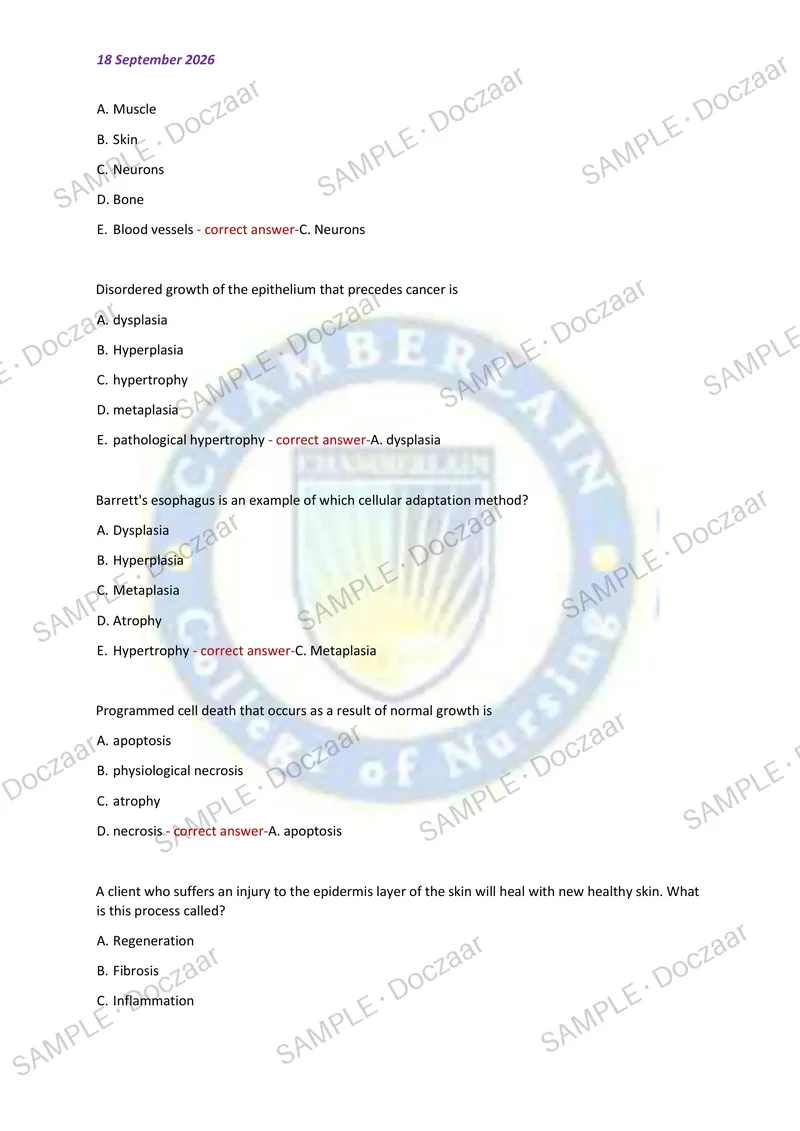
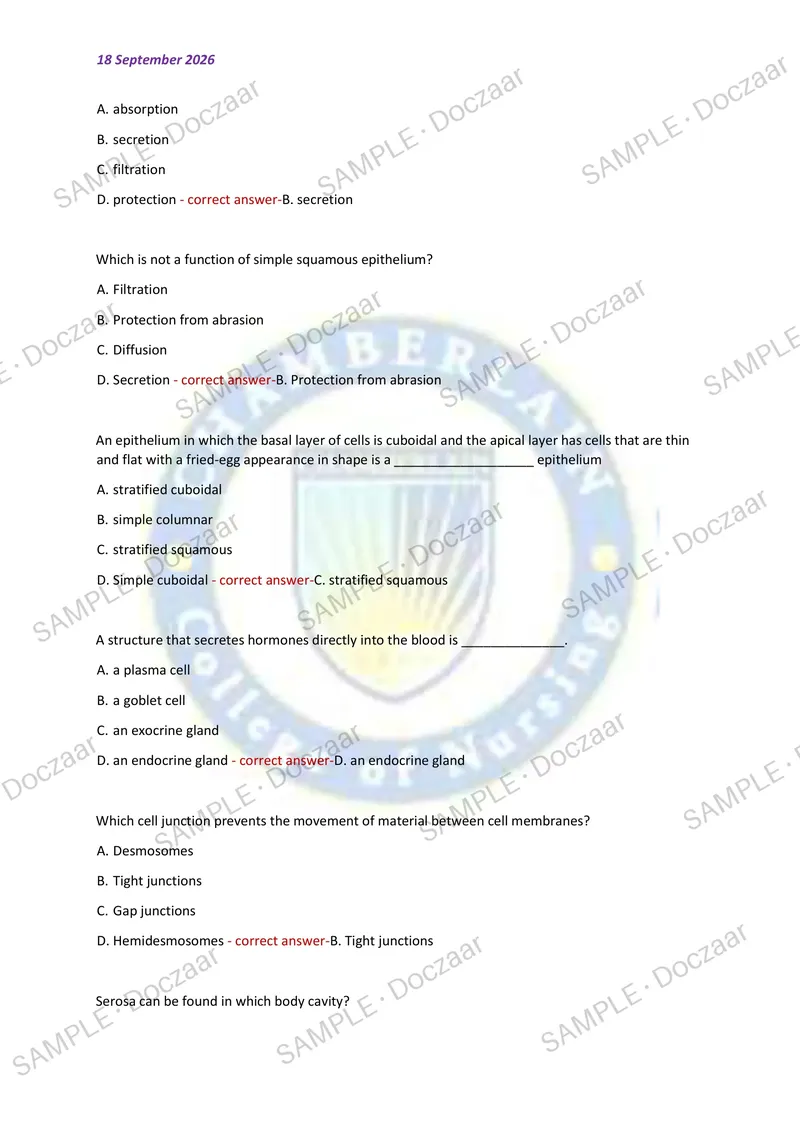
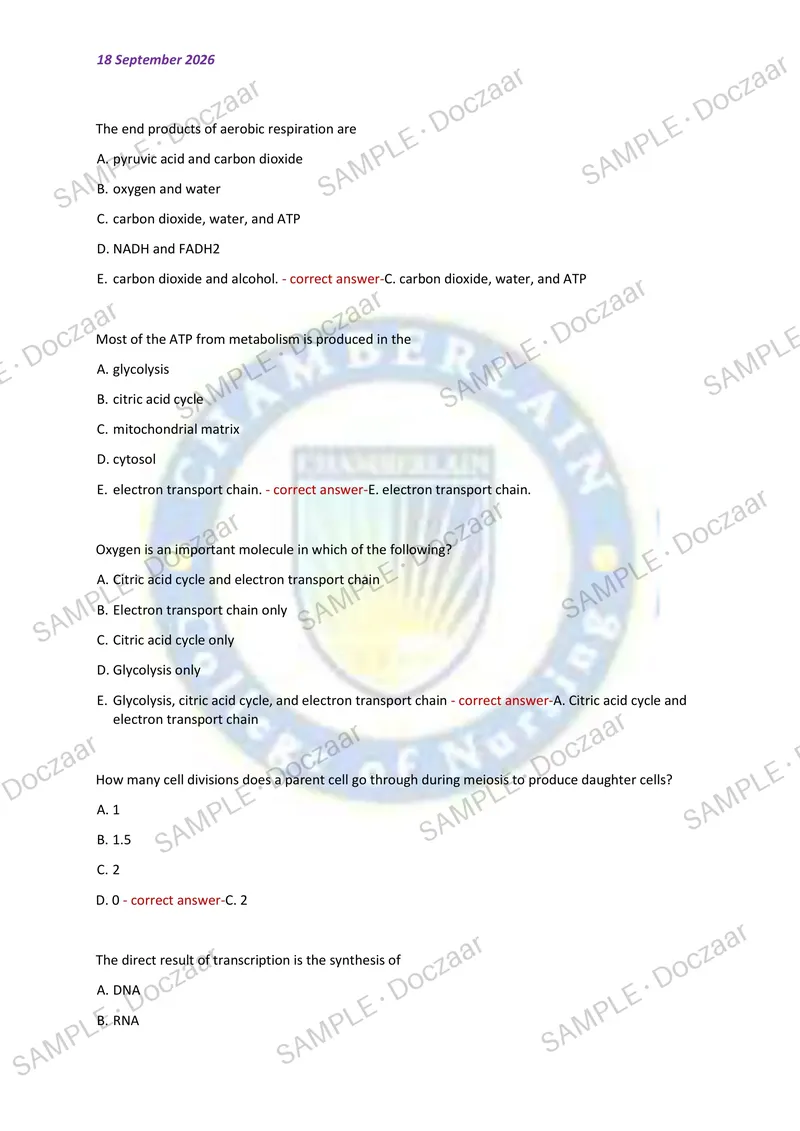
Sample · 5/28
Click to enlarge Pages 2–5 · locked
Click to enlarge Pages 7–9 · locked
Click to enlarge Pages 11–17 · locked
Click to enlarge Pages 19–26 · locked
Click to enlarge
Continued
23 more pages
Locked · Full 28-page document
About this document
The Chamberlain University BIOS 251 Exam 3 for the academic year 2026/2027 is a comprehensive test preparation resource designed for students pursuing studies in biological sciences. This document contains 150 high-yield questions and verified answers, focusing on recent and most-tested topics to aid students in achieving A+ preparation. The exam covers fundamental concepts in cell biology, biochemistry, and human physiology, essential for students seeking to deepen their understanding of these subjects.
Key topics include the structure and function of the phospholipid bilayer, highlighting its amphipathic nature with a hydrophobic tail and hydrophilic head, as well as the fluid mosaic model concept. Students will explore the sodium-potassium ATPase pump as a prime example of active transport, and the principles of osmosis regarding solute concentration gradients.
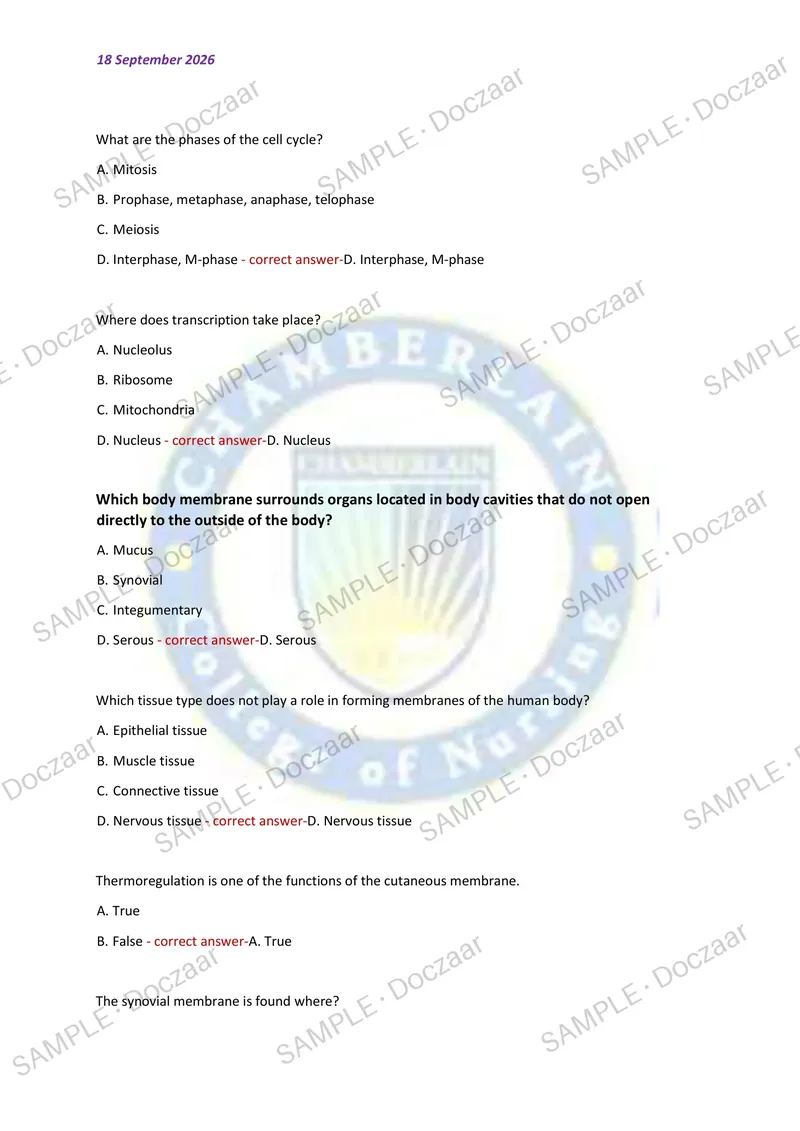
Furthermore, the exam delves into the phases of the cell cycle, emphasizing interphase and M-phase, and the process of transcription occurring in the nucleus. It also covers anatomical concepts such as the serous membrane's role in enclosing organs and highlights the types of tissues involved in forming body membranes, excluding nervous tissue.
In addition to cellular biology, the exam addresses the universal structures shared by all cells, such as DNA, plasma membrane, cytoplasm, and ribosomes, while distinguishing eukaryotic from prokaryotic cells by the presence of a nucleus. The document also explores glial cells' functions in the nervous system and classifies muscle tissue into skeletal, cardiac, and smooth types, emphasizing their role in contraction and temperature regulation.
This test prep document is an invaluable resource for students aiming to excel in their BIOS 251 exam, providing them with the essential knowledge and skills needed to succeed in their studies.
Reviews
No reviews yet.
Be the first — reviews come from verified buyers.
Related documents
BIOS 252 COMPREHENSIVE EXAM 2026/2027 | 70 HIGH-YIELD QUESTIONS & VERIFIED ANSWERS | LATEST TEST PREP | RECENT & MOST TE
Walden University · Biology
15 pagesUndergraduate
BIOL 252 MIDTERM & FINAL EXAM 2026/2027 | 450 HIGH-YIELD QUESTIONS & VERIFIED ANSWERS | LATEST TESTBANK | RECENT & MOST
Walden University · Biology
98 pagesUndergraduate
BIOS 251 BIO 251 WEEK 8 EXAM 2026/2027 | 150 HIGH-YIELD QUESTIONS & VERIFIED ANSWERS | LATEST TEST PREP | RECENT & MOST
Walden University · Biology
14 pagesUndergraduate
BIOS 251 EXAM 2026/2027 | 100 HIGH-YIELD QUESTIONS & VERIFIED ANSWERS | LATEST TEST PREP | RECENT & MOST TESTED TOPICS |
Walden University · Biology
22 pagesUndergraduate
CHAMBERLAIN UNIVERSITY BIOS 251 EXAM 1 2026/2027 | 150 HIGH-YIELD QUESTIONS & VERIFIED ANSWERS | LATEST TEST PREP | RECE
Walden University · Biology
31 pagesUndergraduate