Exam Elaborations
NR 226 EXAM1 NEWEST 2026/2027 ACTUAL EXAM 100 QUESTIONS AND CORRECT (VERIFIED ANSWERS) WITH DETAILED EXPLANATIONS COVE
Preview
Page 1 of 36
Sample · 6/36
Click to enlarge Pages 2–3 · locked
Click to enlarge Pages 5–14 · locked
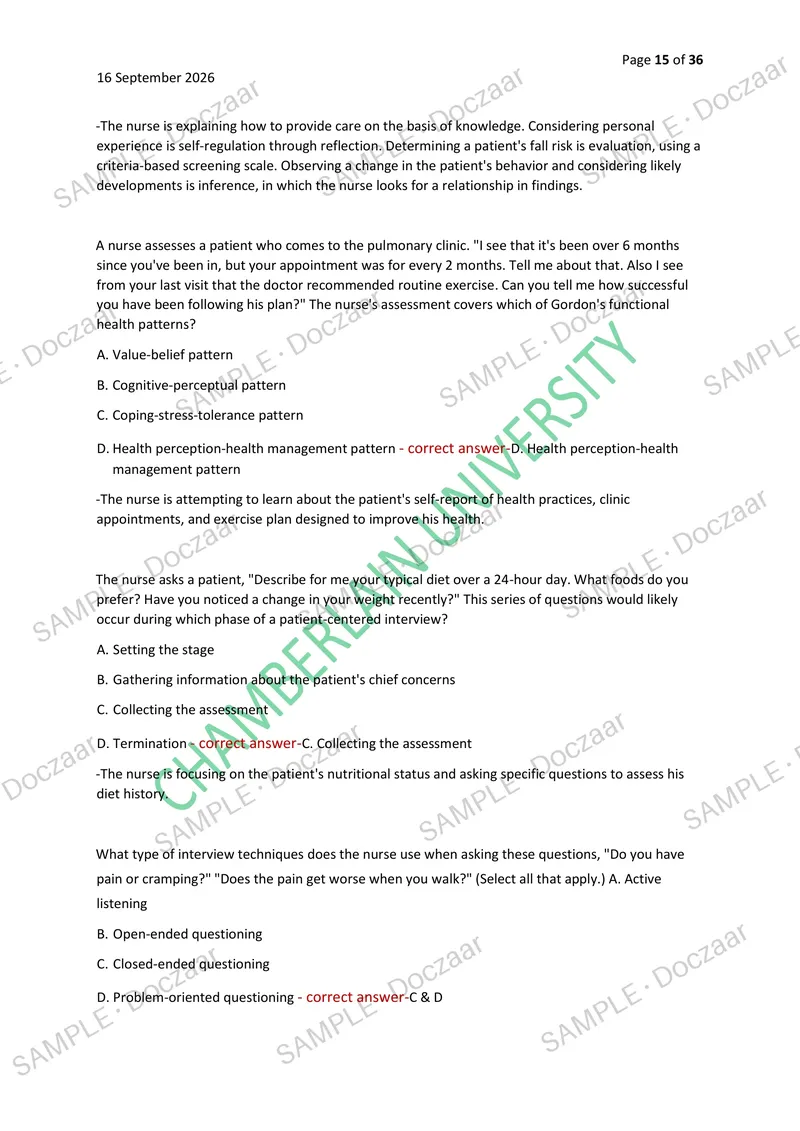
Click to enlarge Pages 16–18 · locked
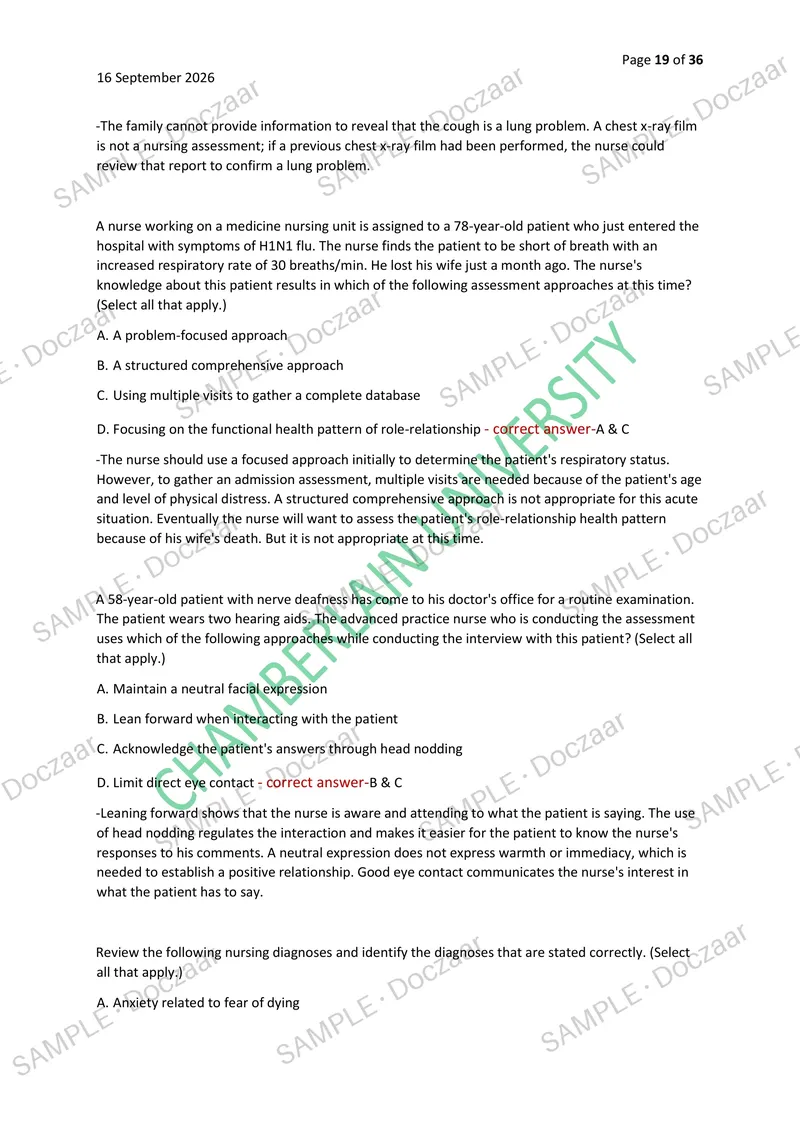
Click to enlarge Pages 20–27 · locked
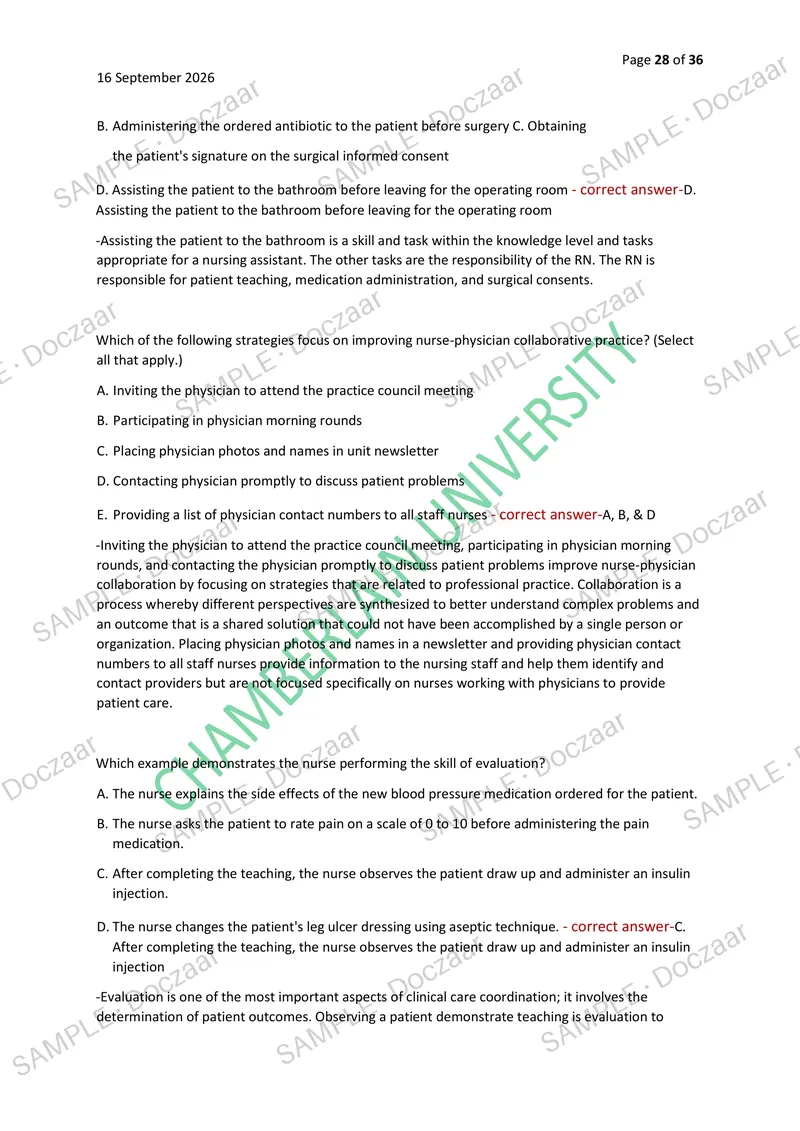
Click to enlarge Pages 29–35 · locked
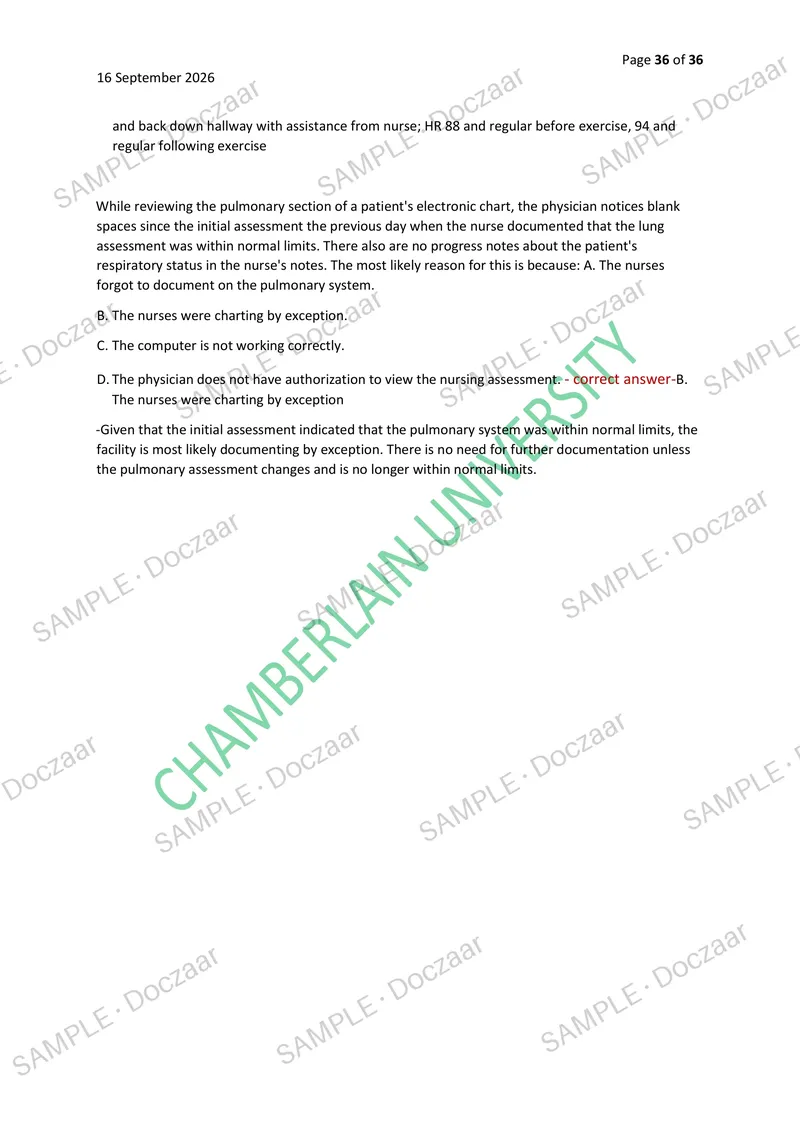
Click to enlarge
Not shown
30 more pages
Locked · Full 36-page document
About this document
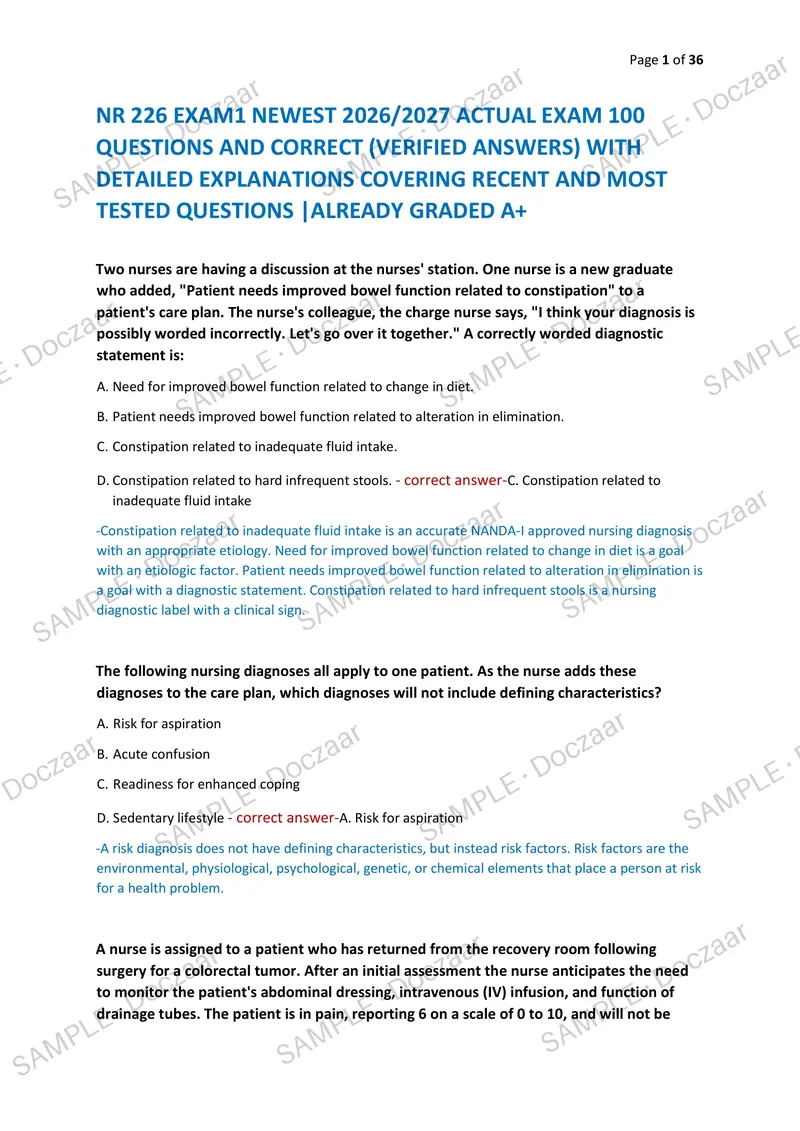
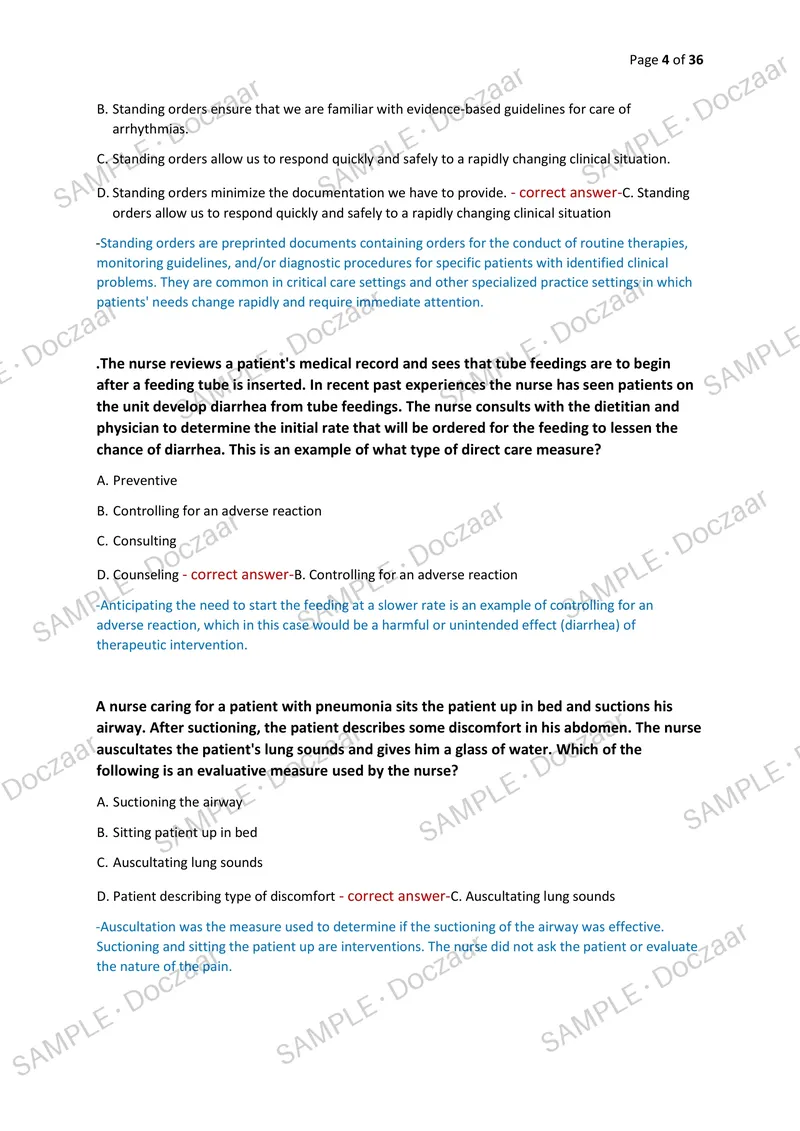
The NR 226 Exam1 document for 2026/2027 provides nursing students with 100 questions and verified answers, complete with detailed explanations covering the most recent and frequently tested topics. This exam guide is designed to help students prepare effectively for their nursing exams by offering insights into key areas of nursing practice and decision-making.
One of the highlighted discussions involves a new graduate nurse and a charge nurse reviewing the correct wording of a nursing diagnosis. This scenario emphasizes the importance of using NANDA-I approved terminology, as demonstrated by the example "Constipation related to inadequate fluid intake," which is identified as a correct diagnosis. The document clarifies the difference between goals and diagnostic statements, aiding students in understanding how to accurately formulate nursing diagnoses.
The document also discusses the concept of risk diagnoses, such as "Risk for aspiration," which, unlike other diagnoses, do not include defining characteristics but instead focus on risk factors. This distinction is crucial for nursing students to grasp, as it affects how care plans are developed and implemented.
Additionally, the exam content addresses differences in nursing care plans between hospital and home health settings. It stresses the need for patients and their families to independently manage most of the healthcare in a home setting, highlighting the collaborative nature of setting goals and outcomes in community-based care.
Finally, the document covers how to measure patient outcomes more precisely, using wound care as an example. It illustrates that specific, measurable outcomes, such as "The patient's wound will reduce in size to less than 4 cm by day 4," are essential for evaluating the effectiveness of nursing interventions.
Reviews
No reviews yet.
Be the first — reviews come from verified buyers.
Related documents
NR 302 exam 3 NEWEST TEST EXAM 180 COMPREHENSIVE QUESTIONS /FREQUENTLY MOST TESTED QUESTIONS AND VERIFIED SOLUTIONS/GE
Walden University · Nursing and midwifery
41 pagesUndergraduate
NR 565 - advanced pharmacology midterm – Chamberlain NEWEST TEST EXAM 100 COMPREHENSIVE QUESTIONS /FREQUENTLY MOST TES
Walden University · Nursing and midwifery
14 pagesUndergraduate
NR565 Week 5 DM & Thyroid Meds NEWEST 2026/2027 ACTUAL EXAM 80 QUESTIONS AND CORRECT (VERIFIED ANSWERS) COVERING RECEN
Walden University · Nursing and midwifery
19 pagesUndergraduate
NHCO Phlebotomy Exam 2026/2027 TEST EXAM 100 COMPREHENSIVE QUESTIONS /FREQUENTLY MOST TESTED QUESTIONS AND VERIFIED SO
Walden University · Nursing and midwifery
24 pagesUndergraduate
NCCT - Patient Intake and Care Exam 2026/2027 TEST EXAM 100 COMPREHENSIVE QUESTIONS /FREQUENTLY MOST TESTED QUESTIONS
Walden University · Nursing and midwifery
21 pagesUndergraduate
NR 509 FINAL NEWEST 2026/2027 ACTUAL EXAM 130 QUESTIONS AND CORRECT (VERIFIED ANSWERS) COVERING RECENT AND MOST TESTED
Walden University · Nursing and midwifery
33 pagesUndergraduate
NR 509 Midterm NEWEST 2026/2027 ACTUAL EXAM 130 QUESTIONS AND CORRECT (VERIFIED ANSWERS) COVERING RECENT AND MOST TEST
Walden University · Nursing and midwifery
36 pagesUndergraduate
CMSRN NEWEST 2026/2027 ACTUAL EXAM 80 QUESTIONS AND CORRECT (VERIFIED ANSWERS) COVERING RECENT AND MOST TESTED QUESTIO
Walden University · Nursing and midwifery
18 pagesUndergraduate