Exam Elaborations
MT AAB IMMUNOHEMATOLOGY EXAM 2026/2027 | 220 HIGH-YIELD QUESTIONS & VERIFIED ANSWERS | LATEST TEST PREP | RECENT & MOST
Preview
Page 1 of 23
Sample · 4/23
Click to enlarge Pages 2–5 · locked
Click to enlarge Pages 7–13 · locked
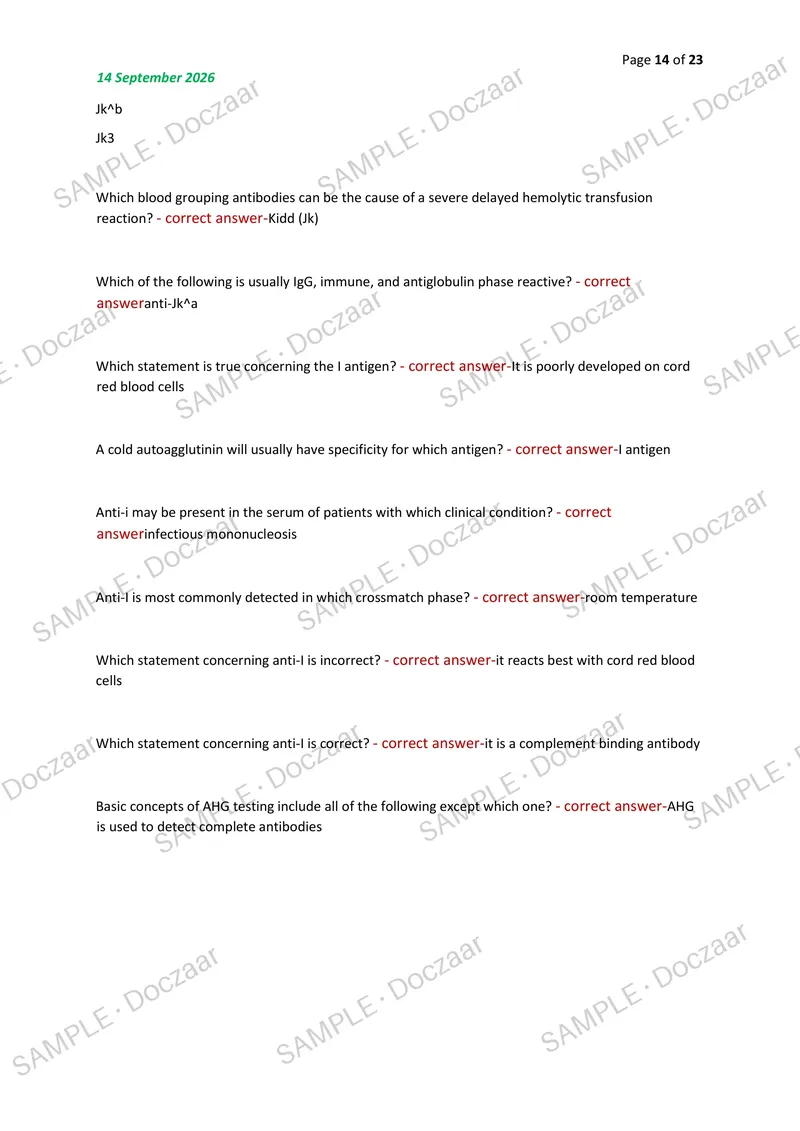
Click to enlarge Pages 15–18 · locked
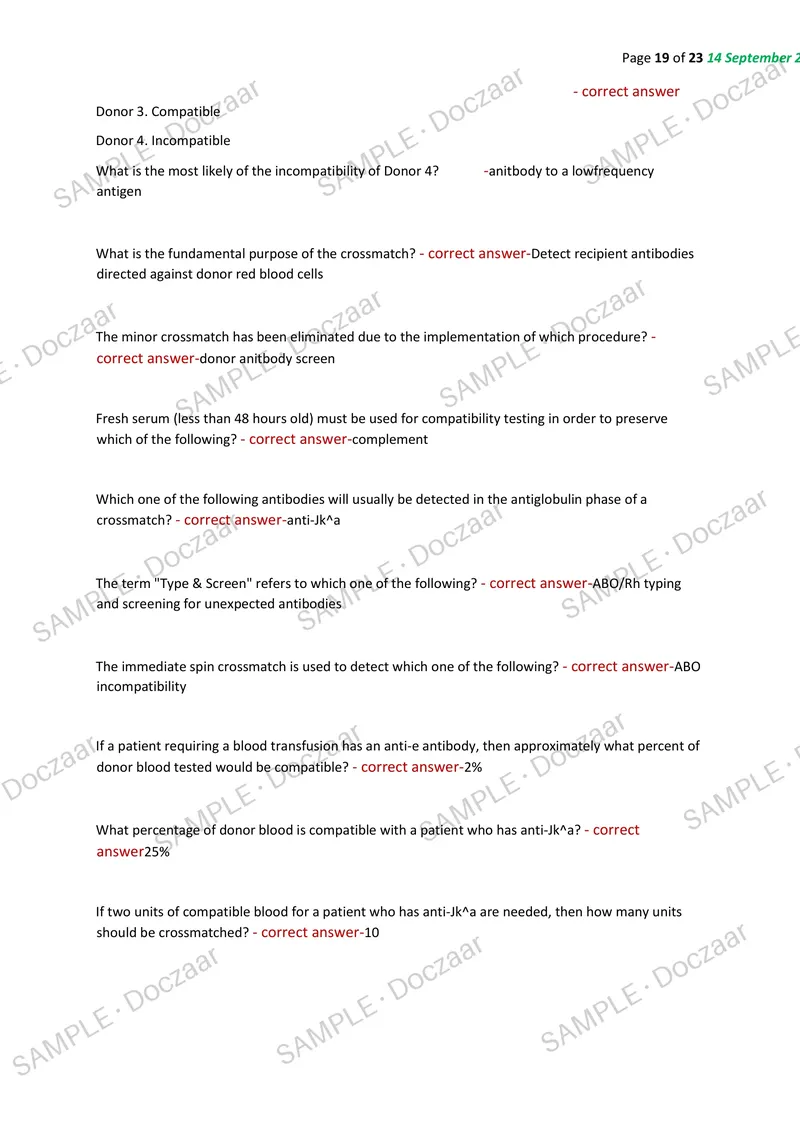
Click to enlarge
Continued
19 more pages
Locked · Full 23-page document
About this document
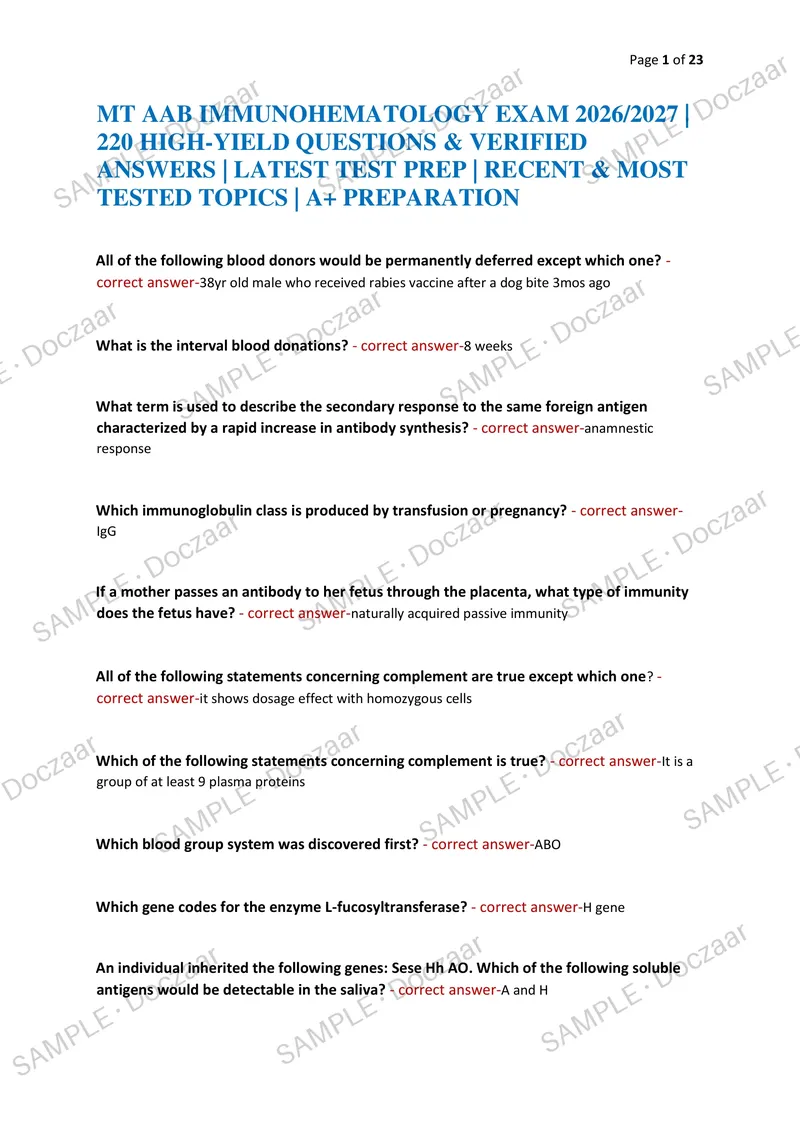
This document serves as a comprehensive study guide for students preparing for the MT AAB Immunohematology Exam for the 2026/2027 academic year. It features 220 high-yield questions and verified answers, focusing on the most recent and frequently tested topics to provide A+ preparation. The content is designed to enhance understanding of key immunohematology concepts and improve exam performance.
Key topics covered include donor eligibility, with specific scenarios such as blood donation intervals, and the roles of immunoglobulins like IgG. It explains the concept of anamnestic response and describes naturally acquired passive immunity when antibodies are passed from mother to fetus. The document delves into the ABO blood group system, the first discovered, and other genetic aspects such as the H gene responsible for coding the enzyme L-fucosyltransferase.
Students will also learn about viral marker testing for HIV, covering essential markers like anti-HIV-1 and anti-HIV-2, and the significance of HBsAg in identifying chronic carriers. The guide discusses the implications of bacterial contamination in blood products, identifying organisms such as Yersinia enterocolitica and Pseudomonas putida.
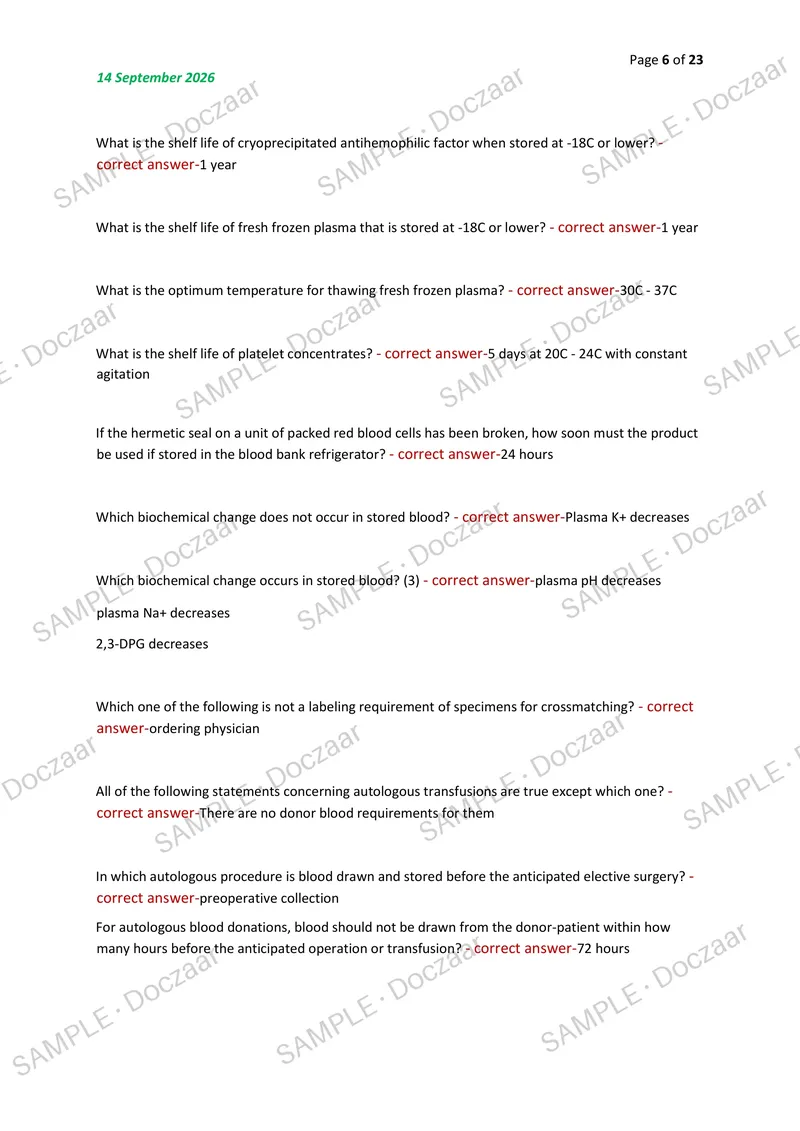
The document provides crucial information on blood storage and transportation, including FDA regulations for maintaining appropriate temperatures, and details on the preservation of red blood cells with CPDA-1 and ADSOL. It highlights the characteristics of weak D antigens, which are prevalent in certain racial groups, and includes genotype analysis using reactions with antisera.
Overall, this exam prep document is an invaluable resource for students aiming to excel in immunohematology, offering in-depth insights and practical knowledge essential for mastering the subject.
Reviews
No reviews yet.
Be the first — reviews come from verified buyers.
Related documents
NR 302 exam 3 NEWEST TEST EXAM 180 COMPREHENSIVE QUESTIONS /FREQUENTLY MOST TESTED QUESTIONS AND VERIFIED SOLUTIONS/GE
Walden University · Nursing and midwifery
41 pagesUndergraduate
NR 565 - advanced pharmacology midterm – Chamberlain NEWEST TEST EXAM 100 COMPREHENSIVE QUESTIONS /FREQUENTLY MOST TES
Walden University · Nursing and midwifery
14 pagesUndergraduate
NR565 Week 5 DM & Thyroid Meds NEWEST 2026/2027 ACTUAL EXAM 80 QUESTIONS AND CORRECT (VERIFIED ANSWERS) COVERING RECEN
Walden University · Nursing and midwifery
19 pagesUndergraduate
NHCO Phlebotomy Exam 2026/2027 TEST EXAM 100 COMPREHENSIVE QUESTIONS /FREQUENTLY MOST TESTED QUESTIONS AND VERIFIED SO
Walden University · Nursing and midwifery
24 pagesUndergraduate
NCCT - Patient Intake and Care Exam 2026/2027 TEST EXAM 100 COMPREHENSIVE QUESTIONS /FREQUENTLY MOST TESTED QUESTIONS
Walden University · Nursing and midwifery
21 pagesUndergraduate
NR 509 FINAL NEWEST 2026/2027 ACTUAL EXAM 130 QUESTIONS AND CORRECT (VERIFIED ANSWERS) COVERING RECENT AND MOST TESTED
Walden University · Nursing and midwifery
33 pagesUndergraduate
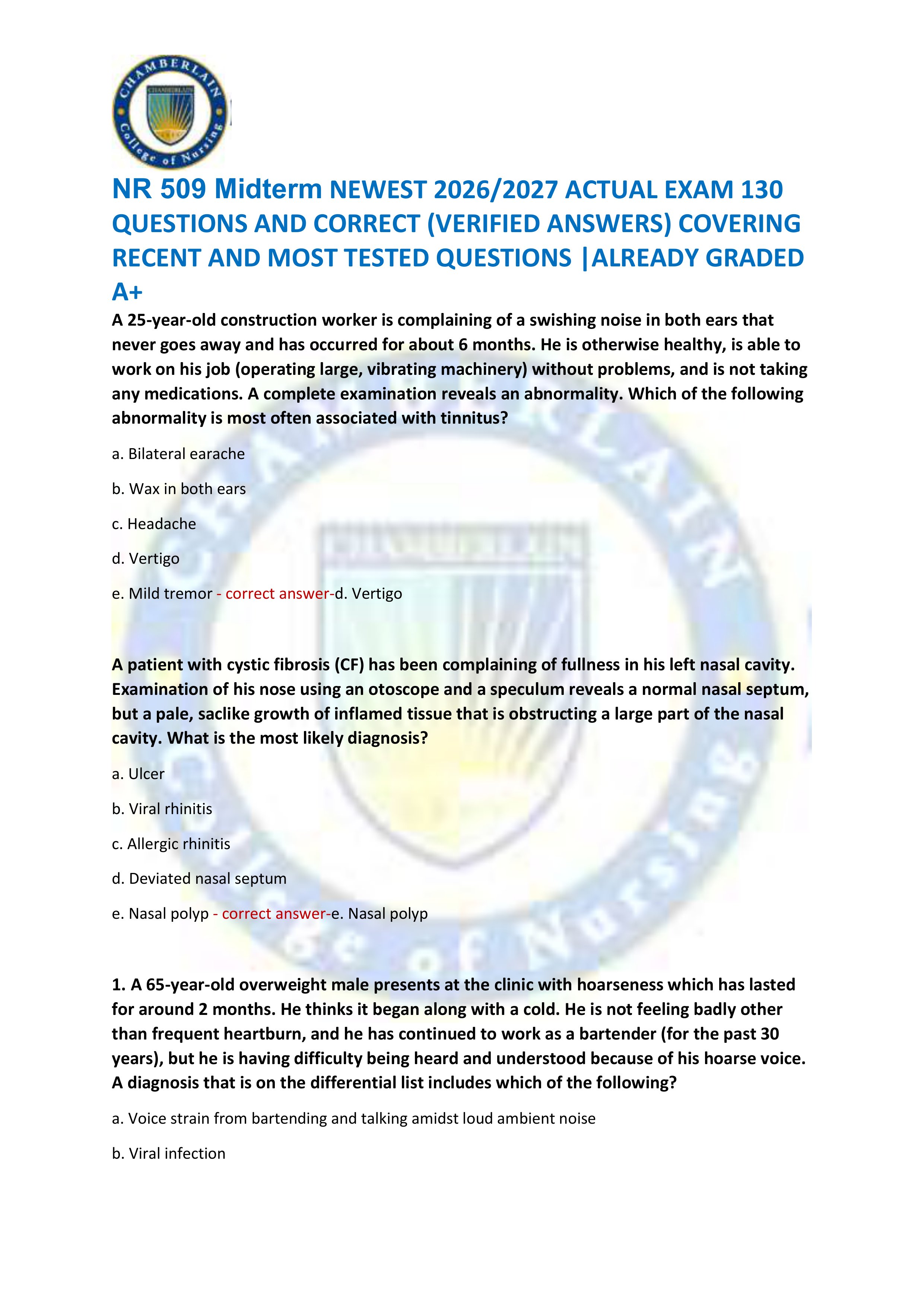
NR 509 Midterm NEWEST 2026/2027 ACTUAL EXAM 130 QUESTIONS AND CORRECT (VERIFIED ANSWERS) COVERING RECENT AND MOST TEST
Walden University · Nursing and midwifery
36 pagesUndergraduate
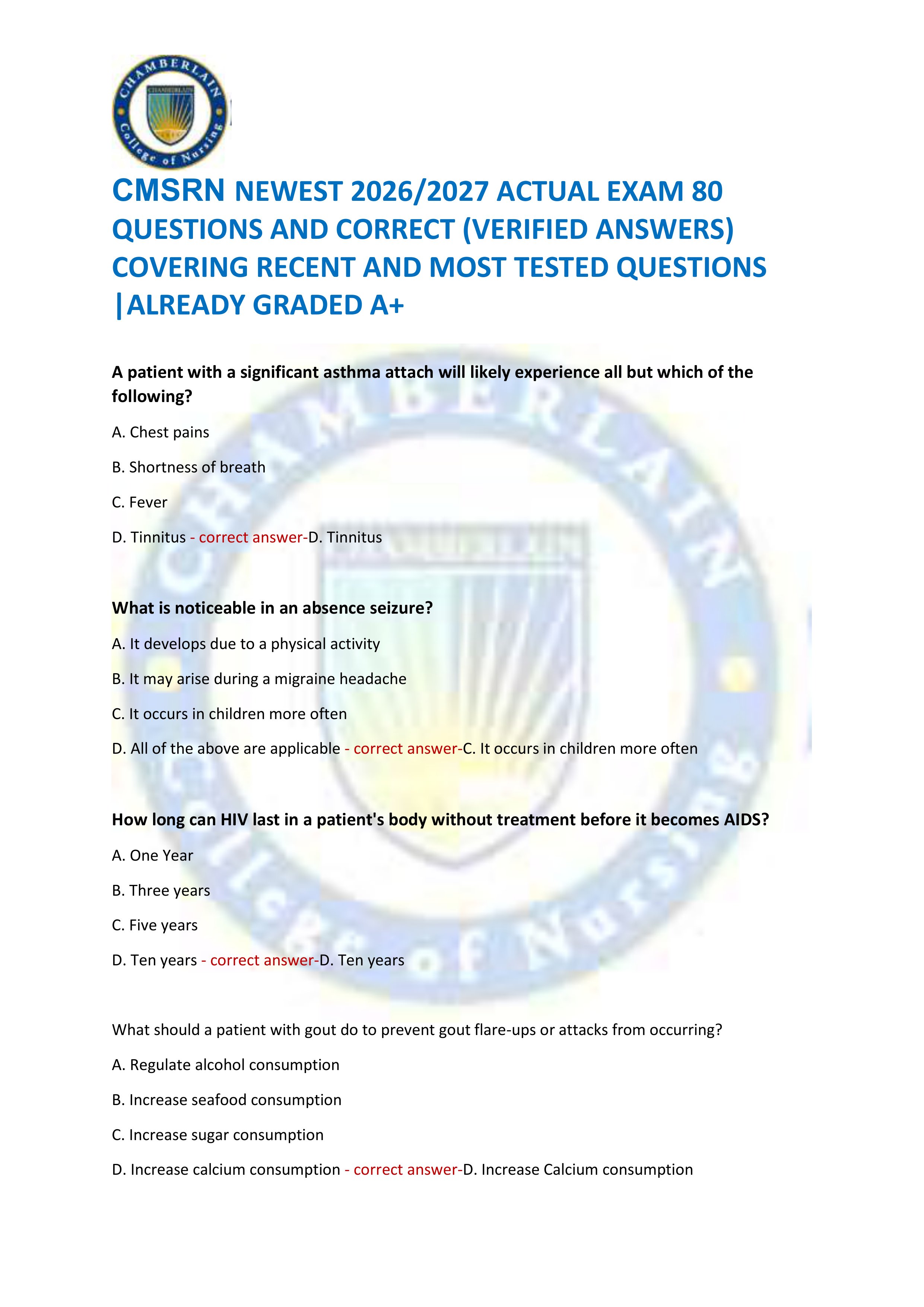
CMSRN NEWEST 2026/2027 ACTUAL EXAM 80 QUESTIONS AND CORRECT (VERIFIED ANSWERS) COVERING RECENT AND MOST TESTED QUESTIO
Walden University · Nursing and midwifery
18 pagesUndergraduate