Exam Elaborations
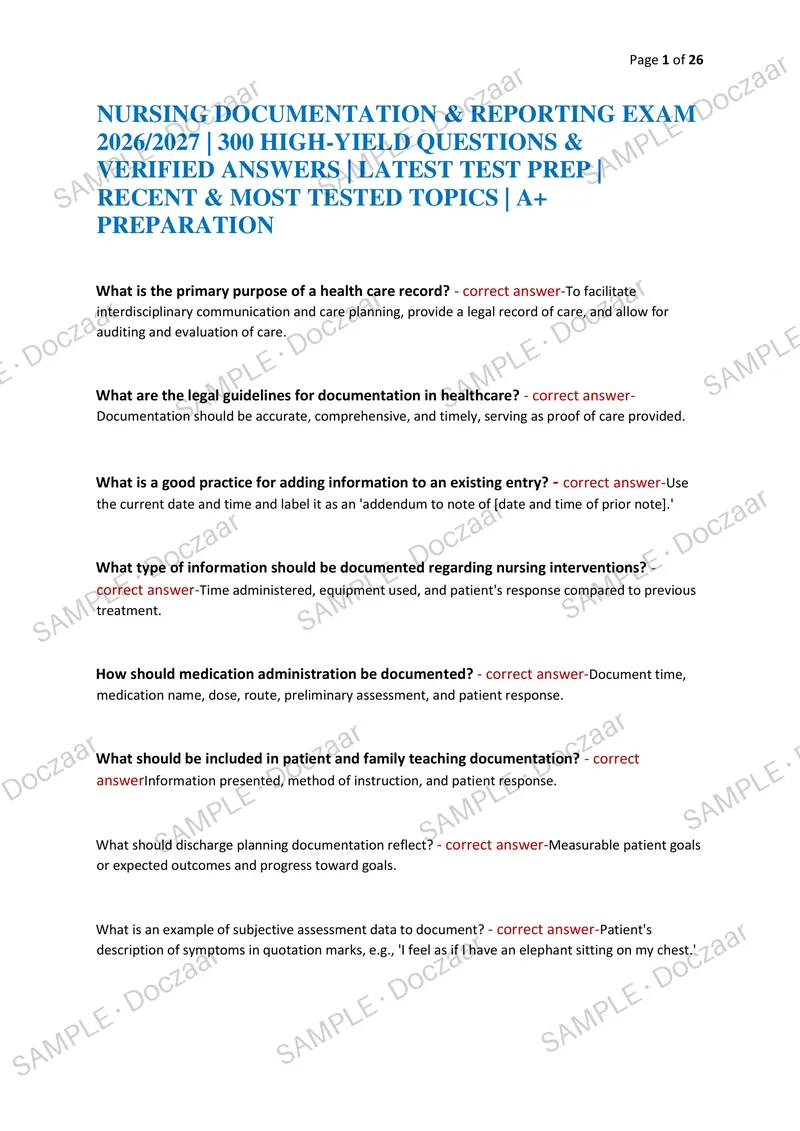
NURSING DOCUMENTATION & REPORTING EXAM 2026/2027 | 300 HIGH-YIELD QUESTIONS & VERIFIED ANSWERS | LATEST TEST PREP | RECE
Preview
Page 1 of 26
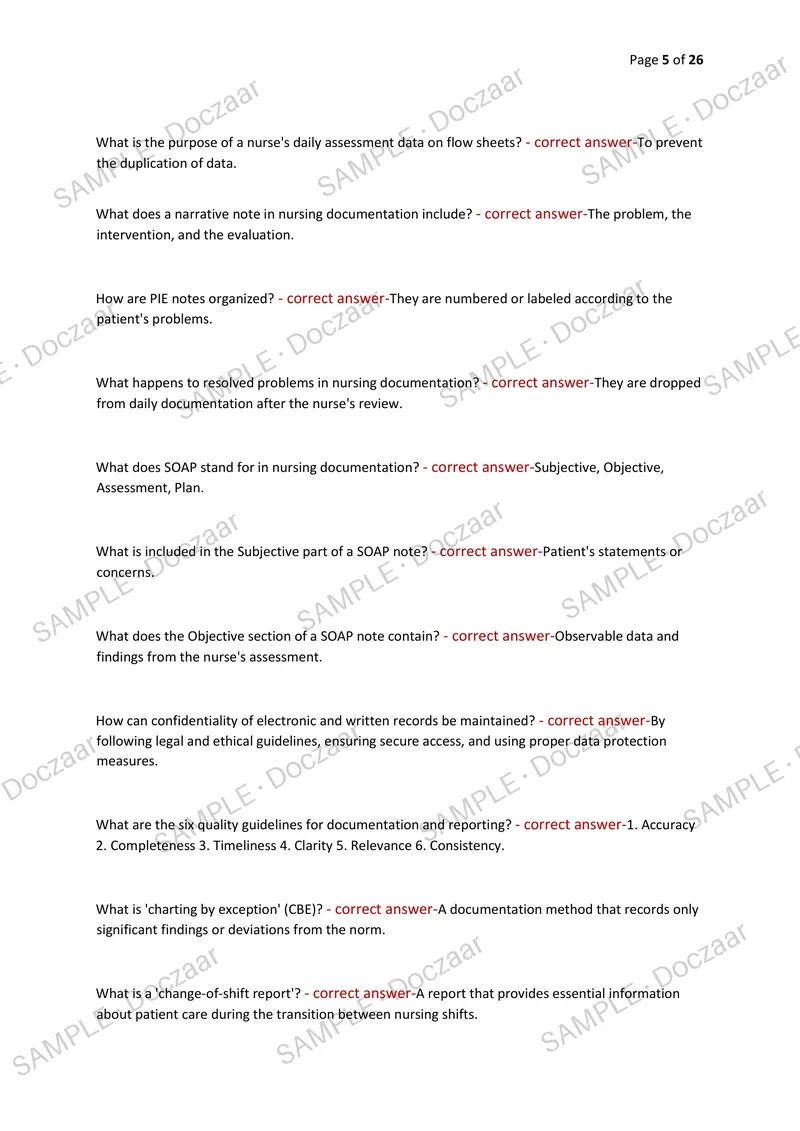
Sample · 4/26
Click to enlarge Pages 2–4 · locked
Click to enlarge Pages 6–11 · locked
Click to enlarge Pages 13–18 · locked
Click to enlarge
Continued
22 more pages
Locked · Full 26-page document
About this document
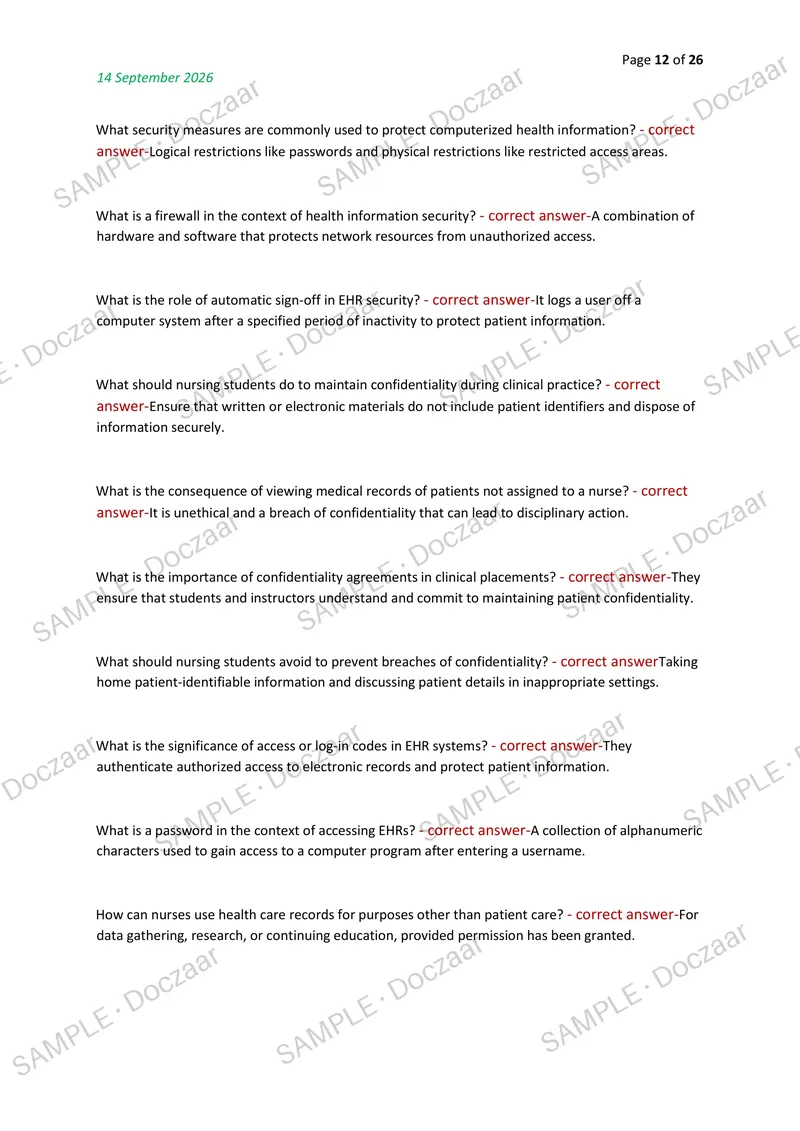
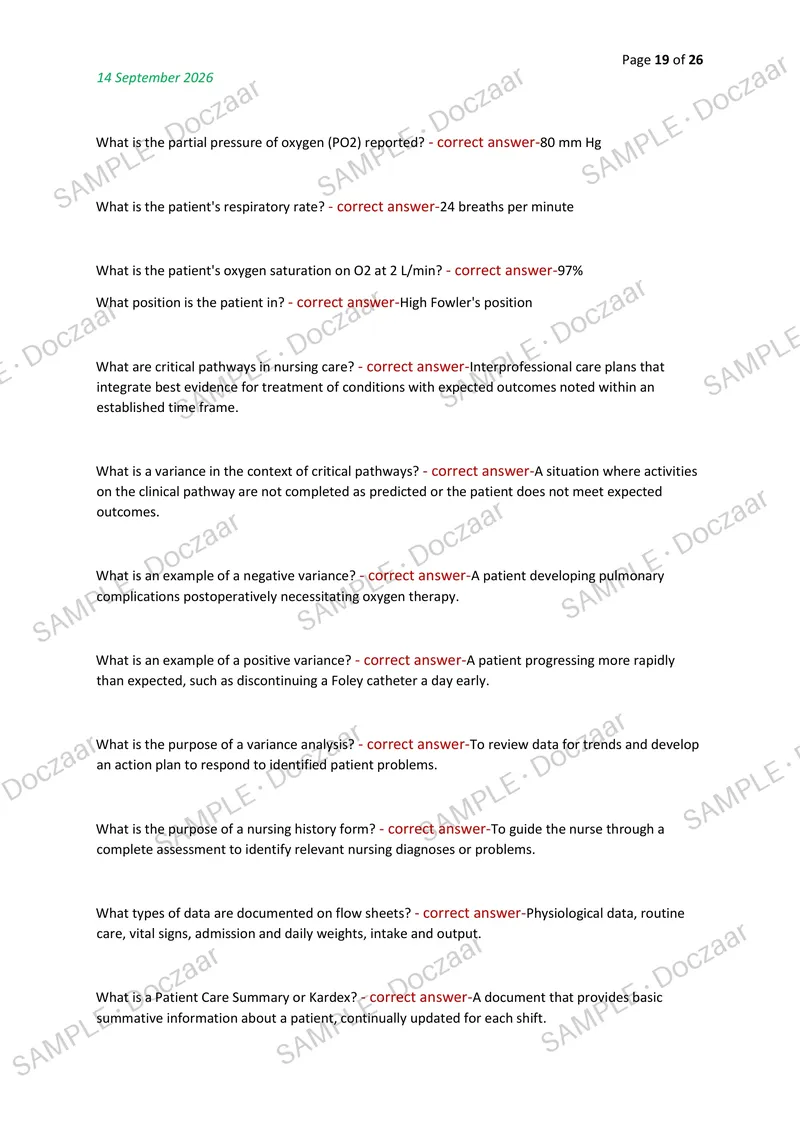
This comprehensive nursing documentation and reporting exam guide for the 2026/2027 academic year features 300 high-yield questions with verified answers, offering essential test preparation for nursing students. The document covers recent and most tested topics in nursing documentation, emphasizing the importance of maintaining accurate and timely health care records. Through this guide, students will learn about the primary purposes of health care records, which include facilitating interdisciplinary communication, care planning, and legal documentation, as well as allowing for auditing and evaluation of care.
Key legal guidelines for documentation are highlighted, stressing the necessity for accuracy, comprehensiveness, and timeliness. The guide also provides best practices for adding information to existing entries and outlines the specific details that should be documented during nursing interventions, medication administration, patient and family teaching, and discharge planning. Subjective assessment data documentation is also explained, emphasizing the importance of capturing patients' descriptions of symptoms accurately.
The guide introduces important concepts and tools such as the I-SBAR-R acronym, critical pathways for interdisciplinary documentation, and the Personal Information Protection and Electronic Documents Act (PIPEDA) for patient privacy. It also differentiates between Electronic Health Records (EHRs) and Electronic Medical Records (EMRs), highlighting their functionalities in healthcare settings. Furthermore, the document explains various documentation formats and tools like SOAP notes, DAR notes, and flow sheets, all crucial for providing detailed accounts of nursing care and supporting clinical decision-making. This exam guide is an invaluable resource for nursing students aiming for A+ preparation in their documentation and reporting exams.
Reviews
No reviews yet.
Be the first — reviews come from verified buyers.
Related documents
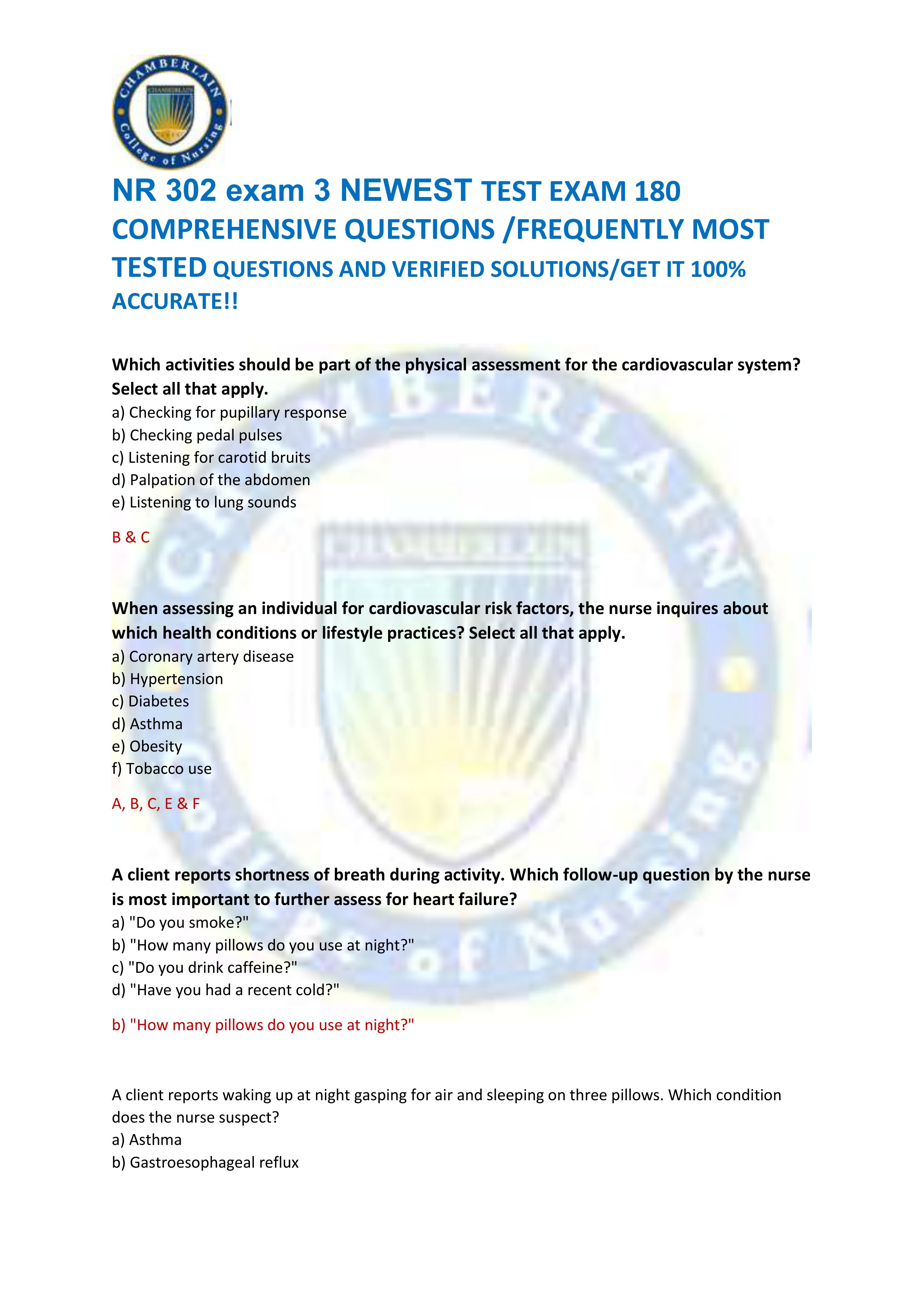
NR 302 exam 3 NEWEST TEST EXAM 180 COMPREHENSIVE QUESTIONS /FREQUENTLY MOST TESTED QUESTIONS AND VERIFIED SOLUTIONS/GE
Walden University · Nursing and midwifery
41 pagesUndergraduate
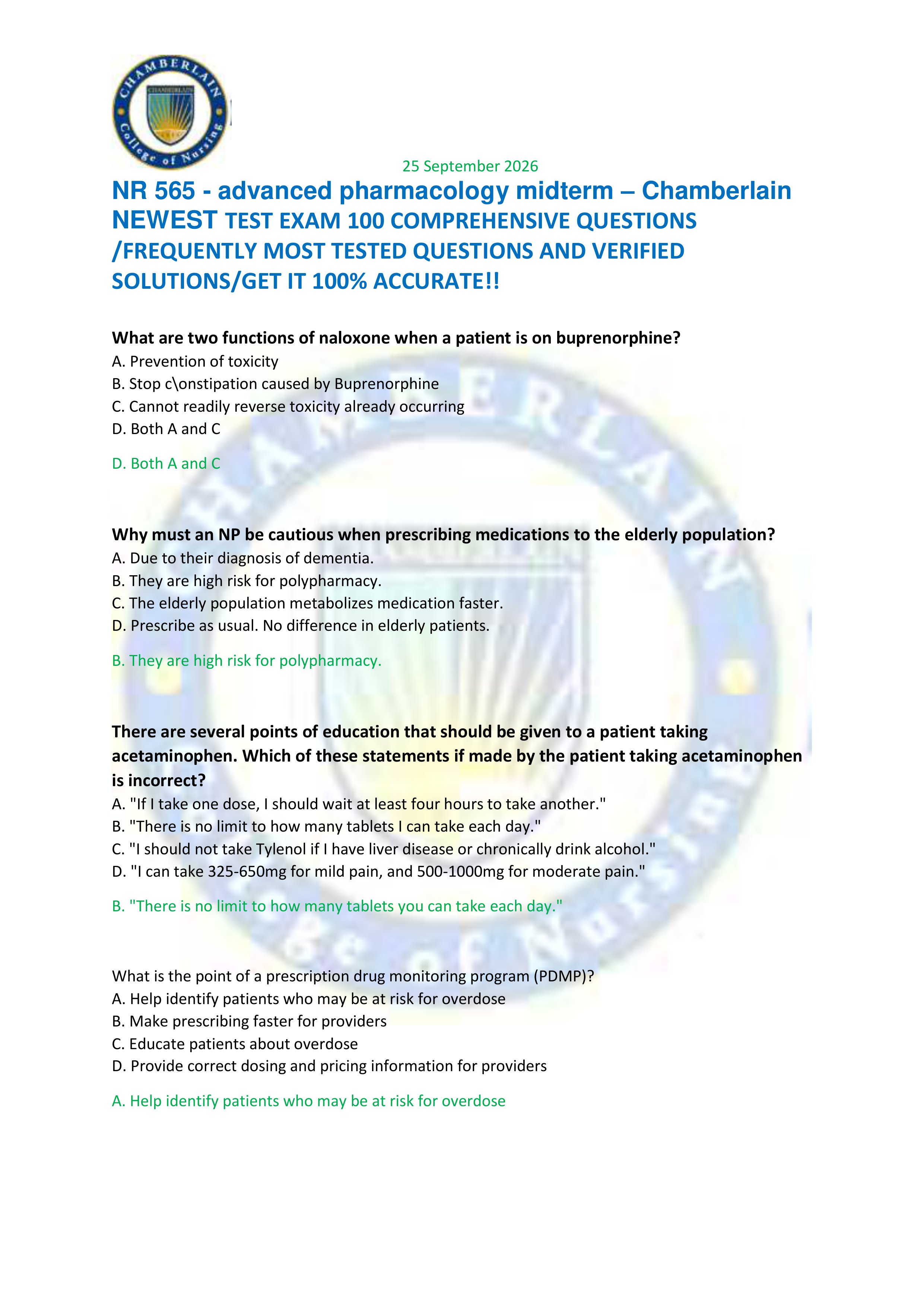
NR 565 - advanced pharmacology midterm – Chamberlain NEWEST TEST EXAM 100 COMPREHENSIVE QUESTIONS /FREQUENTLY MOST TES
Walden University · Nursing and midwifery
14 pagesUndergraduate
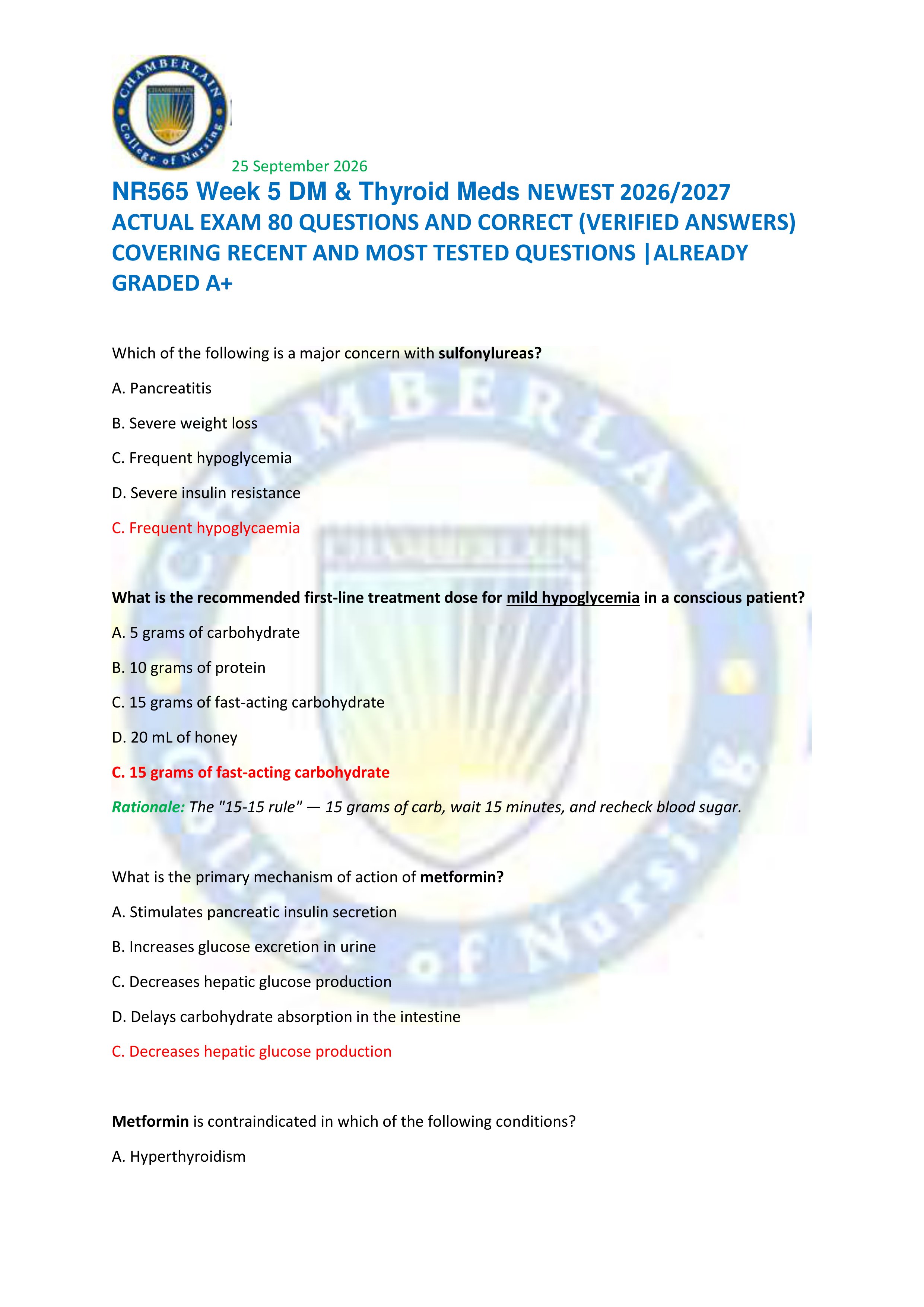
NR565 Week 5 DM & Thyroid Meds NEWEST 2026/2027 ACTUAL EXAM 80 QUESTIONS AND CORRECT (VERIFIED ANSWERS) COVERING RECEN
Walden University · Nursing and midwifery
19 pagesUndergraduate
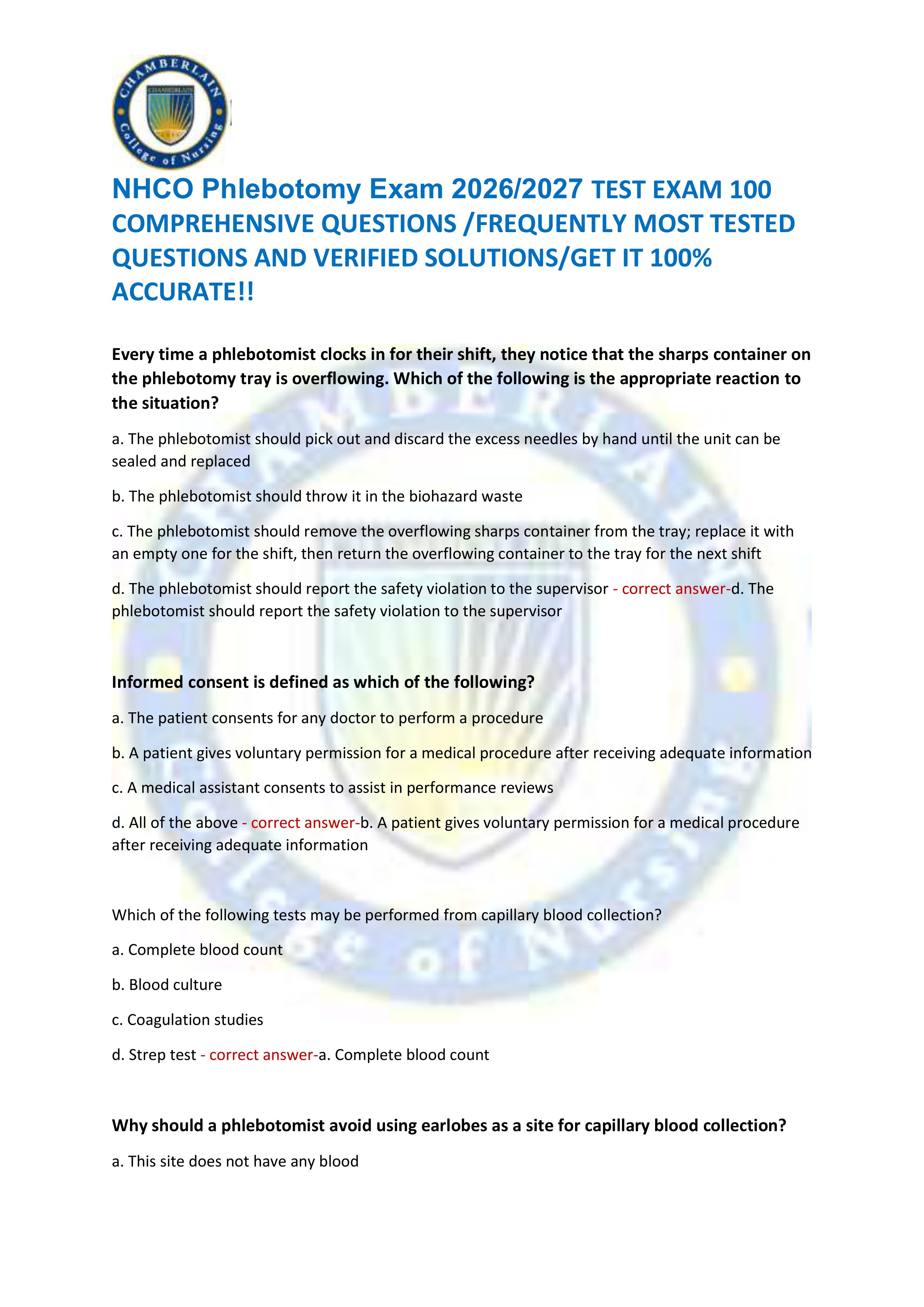
NHCO Phlebotomy Exam 2026/2027 TEST EXAM 100 COMPREHENSIVE QUESTIONS /FREQUENTLY MOST TESTED QUESTIONS AND VERIFIED SO
Walden University · Nursing and midwifery
24 pagesUndergraduate
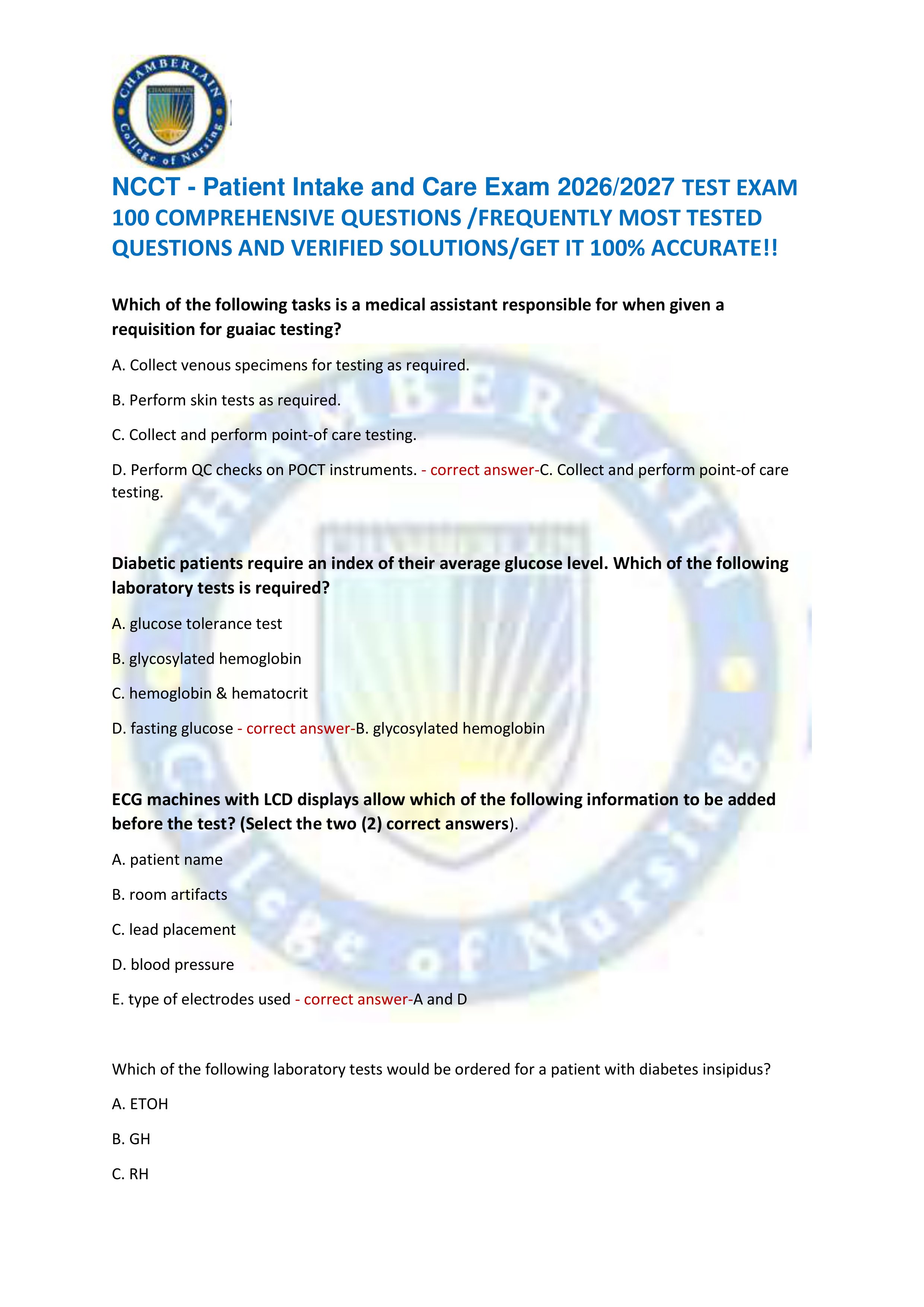
NCCT - Patient Intake and Care Exam 2026/2027 TEST EXAM 100 COMPREHENSIVE QUESTIONS /FREQUENTLY MOST TESTED QUESTIONS
Walden University · Nursing and midwifery
21 pagesUndergraduate
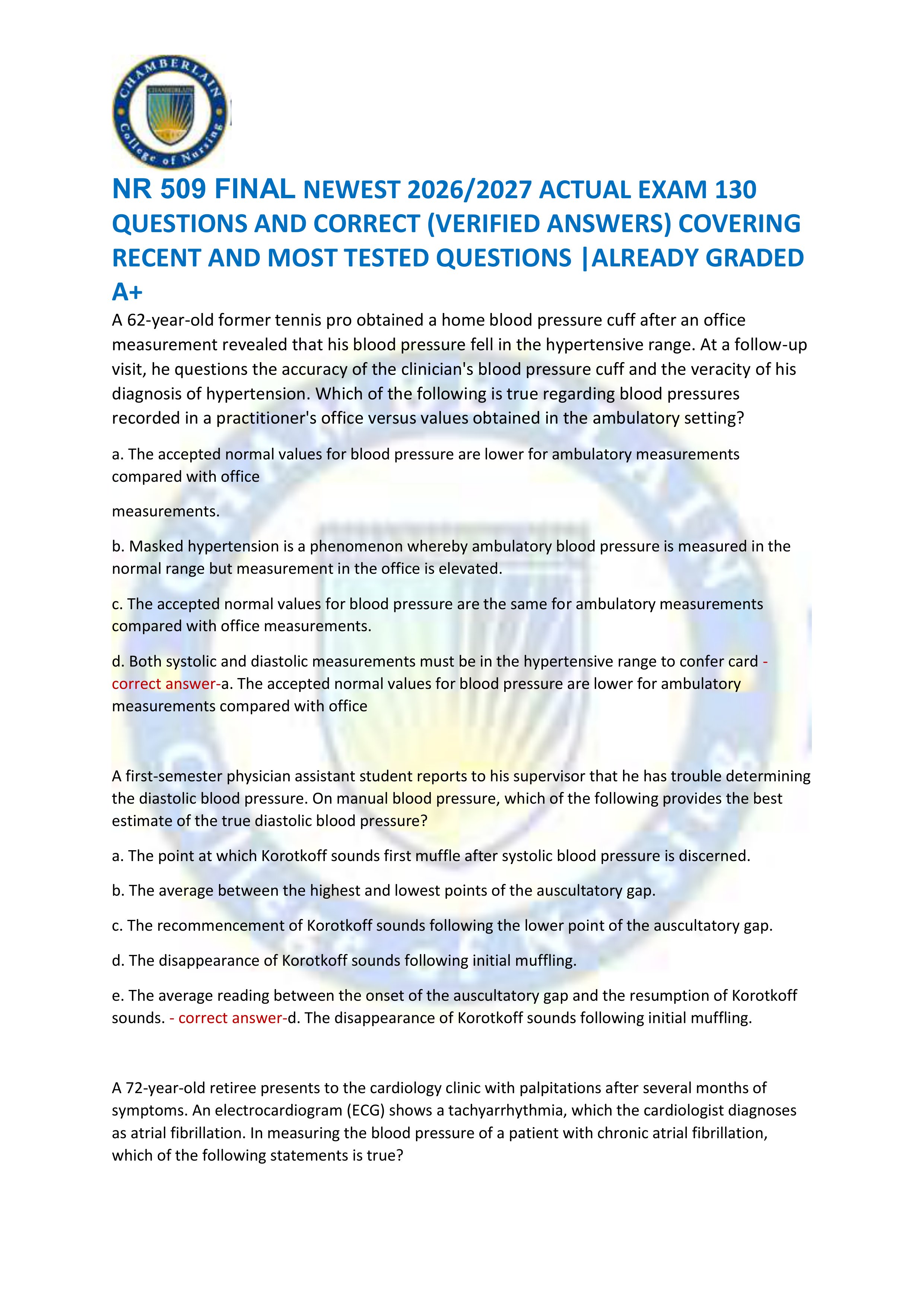
NR 509 FINAL NEWEST 2026/2027 ACTUAL EXAM 130 QUESTIONS AND CORRECT (VERIFIED ANSWERS) COVERING RECENT AND MOST TESTED
Walden University · Nursing and midwifery
33 pagesUndergraduate
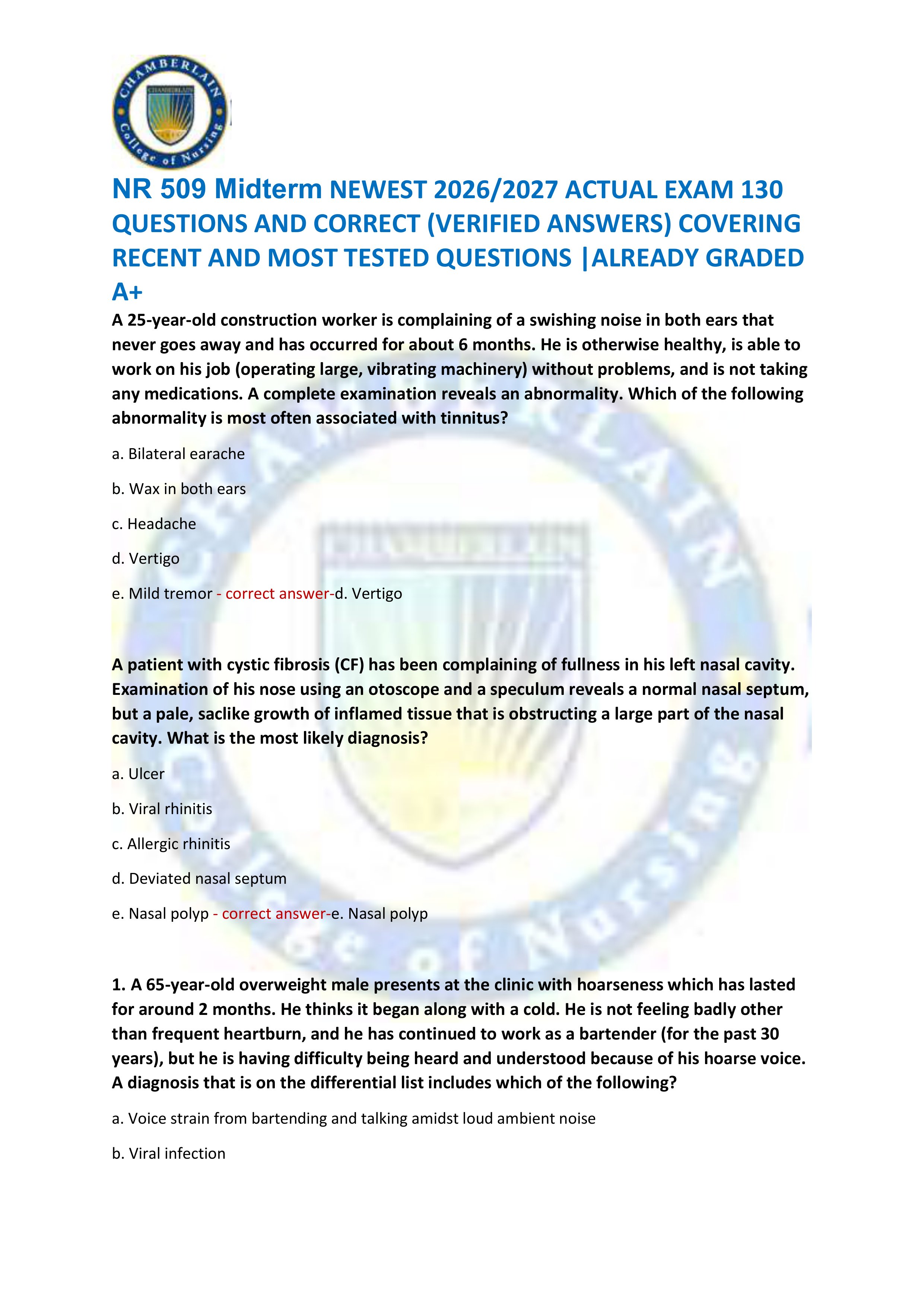
NR 509 Midterm NEWEST 2026/2027 ACTUAL EXAM 130 QUESTIONS AND CORRECT (VERIFIED ANSWERS) COVERING RECENT AND MOST TEST
Walden University · Nursing and midwifery
36 pagesUndergraduate
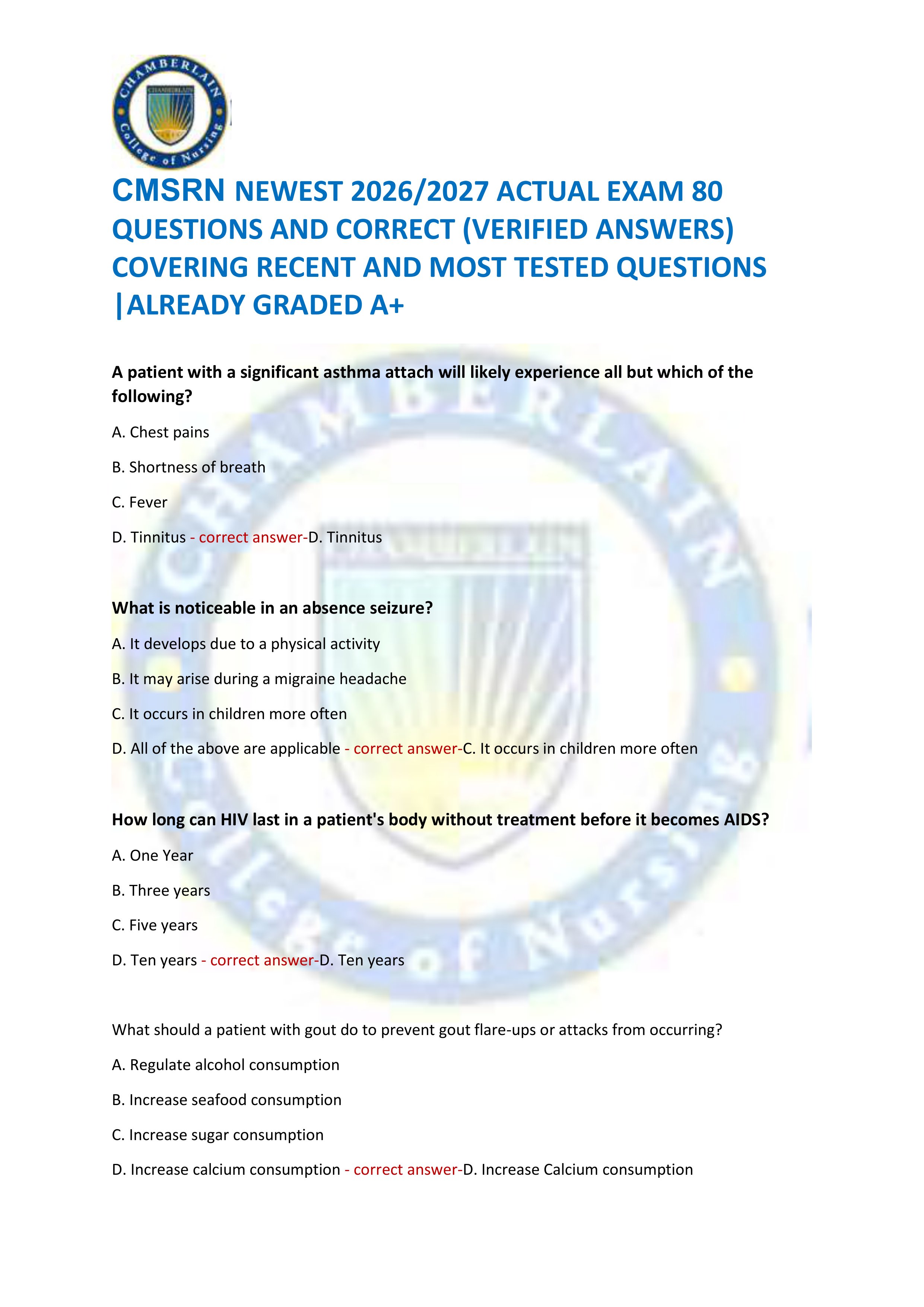
CMSRN NEWEST 2026/2027 ACTUAL EXAM 80 QUESTIONS AND CORRECT (VERIFIED ANSWERS) COVERING RECENT AND MOST TESTED QUESTIO
Walden University · Nursing and midwifery
18 pagesUndergraduate