Exam Elaborations
HESI V2 health assessment NEWEST 2026/2027 ACTUAL EXAM 80 QUESTIONS AND CORRECT (VERIFIED ANSWERS) with explanations C
Preview
Page 1 of 16
Sample · 3/16
Click to enlarge Pages 2–6 · locked
Click to enlarge Pages 8–10 · locked
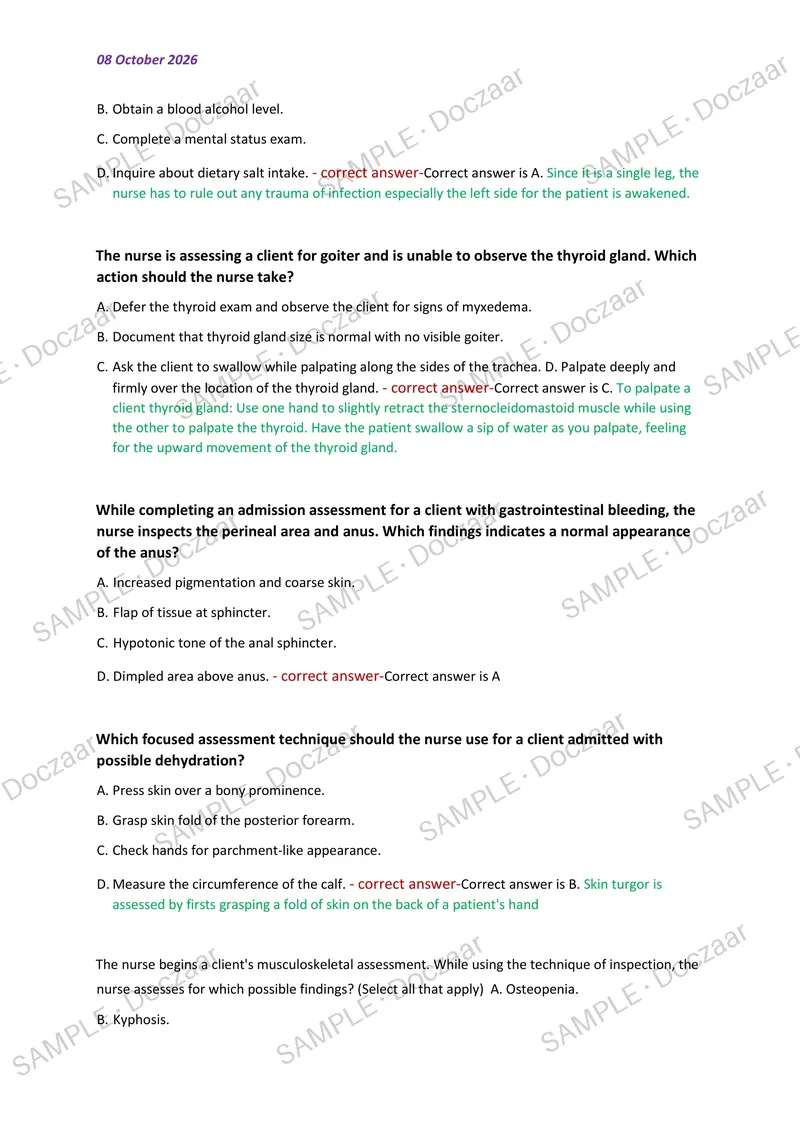
Click to enlarge
Continued
13 more pages
Locked · Full 16-page document
About this document
This document provides an in-depth review of the HESI V2 Health Assessment Exam for the academic years 2026/2027. It contains 80 questions with verified correct answers and explanations, reflecting the most recent and frequently tested topics. Designed as a study aid for nursing students, this guide offers insights into common health assessment scenarios and the rationale behind correct responses, helping students prepare effectively for the exam.
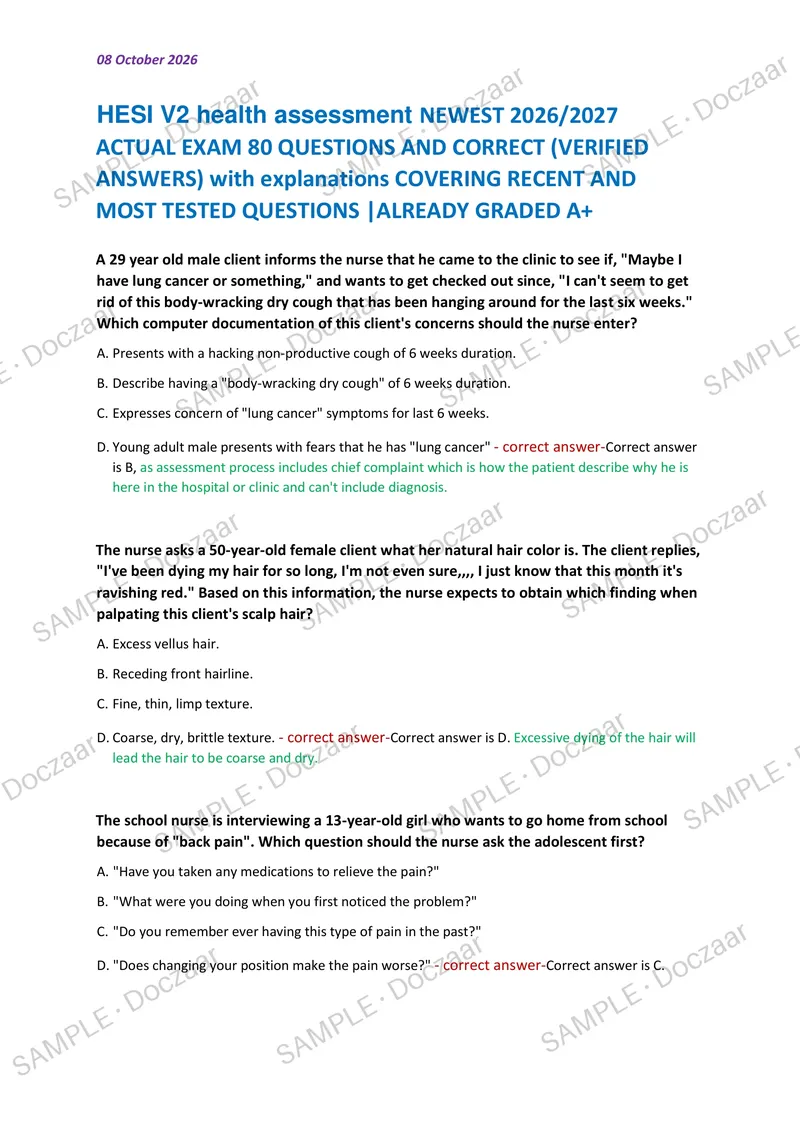
The guide includes various clinical case studies and the appropriate documentation and assessment responses. For instance, it covers how a nurse should document a patient's description of symptoms, emphasizing the importance of recording the patient's chief complaint without implying a diagnosis. Another case highlights the expected findings when assessing a patient with a history of hair dye use, focusing on the physical characteristics of hair.
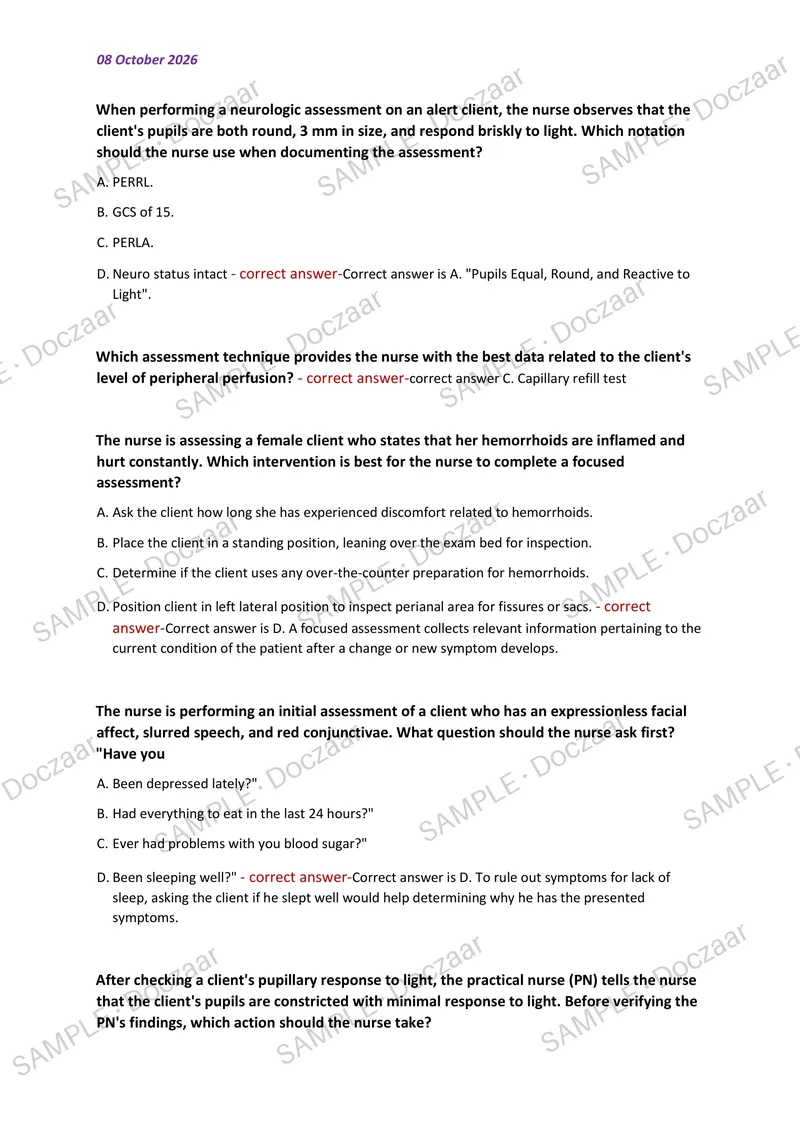
Additionally, the document addresses how to approach health history interviews, especially concerning sensitive topics like drug and alcohol use, by suggesting clear and specific questioning techniques. It also includes scenarios like assessing a potential peritonsillar abscess in a patient with streptococcus pharyngitis, recognizing signs of appendicitis through rebound tenderness, and distinguishing between venous and arterial insufficiency in ulcer evaluations.
This comprehensive guide is an invaluable resource for students aiming to excel in their health assessments, offering practical examples and detailed explanations that hone their diagnostic and interviewing skills. The emphasis on recent and relevant questions makes it an essential tool for understanding the nuances of patient interaction and clinical evaluation.
Reviews
No reviews yet.
Be the first — reviews come from verified buyers.
Related documents
NR 302 exam 3 NEWEST TEST EXAM 180 COMPREHENSIVE QUESTIONS /FREQUENTLY MOST TESTED QUESTIONS AND VERIFIED SOLUTIONS/GE
Walden University · Nursing and midwifery
41 pagesUndergraduate
NR 565 - advanced pharmacology midterm – Chamberlain NEWEST TEST EXAM 100 COMPREHENSIVE QUESTIONS /FREQUENTLY MOST TES
Walden University · Nursing and midwifery
14 pagesUndergraduate
NR565 Week 5 DM & Thyroid Meds NEWEST 2026/2027 ACTUAL EXAM 80 QUESTIONS AND CORRECT (VERIFIED ANSWERS) COVERING RECEN
Walden University · Nursing and midwifery
19 pagesUndergraduate
NHCO Phlebotomy Exam 2026/2027 TEST EXAM 100 COMPREHENSIVE QUESTIONS /FREQUENTLY MOST TESTED QUESTIONS AND VERIFIED SO
Walden University · Nursing and midwifery
24 pagesUndergraduate
NCCT - Patient Intake and Care Exam 2026/2027 TEST EXAM 100 COMPREHENSIVE QUESTIONS /FREQUENTLY MOST TESTED QUESTIONS
Walden University · Nursing and midwifery
21 pagesUndergraduate
NR 509 FINAL NEWEST 2026/2027 ACTUAL EXAM 130 QUESTIONS AND CORRECT (VERIFIED ANSWERS) COVERING RECENT AND MOST TESTED
Walden University · Nursing and midwifery
33 pagesUndergraduate
NR 509 Midterm NEWEST 2026/2027 ACTUAL EXAM 130 QUESTIONS AND CORRECT (VERIFIED ANSWERS) COVERING RECENT AND MOST TEST
Walden University · Nursing and midwifery
36 pagesUndergraduate
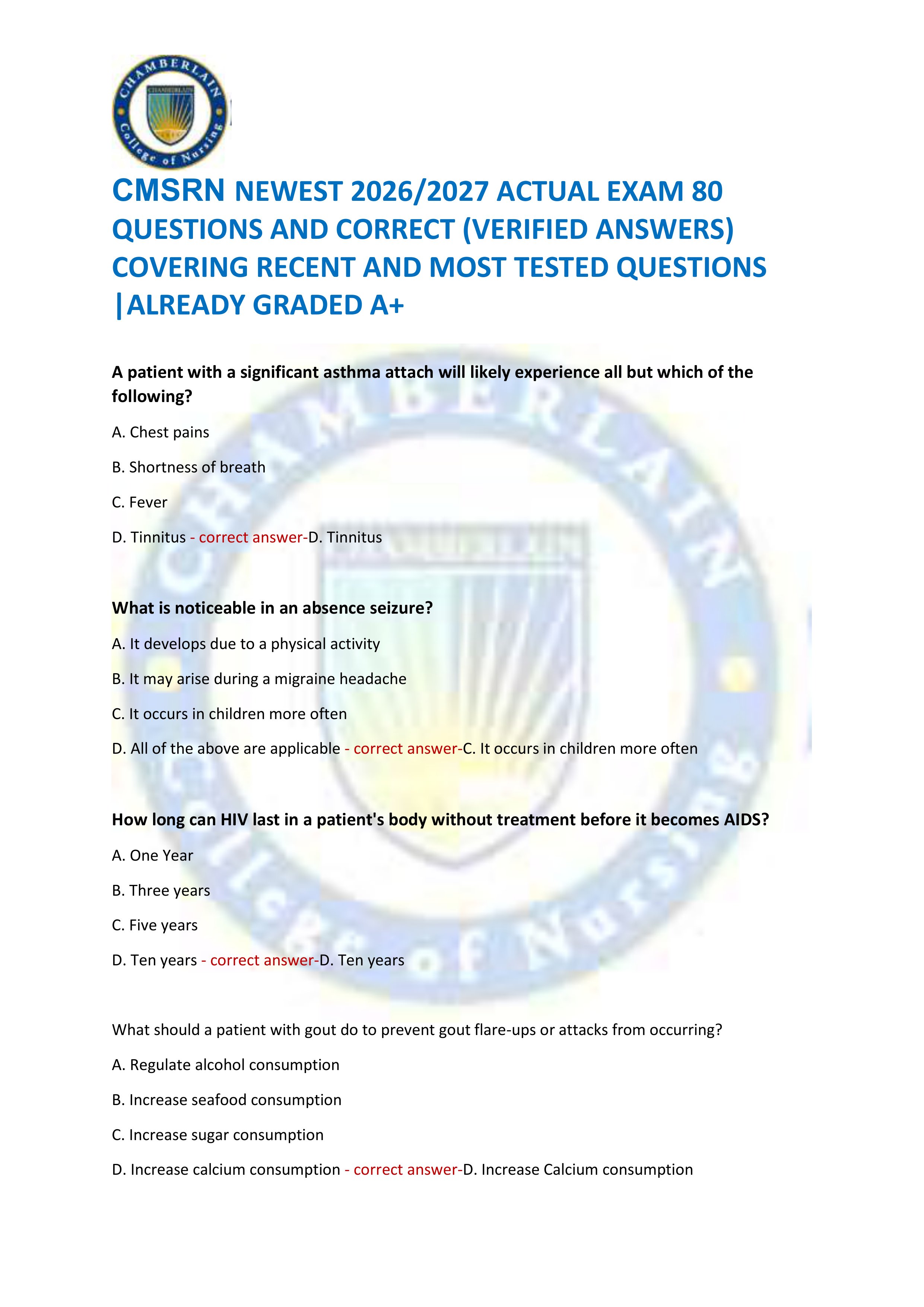
CMSRN NEWEST 2026/2027 ACTUAL EXAM 80 QUESTIONS AND CORRECT (VERIFIED ANSWERS) COVERING RECENT AND MOST TESTED QUESTIO
Walden University · Nursing and midwifery
18 pagesUndergraduate