Exam Elaborations
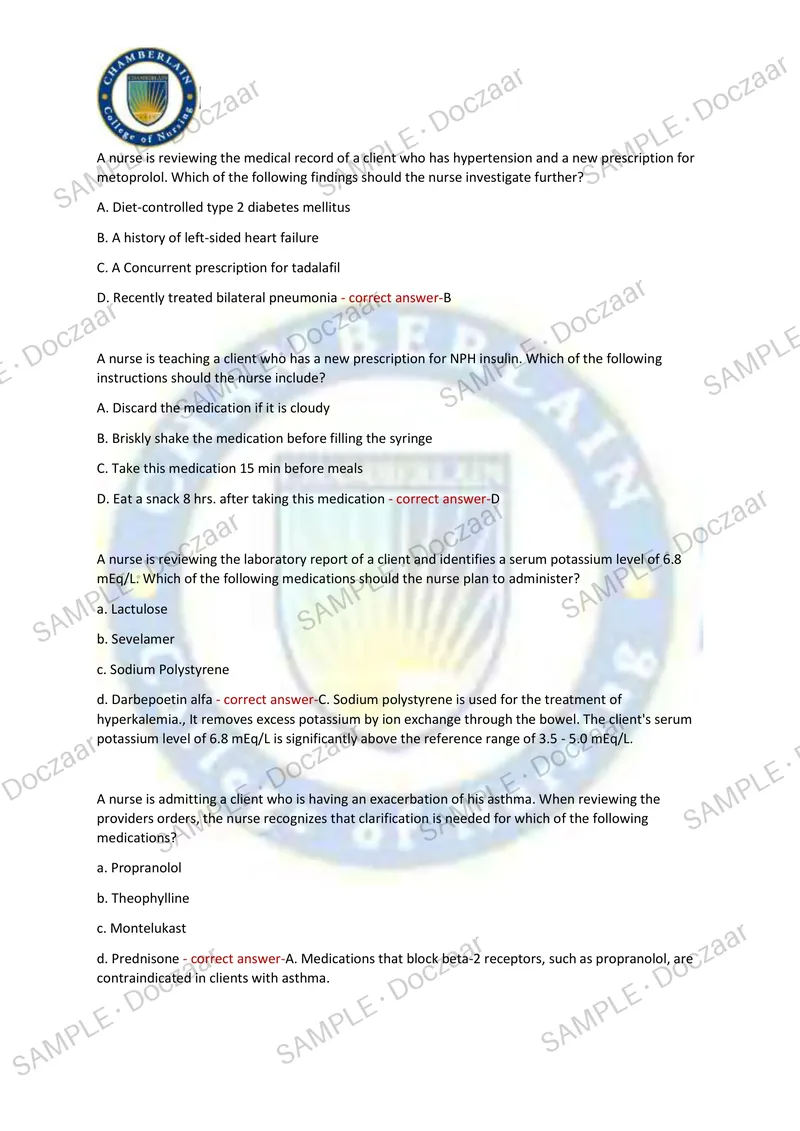
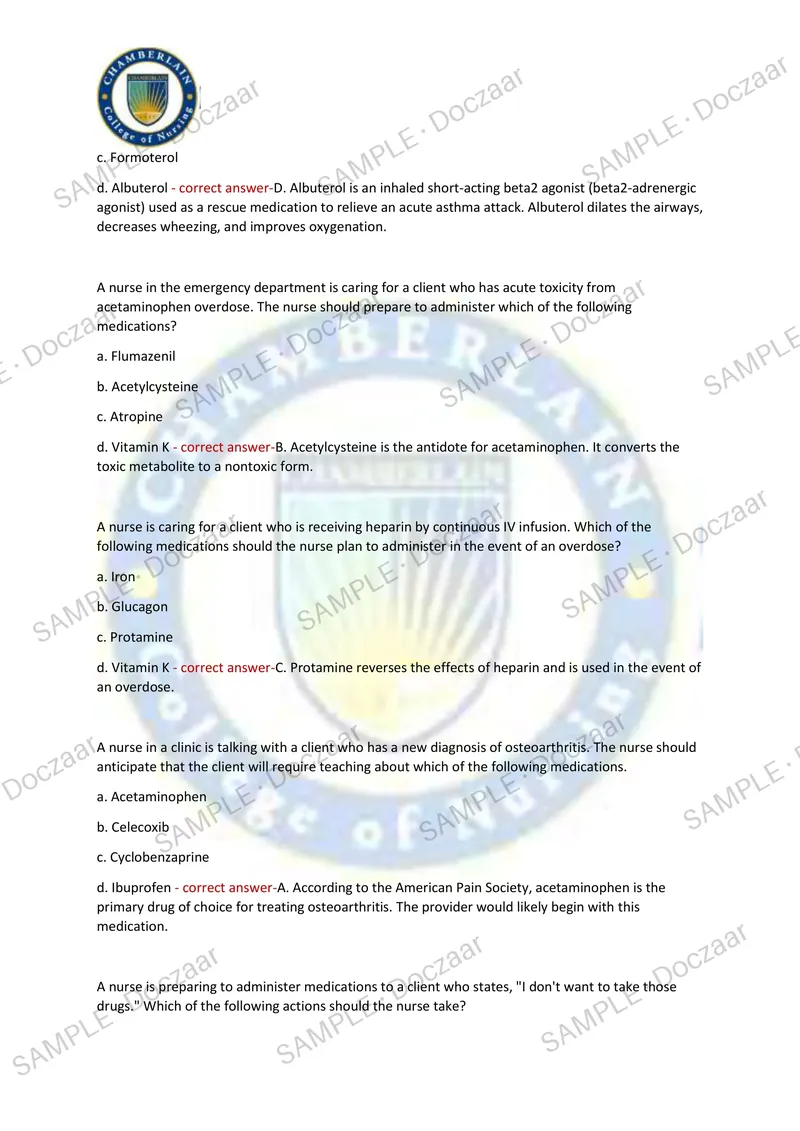
ATI PHARMACOLOGY Chamberlain NEWEST TEST EXAM 100 COMPREHENSIVE QUESTIONS /FREQUENTLY MOST TESTED QUESTIONS AND VERI
Preview
Page 1 of 26
Sample · 4/26
Click to enlarge Pages 2–6 · locked
Click to enlarge Pages 8–14 · locked
Click to enlarge Pages 16–18 · locked
Click to enlarge
Continued
22 more pages
Locked · Full 26-page document
About this document
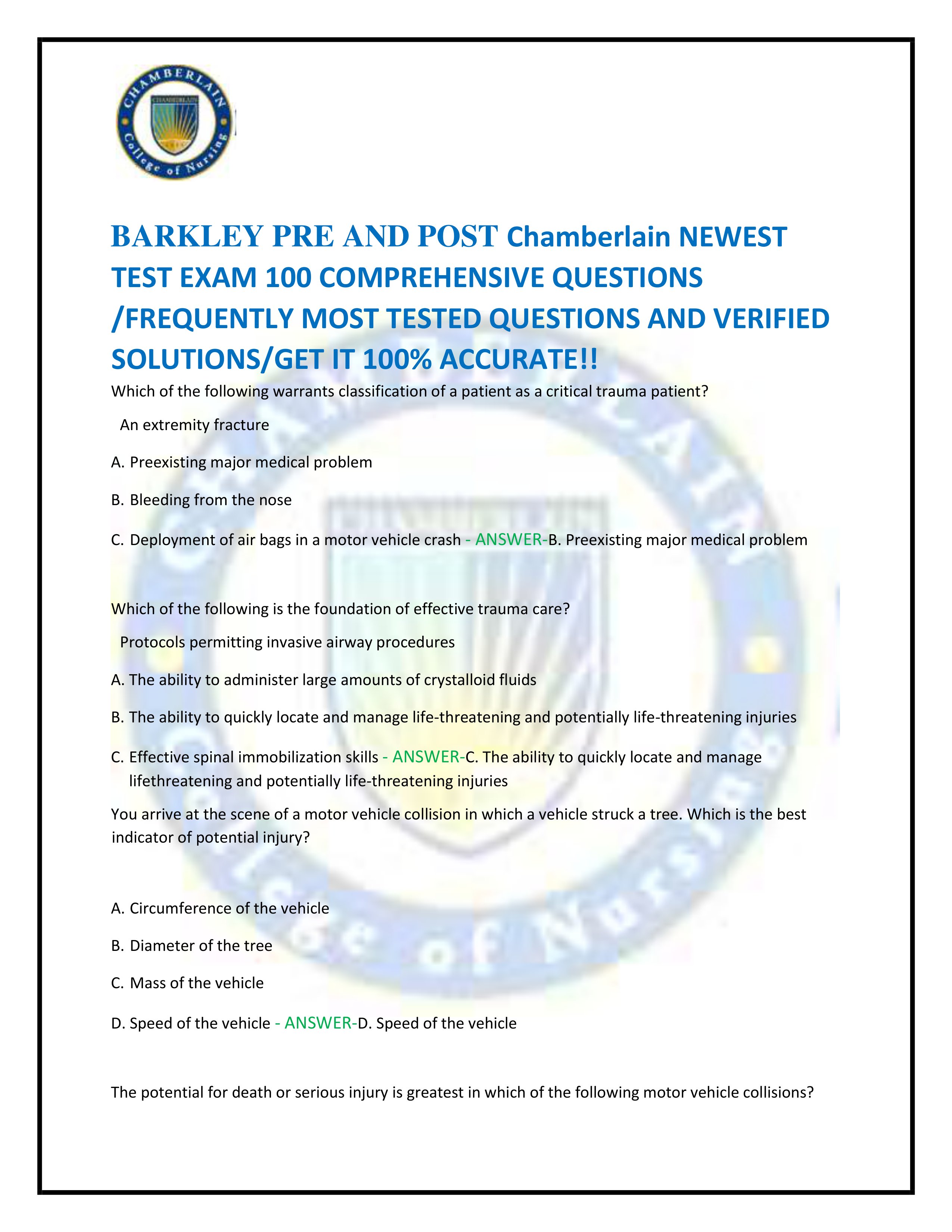
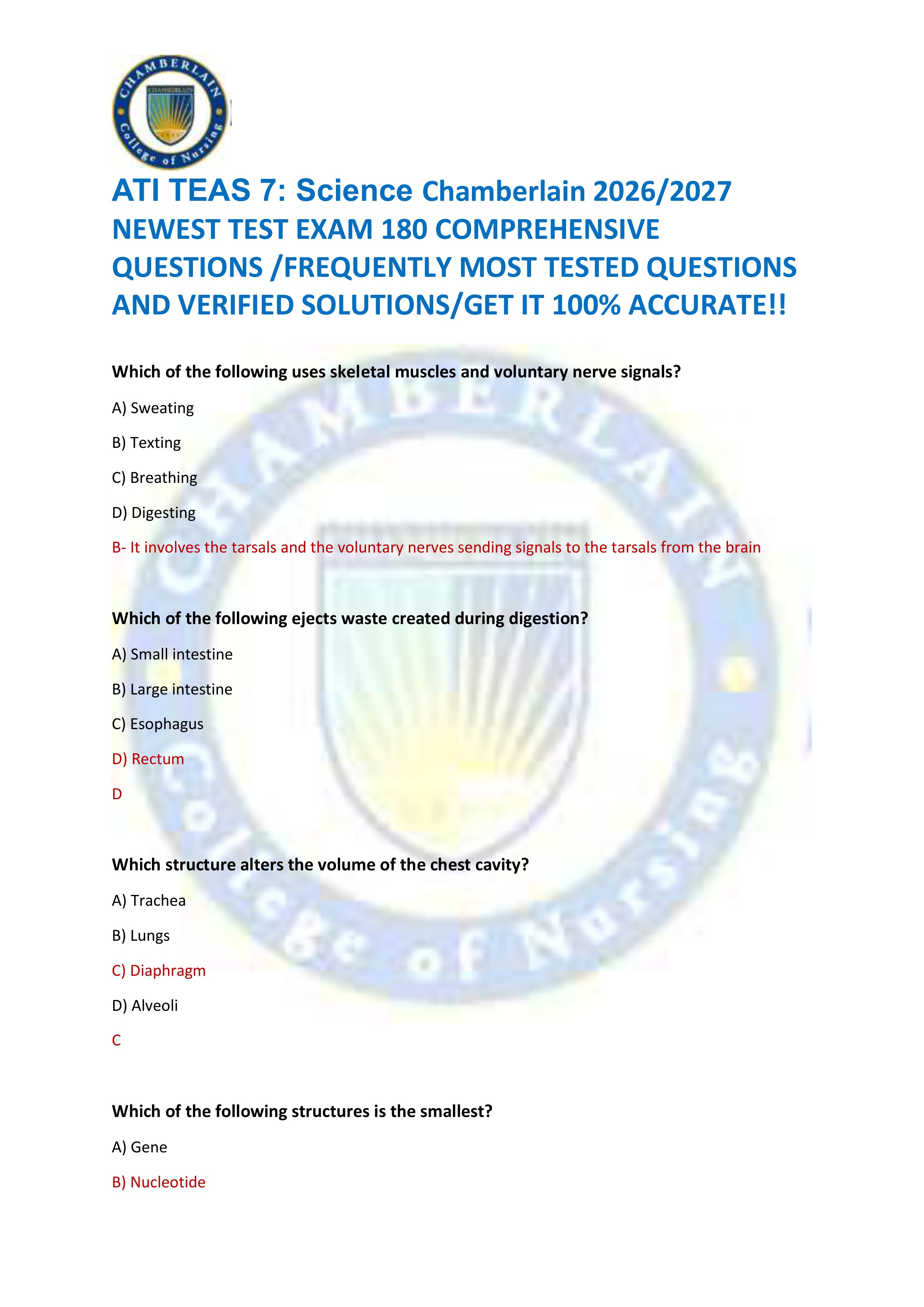
The ATI Pharmacology Chamberlain exam is a comprehensive test comprising 100 questions, designed to evaluate nursing students' knowledge and application of pharmacology concepts. This document highlights frequently tested questions and provides verified solutions, ensuring students can achieve accurate results. A key focus within the exam is on understanding the proper administration and effects of various medications, critical for those preparing for a career in nursing.
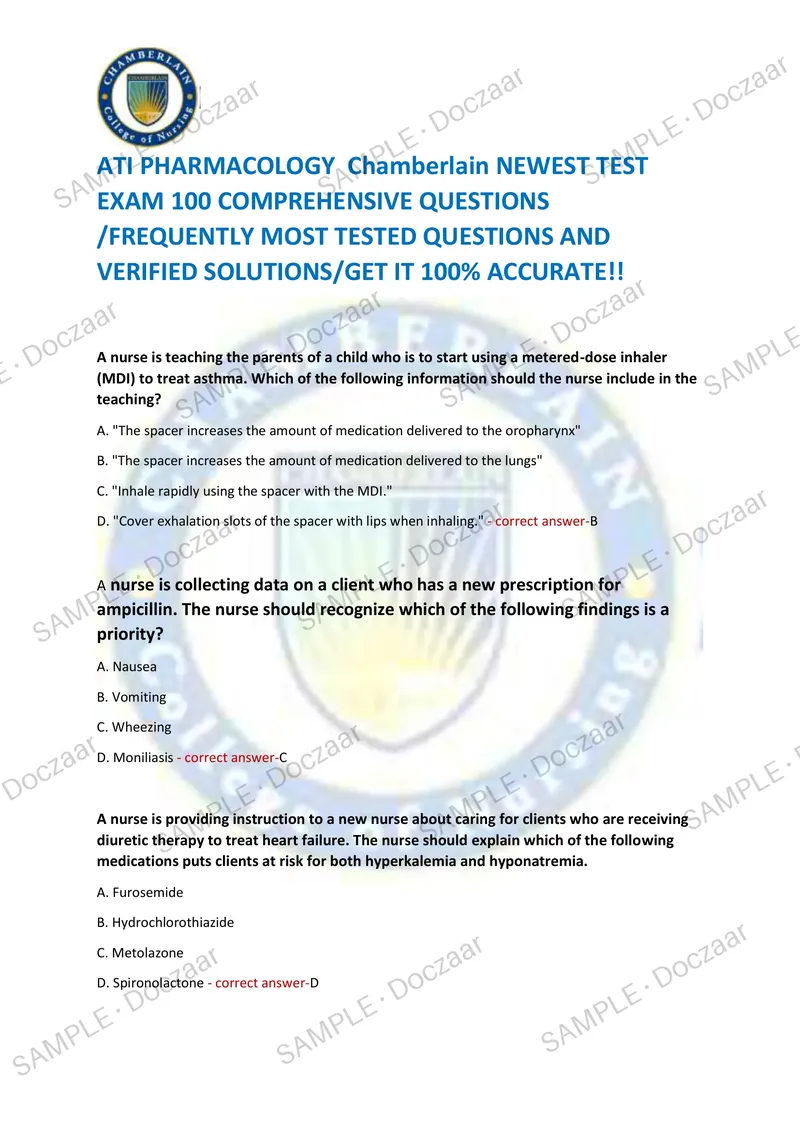
One question addresses the use of metered-dose inhalers (MDIs) in treating asthma, emphasizing the importance of using a spacer to increase medication delivery to the lungs. Another question focuses on recognizing priority symptoms such as wheezing when administering ampicillin, underscoring the need for immediate attention to potential allergic reactions.
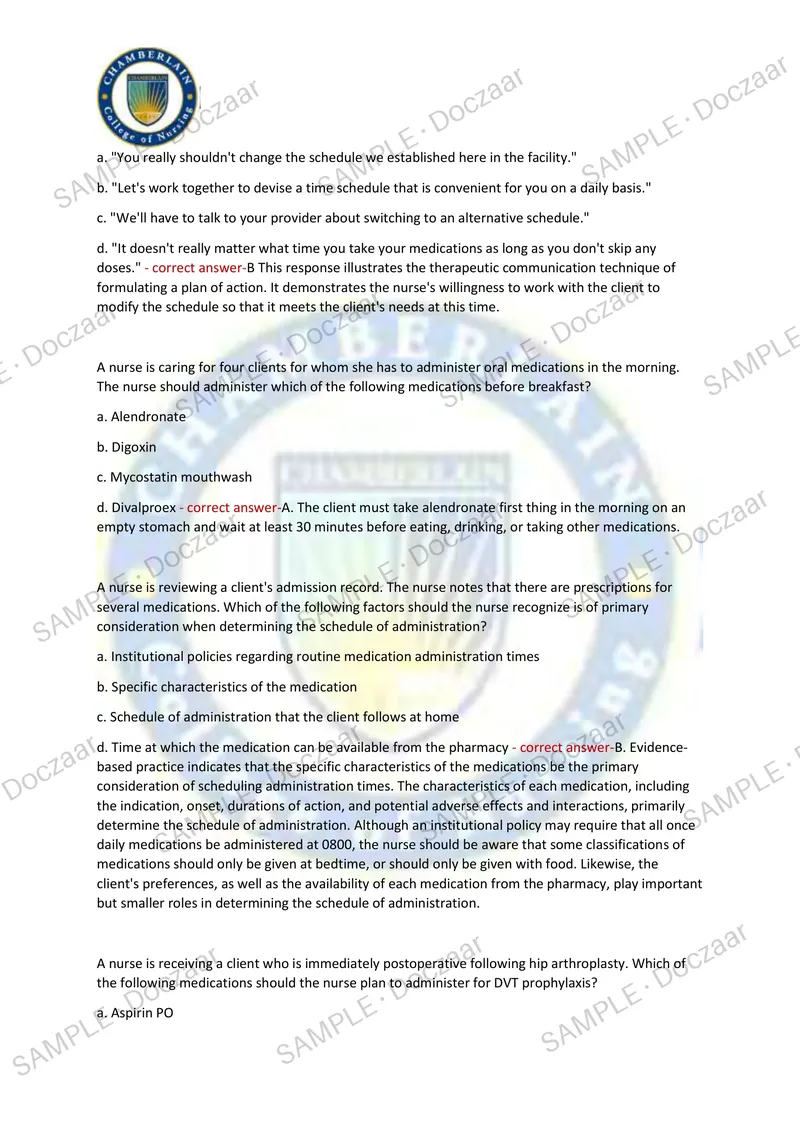
The material also covers the risks associated with diuretic therapy for heart failure patients, particularly highlighting spironolactone's potential to cause both hyperkalemia and hyponatremia. Additionally, the therapeutic outcomes of H2 receptor antagonists, such as relieving heartburn and preventing ulcers, are explored, providing insight into their proper use and effectiveness.
Further sections discuss the importance of vitamin K administration in clients with cirrhosis and prolonged prothrombin time, showcasing the need for careful monitoring of bleeding risks. The document also stresses proper medication administration procedures, advising against documenting before administration to avoid errors.
Overall, this exam serves as a critical resource for nursing students, offering detailed explanations and solutions to common pharmacological scenarios. By studying these questions and answers, students can enhance their understanding of medication management, patient safety, and effective nursing practices.
Reviews
No reviews yet.
Be the first — reviews come from verified buyers.
Related documents
NR 302 exam 3 NEWEST TEST EXAM 180 COMPREHENSIVE QUESTIONS /FREQUENTLY MOST TESTED QUESTIONS AND VERIFIED SOLUTIONS/GE
Walden University · Nursing and midwifery
41 pagesUndergraduate
NR 565 - advanced pharmacology midterm – Chamberlain NEWEST TEST EXAM 100 COMPREHENSIVE QUESTIONS /FREQUENTLY MOST TES
Walden University · Nursing and midwifery
14 pagesUndergraduate
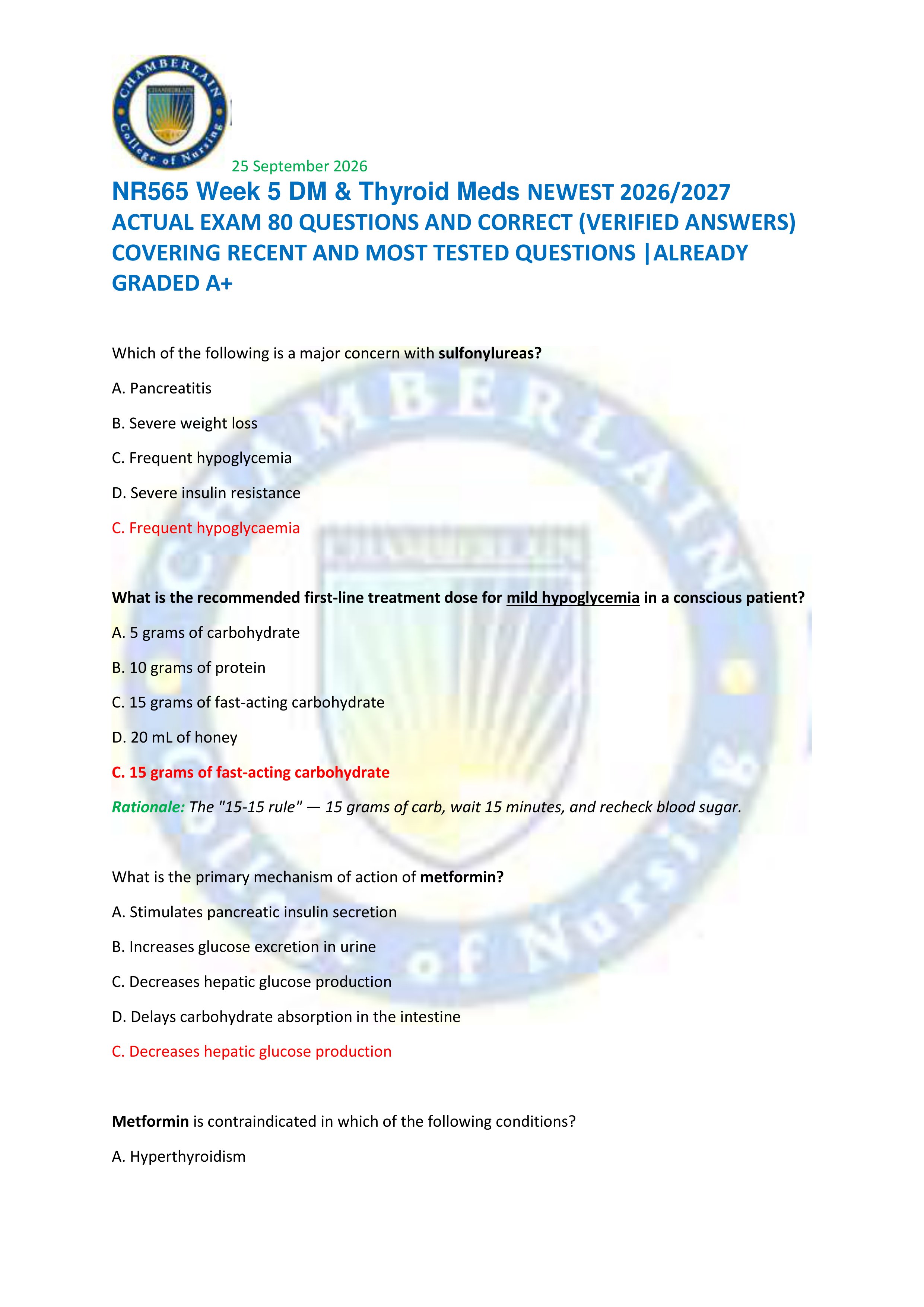
NR565 Week 5 DM & Thyroid Meds NEWEST 2026/2027 ACTUAL EXAM 80 QUESTIONS AND CORRECT (VERIFIED ANSWERS) COVERING RECEN
Walden University · Nursing and midwifery
19 pagesUndergraduate
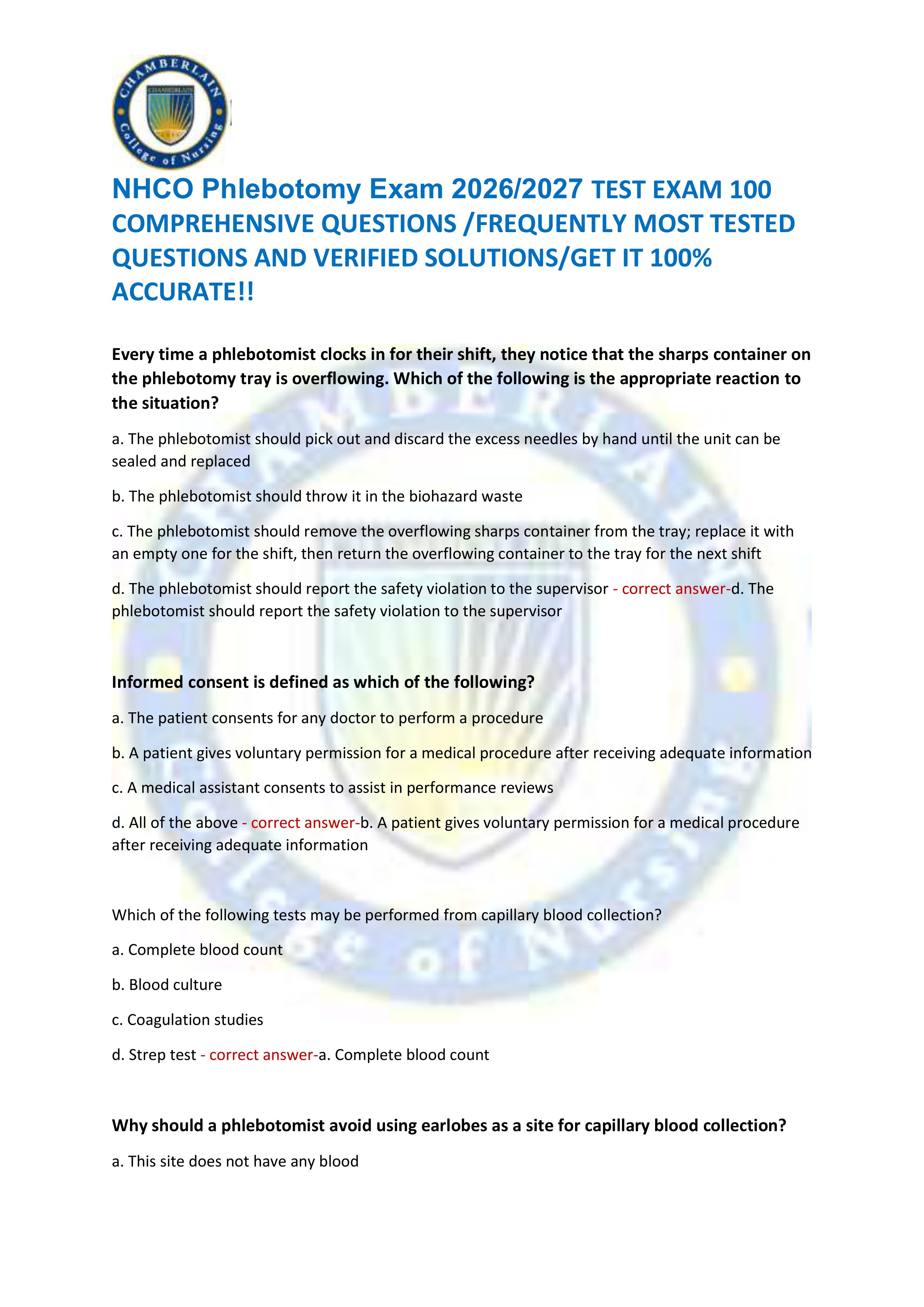
NHCO Phlebotomy Exam 2026/2027 TEST EXAM 100 COMPREHENSIVE QUESTIONS /FREQUENTLY MOST TESTED QUESTIONS AND VERIFIED SO
Walden University · Nursing and midwifery
24 pagesUndergraduate
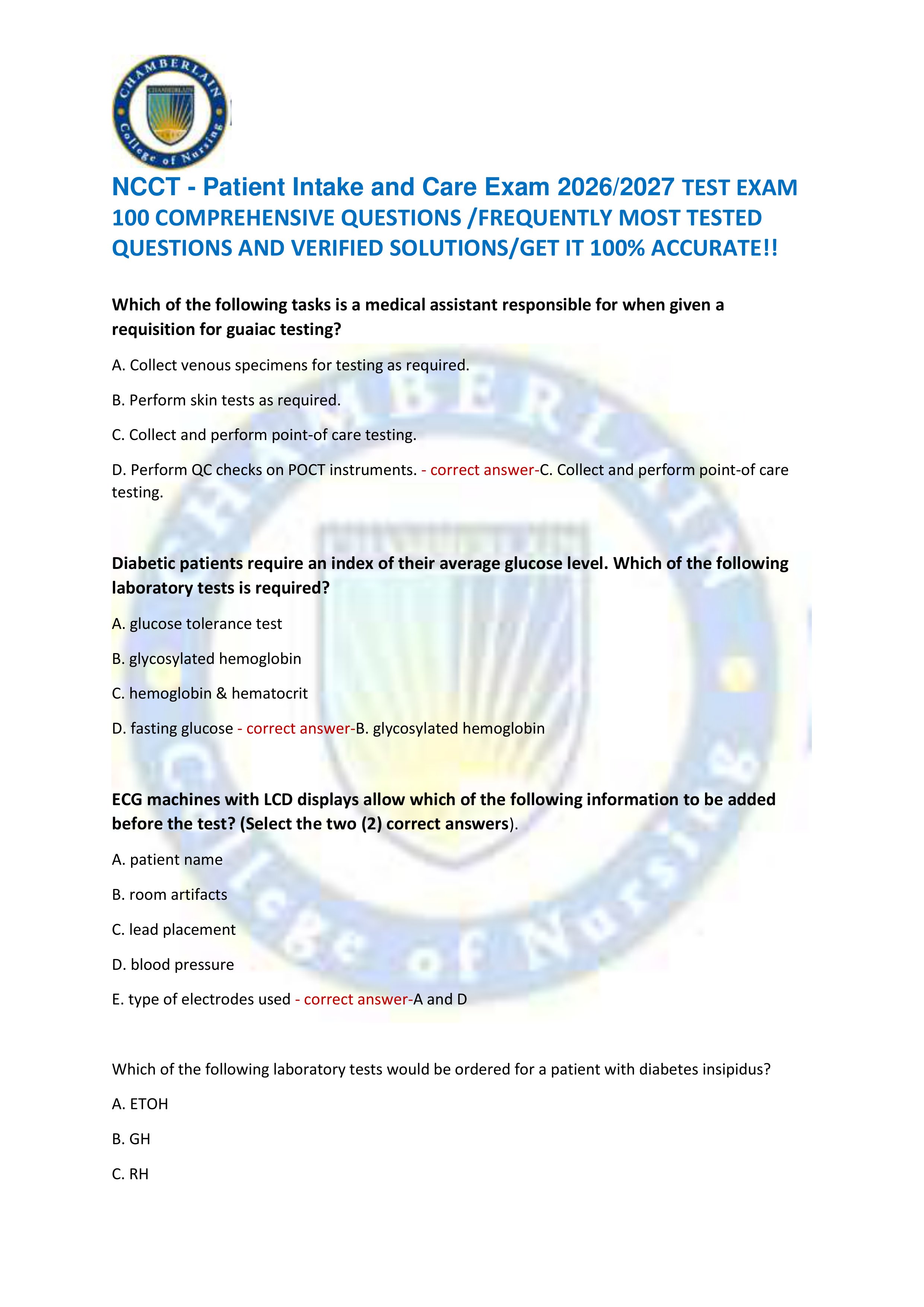
NCCT - Patient Intake and Care Exam 2026/2027 TEST EXAM 100 COMPREHENSIVE QUESTIONS /FREQUENTLY MOST TESTED QUESTIONS
Walden University · Nursing and midwifery
21 pagesUndergraduate
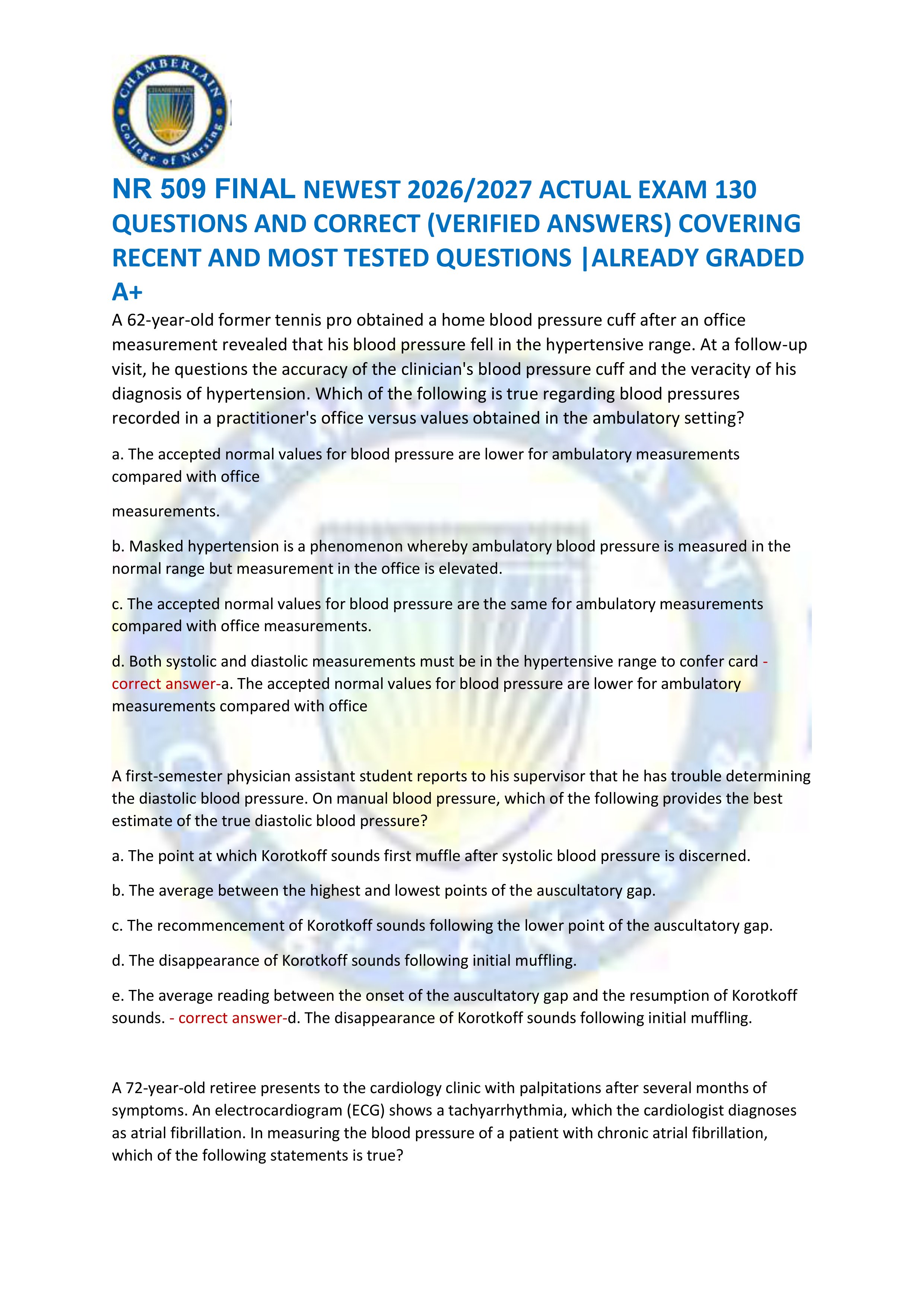
NR 509 FINAL NEWEST 2026/2027 ACTUAL EXAM 130 QUESTIONS AND CORRECT (VERIFIED ANSWERS) COVERING RECENT AND MOST TESTED
Walden University · Nursing and midwifery
33 pagesUndergraduate
NR 509 Midterm NEWEST 2026/2027 ACTUAL EXAM 130 QUESTIONS AND CORRECT (VERIFIED ANSWERS) COVERING RECENT AND MOST TEST
Walden University · Nursing and midwifery
36 pagesUndergraduate
CMSRN NEWEST 2026/2027 ACTUAL EXAM 80 QUESTIONS AND CORRECT (VERIFIED ANSWERS) COVERING RECENT AND MOST TESTED QUESTIO
Walden University · Nursing and midwifery
18 pagesUndergraduate