Exam Elaborations
NR566 ADVANCED PHARMACOLOGY FOR CARE OF THE FAMILY FINAL 2026/2027 NEWEST TEST EXAM 100 COMPREHENSIVE QUESTIONS /FREQU
Preview
Page 1 of 21
Sample · 4/21
Click to enlarge Pages 2–6 · locked
Click to enlarge Page 8 · locked
Click to enlarge Pages 10–18 · locked
Click to enlarge
Continued
17 more pages
Locked · Full 21-page document
About this document
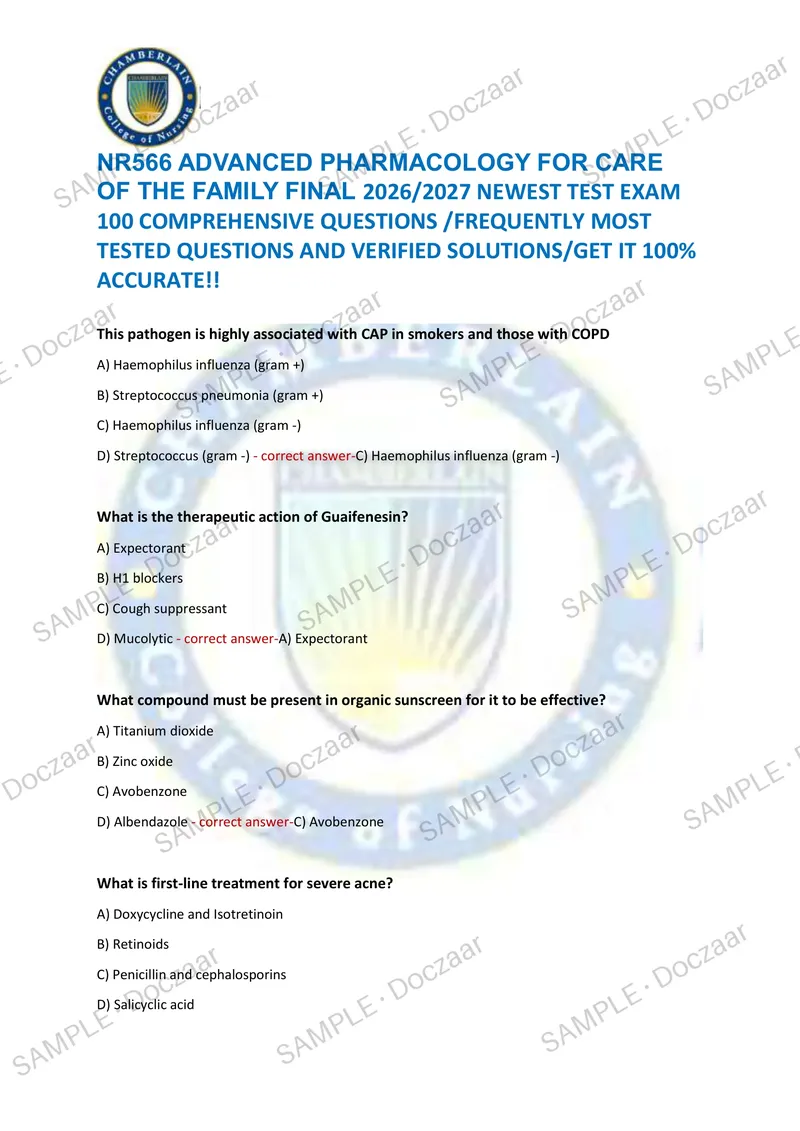
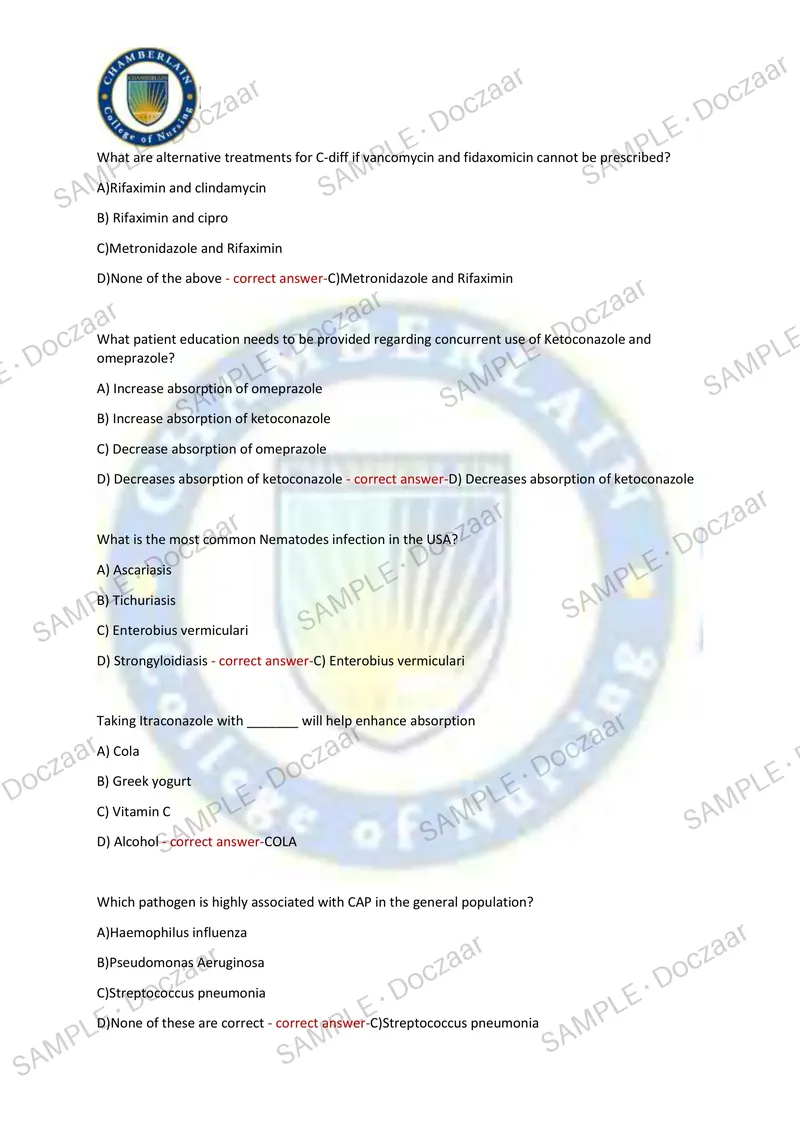
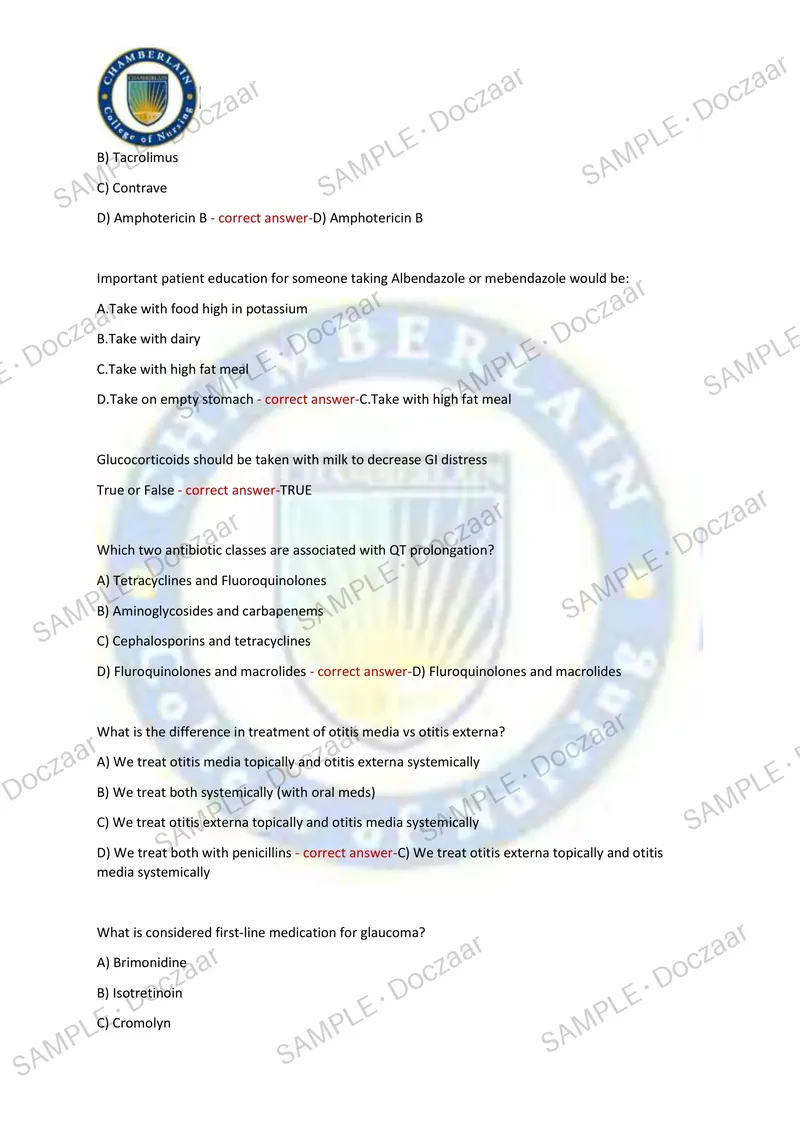
The NR566 Advanced Pharmacology for Care of the Family Final Exam for the 2026/2027 academic year is a comprehensive test aimed at evaluating students' understanding of pharmacological principles in family care. This document contains 100 frequently tested questions along with verified solutions, ensuring accuracy for learners. The exam covers a wide range of topics essential for advanced pharmacology, including the management of conditions such as community-acquired pneumonia (CAP), severe acne, bacterial meningitis, and complicated urinary tract infections (UTIs).
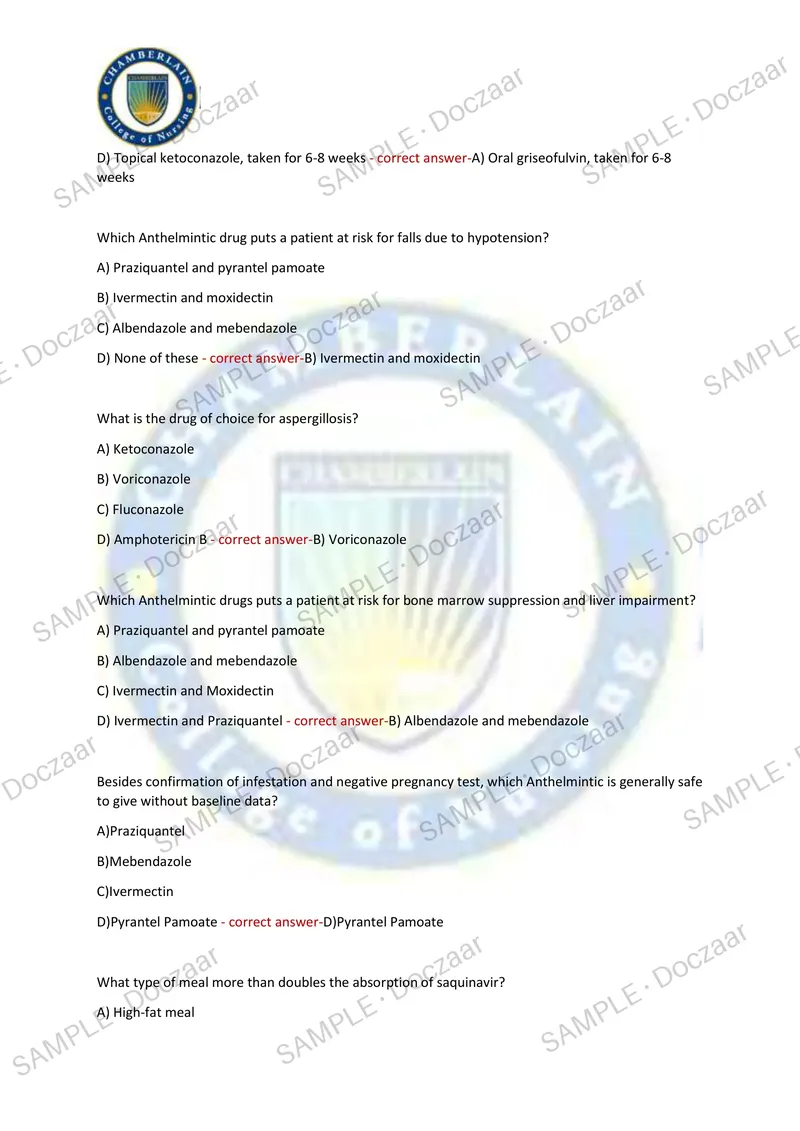
Key highlights include the identification of Haemophilus influenza (gram-negative) as a pathogen related to CAP in smokers and those with COPD, and the therapeutic action of Guaifenesin as an expectorant. It further discusses first-line treatments, such as the combination of doxycycline and isotretinoin for severe acne, and the use of dicloxacillin for mastitis. The exam also addresses the importance of third-generation cephalosporins for bacterial meningitis treatment.
Students are tested on understanding the pharmacodynamics of medications like intranasal Cromolyn, and the interaction between ketoconazole and omeprazole, which decreases ketoconazole absorption. Alternative treatments for C-diff when standard options like vancomycin are unavailable are also explored. Additional questions cover the most common nematode infection in the USA, Enterobius vermicularis, and the implications of using fluoroquinolones, which are associated with tendonitis and tendon rupture.
This exam is a valuable resource for students looking to excel in advanced pharmacology, providing them with the necessary knowledge to manage diverse patient conditions effectively. It emphasizes critical thinking and application of pharmacological principles in real-world scenarios, making it an essential study tool.
Reviews
No reviews yet.
Be the first — reviews come from verified buyers.
Related documents
NR 302 exam 3 NEWEST TEST EXAM 180 COMPREHENSIVE QUESTIONS /FREQUENTLY MOST TESTED QUESTIONS AND VERIFIED SOLUTIONS/GE
Walden University · Nursing and midwifery
41 pagesUndergraduate
NR 565 - advanced pharmacology midterm – Chamberlain NEWEST TEST EXAM 100 COMPREHENSIVE QUESTIONS /FREQUENTLY MOST TES
Walden University · Nursing and midwifery
14 pagesUndergraduate
NR565 Week 5 DM & Thyroid Meds NEWEST 2026/2027 ACTUAL EXAM 80 QUESTIONS AND CORRECT (VERIFIED ANSWERS) COVERING RECEN
Walden University · Nursing and midwifery
19 pagesUndergraduate
NHCO Phlebotomy Exam 2026/2027 TEST EXAM 100 COMPREHENSIVE QUESTIONS /FREQUENTLY MOST TESTED QUESTIONS AND VERIFIED SO
Walden University · Nursing and midwifery
24 pagesUndergraduate
NCCT - Patient Intake and Care Exam 2026/2027 TEST EXAM 100 COMPREHENSIVE QUESTIONS /FREQUENTLY MOST TESTED QUESTIONS
Walden University · Nursing and midwifery
21 pagesUndergraduate
NR 509 FINAL NEWEST 2026/2027 ACTUAL EXAM 130 QUESTIONS AND CORRECT (VERIFIED ANSWERS) COVERING RECENT AND MOST TESTED
Walden University · Nursing and midwifery
33 pagesUndergraduate
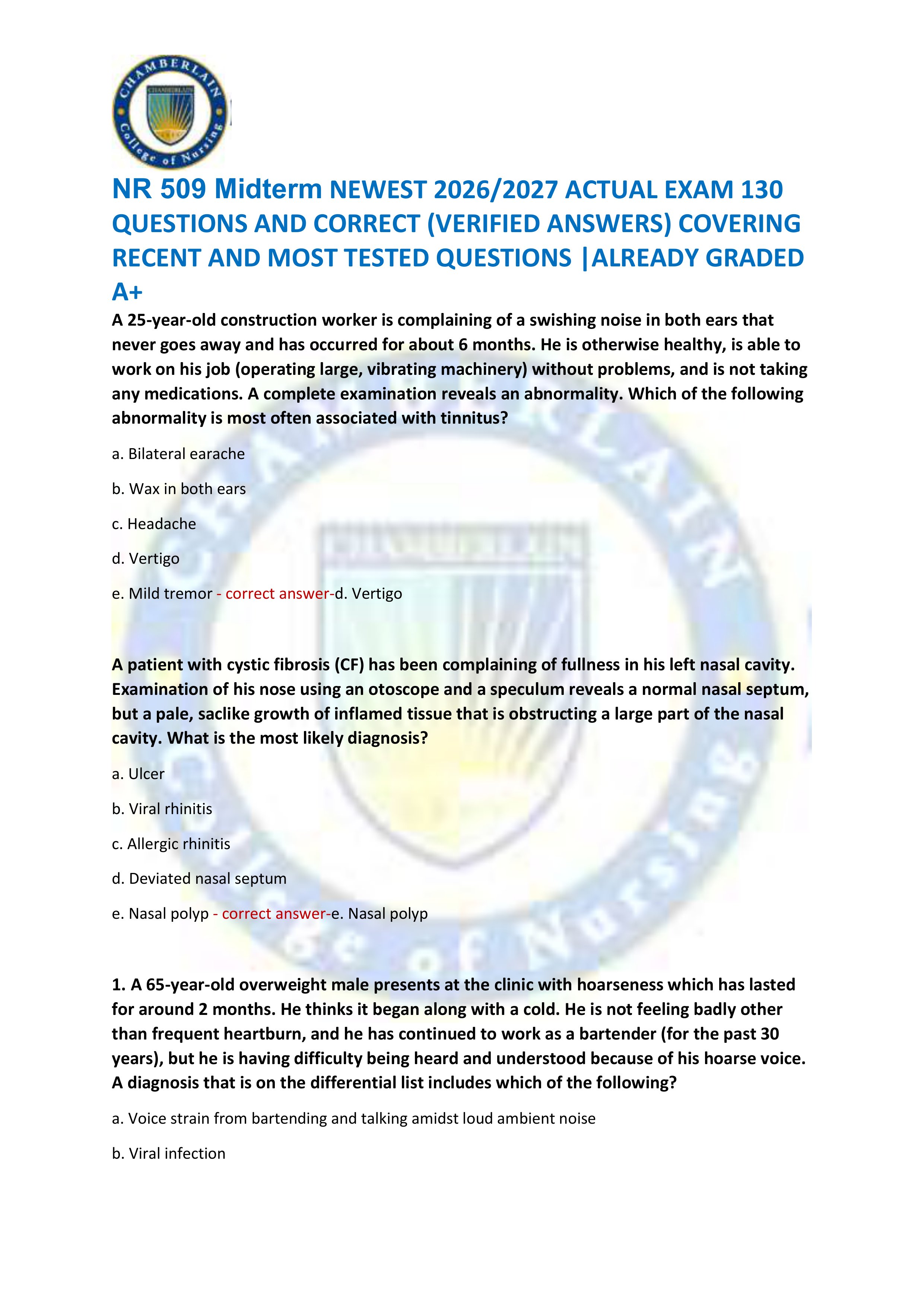
NR 509 Midterm NEWEST 2026/2027 ACTUAL EXAM 130 QUESTIONS AND CORRECT (VERIFIED ANSWERS) COVERING RECENT AND MOST TEST
Walden University · Nursing and midwifery
36 pagesUndergraduate
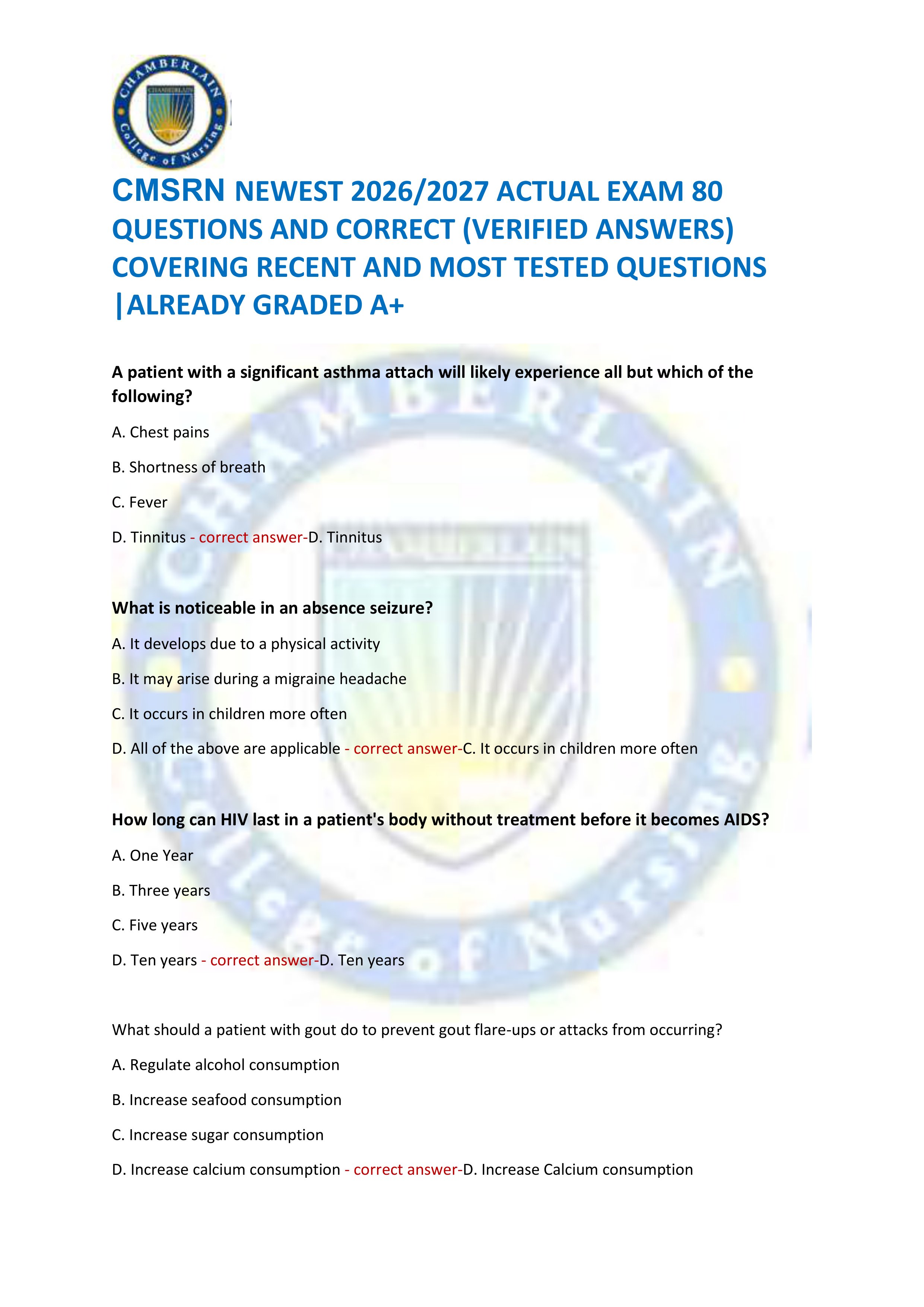
CMSRN NEWEST 2026/2027 ACTUAL EXAM 80 QUESTIONS AND CORRECT (VERIFIED ANSWERS) COVERING RECENT AND MOST TESTED QUESTIO
Walden University · Nursing and midwifery
18 pagesUndergraduate