Exam Elaborations
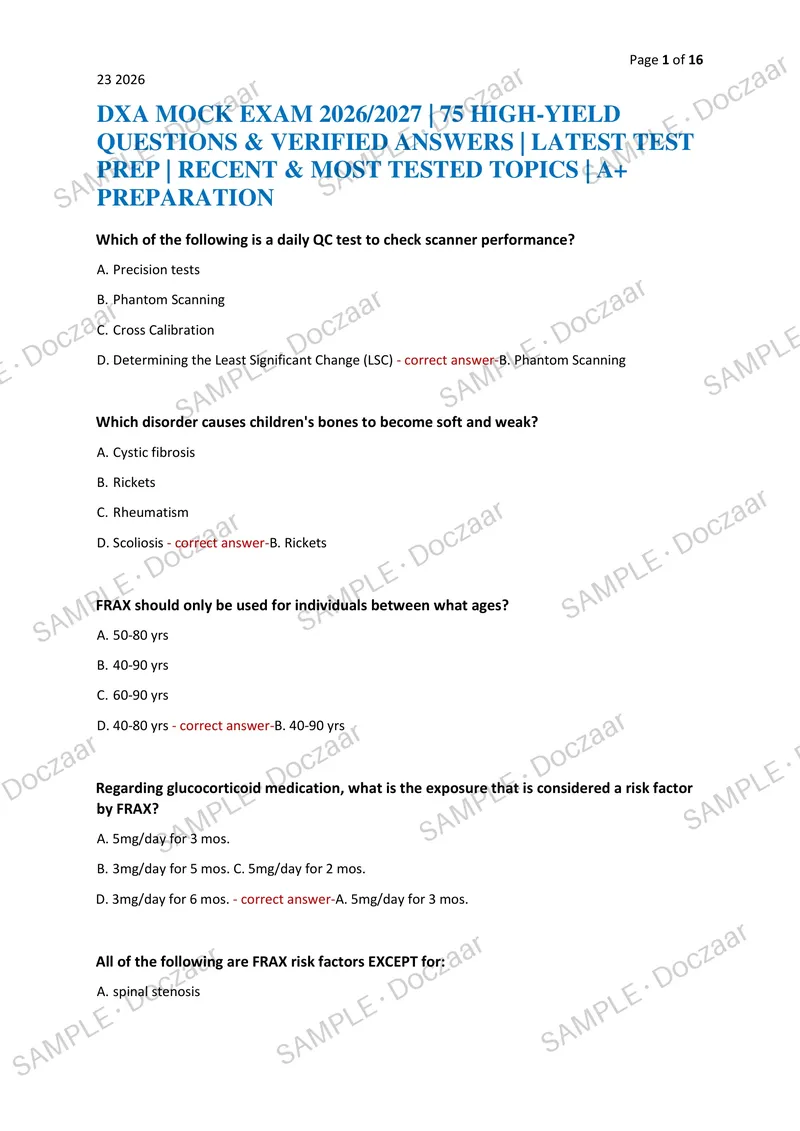
DXA MOCK EXAM 2026/2027 | 75 HIGH-YIELD QUESTIONS & VERIFIED ANSWERS | LATEST TEST PREP | RECENT & MOST TESTED TOPICS |
Preview
Page 1 of 16
Sample · 3/16
Click to enlarge Pages 2–5 · locked
Click to enlarge Pages 7–9 · locked
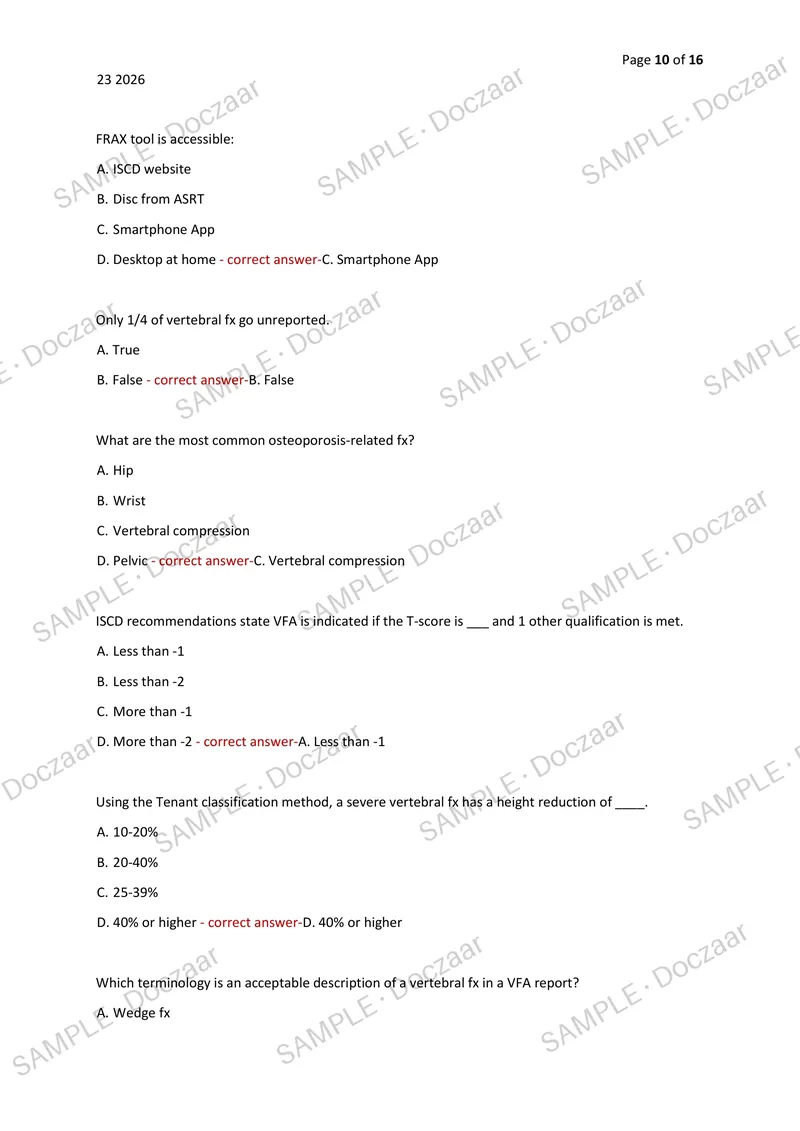
Click to enlarge
Continued
13 more pages
Locked · Full 16-page document
About this document
The "DXA Mock Exam 2026/2027" document is an essential study guide for students preparing for the upcoming DXA examinations. It comprises 75 high-yield questions and verified answers, focusing on recent and frequently tested topics, ensuring that students achieve A+ preparation. The exam content delves into various critical areas, including daily quality control tests like Phantom Scanning for scanner performance and understanding bone disorders, such as Rickets, that lead to weak bones in children.
Additionally, the document covers the appropriate use of the FRAX tool for assessing fracture risk in individuals aged between 40 and 90 years and outlines glucocorticoid exposure as a significant risk factor, specifically at a rate of 5mg/day for three months. Key anatomical terms are clarified, such as articular surfaces and the importance of standard anatomical positions for describing bone orientation.
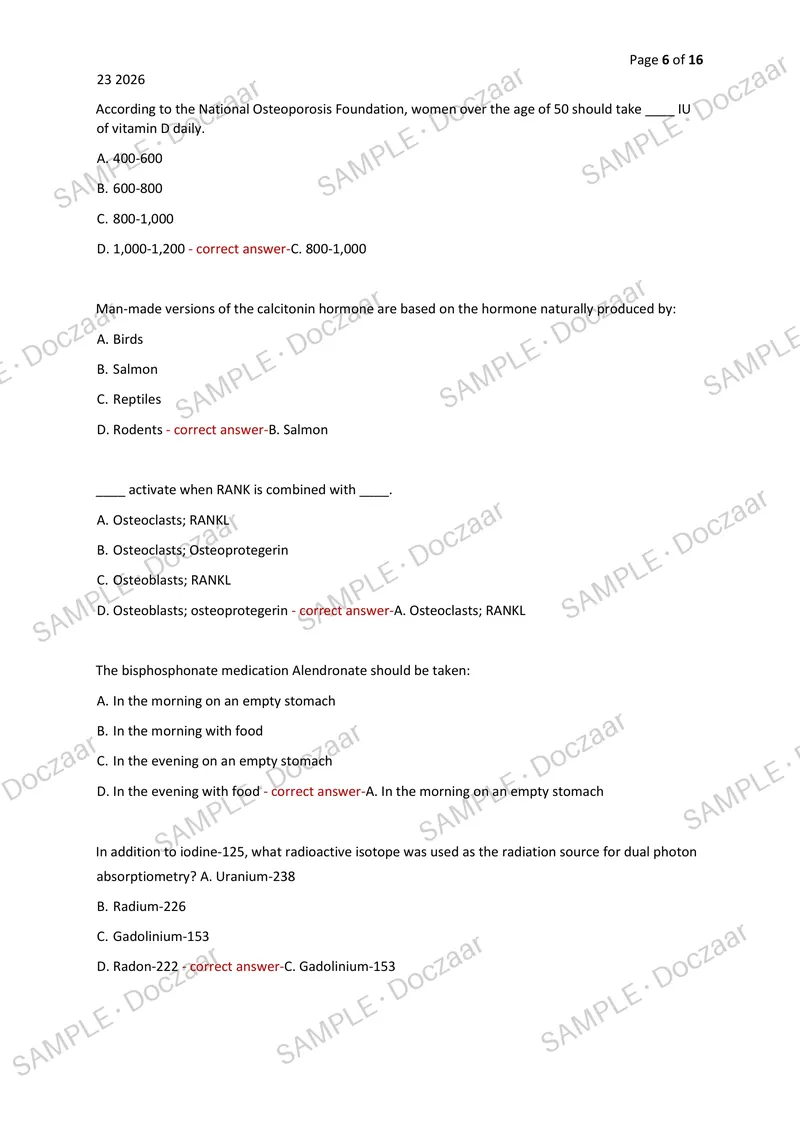
Students will gain insights into statistical measures in bone density evaluation, such as the Coefficient of Variation (CV), and understand the principles of bone remodeling, where bone mass increases when formation outpaces resorption. The guide also details the proprietary nature of bone edge detection algorithms and the recommended minimum distance a bone densitometry technician should maintain from the scanner.
Further, the document emphasizes the importance of in vivo testing for operation precision and highlights the necessity of filling out patient questionnaires before scanning procedures. It also addresses the most common osteoporosis-related fractures, vertebral compression fractures, and provides guidelines on using the FRAX tool via a smartphone app. This comprehensive guide is a valuable resource for students seeking to enhance their understanding and performance in the DXA exams.
Reviews
No reviews yet.
Be the first — reviews come from verified buyers.
Related documents
NR 302 exam 3 NEWEST TEST EXAM 180 COMPREHENSIVE QUESTIONS /FREQUENTLY MOST TESTED QUESTIONS AND VERIFIED SOLUTIONS/GE
Walden University · Nursing and midwifery
41 pagesUndergraduate
NR 565 - advanced pharmacology midterm – Chamberlain NEWEST TEST EXAM 100 COMPREHENSIVE QUESTIONS /FREQUENTLY MOST TES
Walden University · Nursing and midwifery
14 pagesUndergraduate
NR565 Week 5 DM & Thyroid Meds NEWEST 2026/2027 ACTUAL EXAM 80 QUESTIONS AND CORRECT (VERIFIED ANSWERS) COVERING RECEN
Walden University · Nursing and midwifery
19 pagesUndergraduate
NHCO Phlebotomy Exam 2026/2027 TEST EXAM 100 COMPREHENSIVE QUESTIONS /FREQUENTLY MOST TESTED QUESTIONS AND VERIFIED SO
Walden University · Nursing and midwifery
24 pagesUndergraduate
NCCT - Patient Intake and Care Exam 2026/2027 TEST EXAM 100 COMPREHENSIVE QUESTIONS /FREQUENTLY MOST TESTED QUESTIONS
Walden University · Nursing and midwifery
21 pagesUndergraduate
NR 509 FINAL NEWEST 2026/2027 ACTUAL EXAM 130 QUESTIONS AND CORRECT (VERIFIED ANSWERS) COVERING RECENT AND MOST TESTED
Walden University · Nursing and midwifery
33 pagesUndergraduate
NR 509 Midterm NEWEST 2026/2027 ACTUAL EXAM 130 QUESTIONS AND CORRECT (VERIFIED ANSWERS) COVERING RECENT AND MOST TEST
Walden University · Nursing and midwifery
36 pagesUndergraduate
CMSRN NEWEST 2026/2027 ACTUAL EXAM 80 QUESTIONS AND CORRECT (VERIFIED ANSWERS) COVERING RECENT AND MOST TESTED QUESTIO
Walden University · Nursing and midwifery
18 pagesUndergraduate