Exam Elaborations
NR566 ADVANCED PHARMACOLOGY FOR CARE OF THE FAMILY FINAL EXAM 2026/2027 | 100 HIGH-YIELD QUESTIONS & VERIFIED ANSWERS |
Preview
Page 1 of 21
Sample · 4/21
Click to enlarge Pages 2–3 · locked
Click to enlarge Pages 5–10 · locked
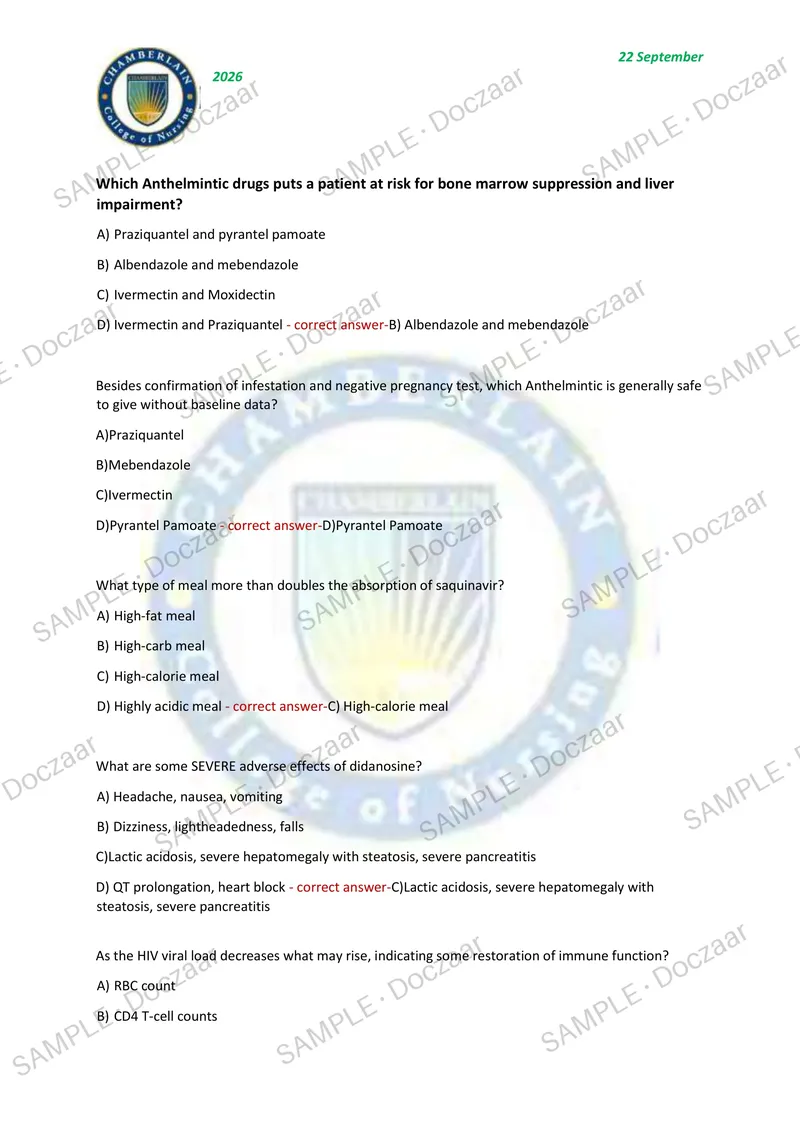
Click to enlarge Pages 12–17 · locked
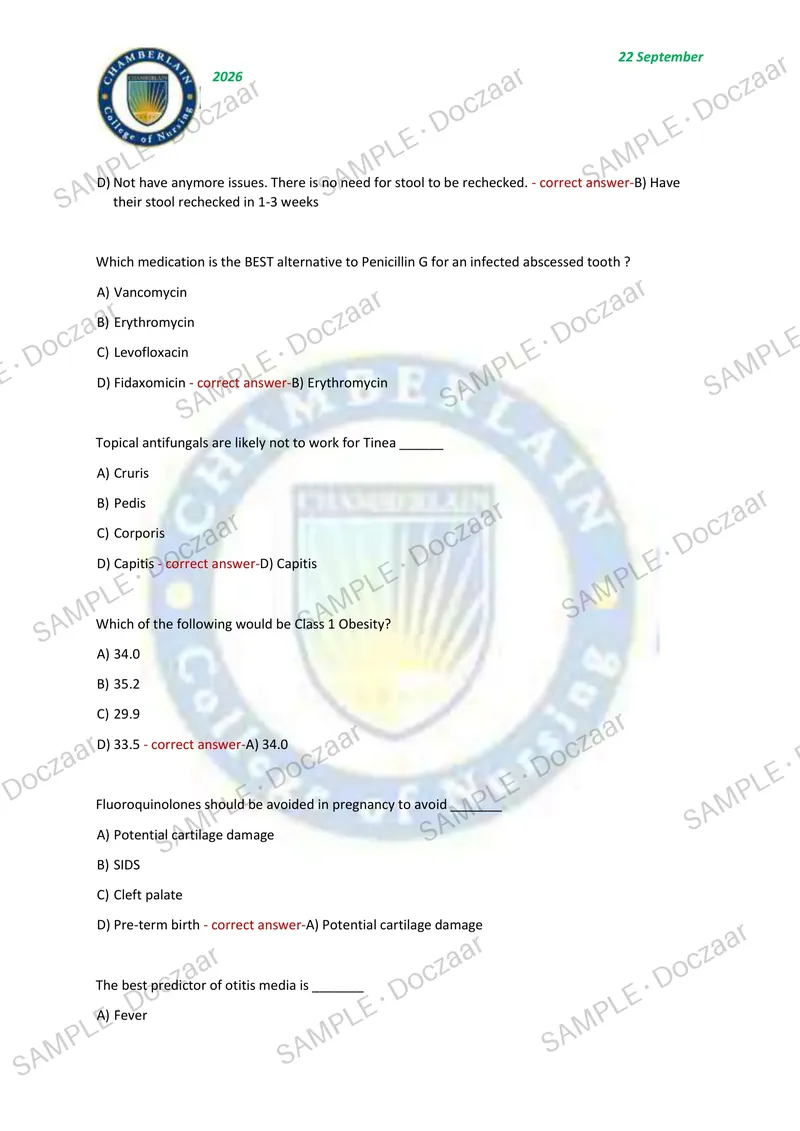
Click to enlarge
Continued
17 more pages
Locked · Full 21-page document
About this document
This document serves as a comprehensive study guide for students preparing for the NR566 Advanced Pharmacology for Care of the Family final exam for the 2026/2027 academic year. It features 100 high-yield questions with verified answers, focusing on the most recent and frequently tested topics in pharmacology. The guide is an essential resource for students aiming for A+ preparation in their pharmacology exams.
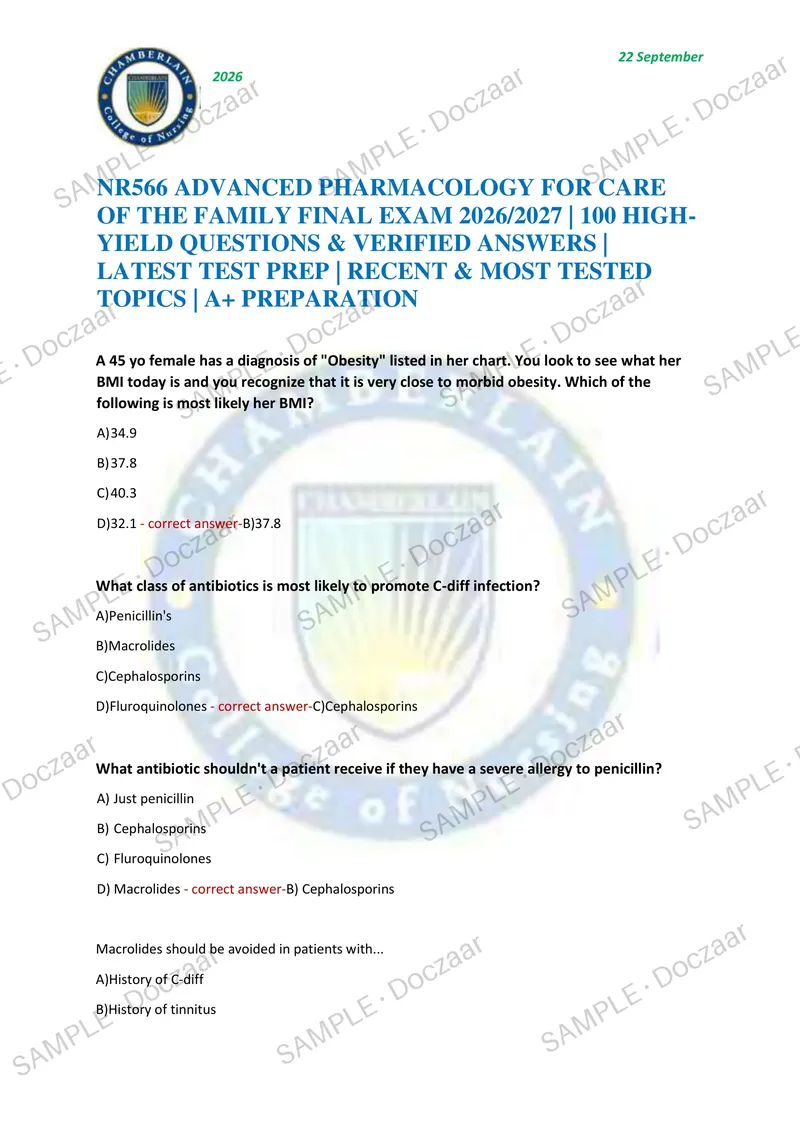
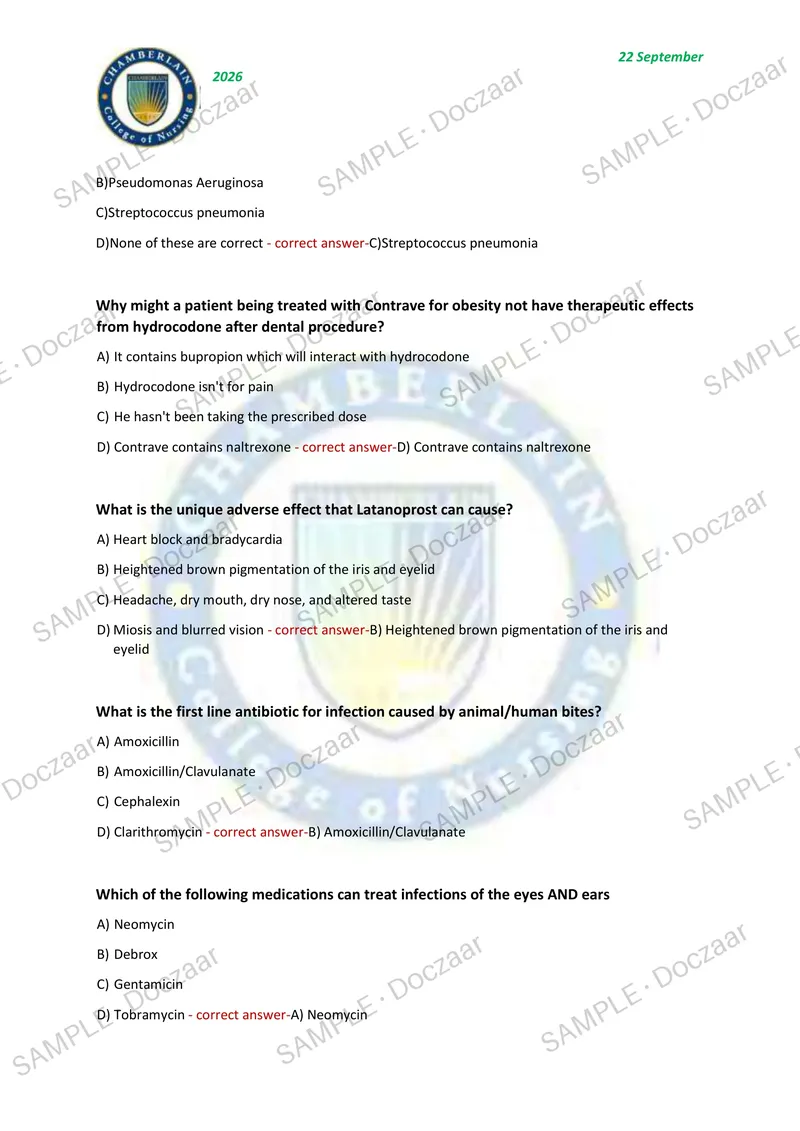
The content includes a variety of clinical scenarios and questions that cover important pharmacological concepts and drug-related knowledge. For example, it addresses the management of obesity by examining BMI values, the risk of C-diff infection associated with certain antibiotic classes like Cephalosporins, and contraindications for patients with penicillin allergies. The document also discusses the use of antibiotics in treating infections in infants, uncomplicated urinary tract infections (UTIs), and the management of community-acquired pneumonia (CAP) in smokers and patients with COPD.
Additionally, the study guide explores the therapeutic actions of various medications, such as Guaifenesin as an expectorant and Topiramate's role in inducing a sense of satiety. It touches on the mechanisms of action for drugs like intranasal Cromolyn, treatment approaches for conditions like otomycosis, and the use of Omalizumab for asthma and seasonal allergic rhinitis. Lastly, it highlights the risk associated with Budesonide in children, specifically the potential for delayed growth, and provides guidance on the management of weight loss medications like phentermine/topiramate.
This document is ideal for students seeking an efficient and effective review of key pharmacological principles and drug therapies. The content is SEO-optimized with natural keywords to enhance discoverability for those searching for advanced pharmacology exam preparation resources.
Reviews
No reviews yet.
Be the first — reviews come from verified buyers.
Related documents
NR 302 exam 3 NEWEST TEST EXAM 180 COMPREHENSIVE QUESTIONS /FREQUENTLY MOST TESTED QUESTIONS AND VERIFIED SOLUTIONS/GE
Walden University · Nursing and midwifery
41 pagesUndergraduate
NR 565 - advanced pharmacology midterm – Chamberlain NEWEST TEST EXAM 100 COMPREHENSIVE QUESTIONS /FREQUENTLY MOST TES
Walden University · Nursing and midwifery
14 pagesUndergraduate
NR565 Week 5 DM & Thyroid Meds NEWEST 2026/2027 ACTUAL EXAM 80 QUESTIONS AND CORRECT (VERIFIED ANSWERS) COVERING RECEN
Walden University · Nursing and midwifery
19 pagesUndergraduate
NHCO Phlebotomy Exam 2026/2027 TEST EXAM 100 COMPREHENSIVE QUESTIONS /FREQUENTLY MOST TESTED QUESTIONS AND VERIFIED SO
Walden University · Nursing and midwifery
24 pagesUndergraduate
NCCT - Patient Intake and Care Exam 2026/2027 TEST EXAM 100 COMPREHENSIVE QUESTIONS /FREQUENTLY MOST TESTED QUESTIONS
Walden University · Nursing and midwifery
21 pagesUndergraduate
NR 509 FINAL NEWEST 2026/2027 ACTUAL EXAM 130 QUESTIONS AND CORRECT (VERIFIED ANSWERS) COVERING RECENT AND MOST TESTED
Walden University · Nursing and midwifery
33 pagesUndergraduate
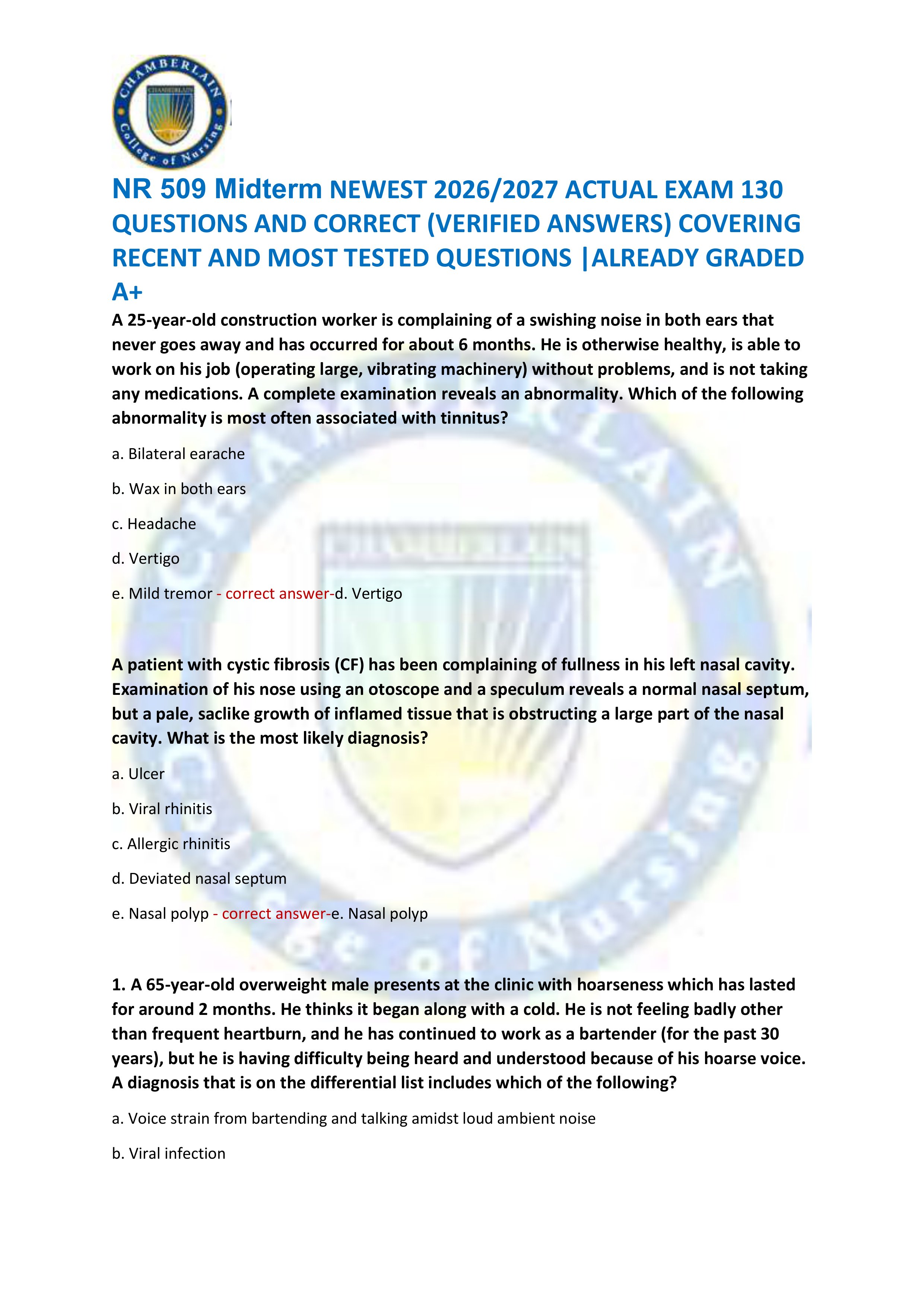
NR 509 Midterm NEWEST 2026/2027 ACTUAL EXAM 130 QUESTIONS AND CORRECT (VERIFIED ANSWERS) COVERING RECENT AND MOST TEST
Walden University · Nursing and midwifery
36 pagesUndergraduate
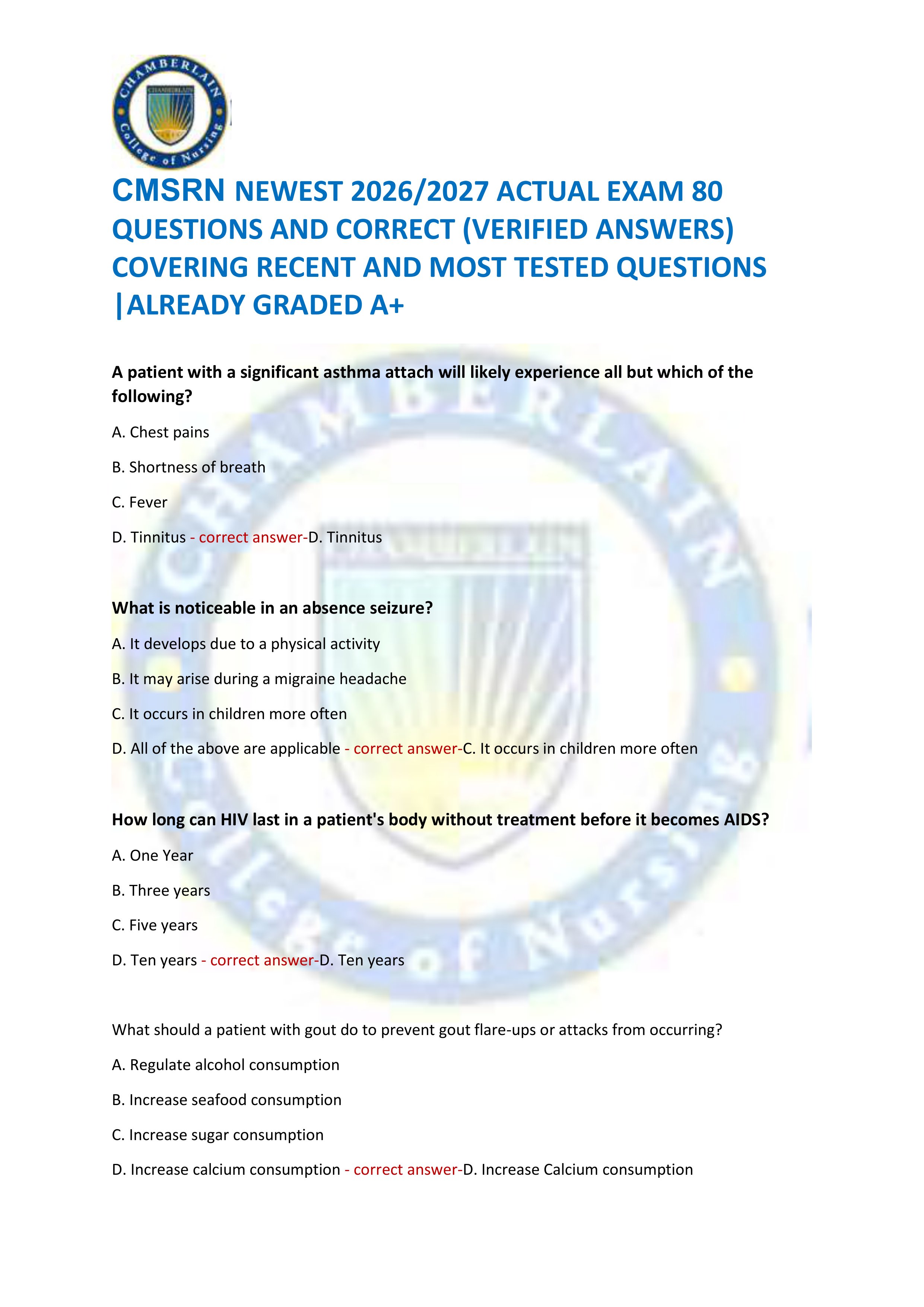
CMSRN NEWEST 2026/2027 ACTUAL EXAM 80 QUESTIONS AND CORRECT (VERIFIED ANSWERS) COVERING RECENT AND MOST TESTED QUESTIO
Walden University · Nursing and midwifery
18 pagesUndergraduate